Dark-leaf plum trees add striking color to any landscape with their richly purple foliage and seasonal blossoms. This guide highlights five solid choices, ranging from bareroot saplings to mature live plants, to help you select a hardy, low-maintenance option for a decorative or fruit-bearing yard. Each option includes key growing notes and care tips to support successful establishment. The table below provides a quick snapshot of the featured products.
| Product | Size / Type | Notable Feature |
|---|---|---|
| Purple Leaf Plum Trees, 12-18 Inches Tall, Bareroot | Bareroot saplings | Vibrant purple foliage with pink spring blossoms |
| Dark Purple Plum Tree 6-15 Inch | Bareroot, dormant | Large, dark purple plums; hardy across zones 4–9 |
| 3 Pack Live Plum Trees | Live trees (three) | Sweet, juicy fruit; fast-growing orchard start |
| 2 American Plum Trees Live Plants | 18-24 inch tall, bareroot | Cold-hardy; suitable for early harvests |
| Red June Plum Trees | 2-3 feet tall | Self-pollinating; reliable fruit production |
Purple Leaf Plum Trees, 12-18 Inches Tall

These bareroot plum trees arrive as young saplings measuring 12-18 inches, ideal for establishing in small to medium yards. Their standout feature is vibrant purple foliage that contrasts beautifully with pink spring blossoms. Bareroot delivery requires careful planting to encourage strong root development. Provide full sun and well-drained soil for best growth. Water consistently during the first growing season and mulch to conserve moisture. They can become multi-story ornamentals as they mature, with the potential for early-season fruit in some varieties.
Key points: ornamental value with striking foliage, easy initial establishment, detailed planting instructions provided. Best suited for zones with warm summers and adequate rainfall. This option offers a balance of visual impact and gradual fruiting potential, making it a versatile addition to decorative borders or mixed landscapes.
Dark Purple Plum Tree 6-15 Inch Tall

This compact dark purple plum tree is sold as a bareroot dormant plant, focusing on root establishment during winter. Expect large, dark purple plums once mature, with the tree thriving in USDA zones 4–9 under full sun. Early care emphasizes deep but gentle watering, mulching, and a protective approach to root spread during the first growing season. The plant supports both ornamental appeal and eventual fruit production, depending on local pollination and climate conditions.
Growing guidance: plant in well-drained soil with space for root expansion, provide annual pruning to maintain shape, and monitor for common plum pests and diseases. This option suits gardeners seeking a durable tree with dramatic foliage and a reliable fruit crop in suitable climates.
3 Pack Live Plum Trees
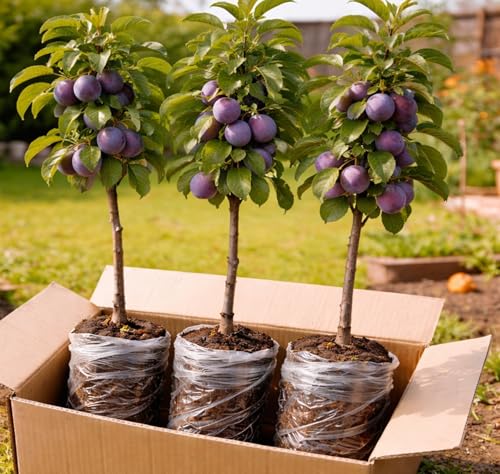
This 3-pack offers three live plum trees known for sweet, juicy fruit and robust growth. The batch is designed to establish a small backyard orchard with cross-pollination benefits and increased yield potential. Planting should follow standard fruit-tree etiquette: choose sunny, well-drained soil, space trees adequately, and apply consistent irrigation during the establishment phase. Regular pruning helps shape the canopy and promote fruiting wood. The trio is particularly suitable for homeowners aiming to maximize harvest opportunities in mid to late summer.
Notes: fast-growing and productive, with emphasis on fruit quality. Consider pairing with pollinators and ensuring compatible chilling hours in your region to optimize yields.
2 American Plum Trees Live Plants

This pair of live plum trees arrives as 18-24 inch bareroot drought-tolerant saplings, dormant and ready for immediate planting. They are described as cold-hardy, making them suitable for regions with harsh springs. Plumcots may ripen in early June in compatible zones. Plant in well-drained soil with full sun exposure and provide steady moisture during establishment. Spacing should accommodate mature canopy size, and pruning can help stimulate fruit production and healthy growth in successive seasons.
Considerations: ensure your climate aligns with USDA zones 3–8, observe winter protection measures in colder areas, and monitor for typical plum tree pests and diseases. This option emphasizes resilience and steady development into productive trees over time.
Red June Plum Trees

Red June plum trees are self-pollinating, shipped as live plants between two and three feet tall. They are suited for direct-ground planting upon arrival, with California and other regions possibly receiving bare-root stock due to regulatory conditions. This variety tends to thrive in zones 7–9 with full sun, delivering reliable fruit production and a vigorous growth habit. As with other plums, ongoing care includes pruning, watering consistency, and pest/disease management as needed.
Purchase considerations: verify your local climate suitability, whether bare-root stock is expected in your area, and the tree’s space requirements for a healthy canopy and fruiting structure.
Buying Guide: Key Purchase Considerations and Comparisons
When choosing a dark-leaf plum tree, consider ornamental value versus fruit production, climate suitability, root establishment, and maintenance needs. Here are some core factors to compare across options:
- Foliage and color: If decorative foliage is priority, Purple Leaf Plum and Dark Purple Plum varieties offer striking purple leaves alongside seasonal blossoms.
- Size and spacing: Bareroot saplings are compact at planting; mature trees require more space. Plan for canopy spread and root systems.
- Hardiness and climate: Check USDA hardiness zones and local summer heat. Cold-hardiness reduces winter damage risk; heat tolerance affects fruit quality.
- Pollination: Some plums are self-pollinating, others benefit from cross-pollination. Self-pollinating varieties simplify orchard planning.
- Establishment and care: Bareroot plants depend on proper planting and watering in the first year. Dormant stock often requires seasonal pruning and mulching.
- Fruit yield and flavor: The time to fruiting varies; some options deliver early harvests while others focus on ornamental value first.
- Maintenance: Look for disease resistance, pest management needs, and pruning requirements to keep trees healthy and productive.
Throughout selection, balance visual appeal with practical goals such as fruit production, climate fit, and long-term maintenance. For best results, pair your choice with well-drained soil, regular irrigation during establishment, and seasonal pruning to shape growth and maximize yield potential.