Bright purple foliage and vibrant spring blooms can transform any landscape. This guide highlights five purple-leaf flowering shrubs and related plants, offering concise details on color, size, and care. Each selection emphasizes striking foliage, year-round appeal, and reliable performance in American gardens.
| Product | Brand | Foliage Color / Bloom | Key Benefit |
|---|---|---|---|
| Purple Daydream Loropetalum | Living | Dark purple foliage with pink spring flowers | Compact evergreen for small spaces |
| Autumn Royalty Azalea | Encore Azalea Store | Purple flowers; evergreen foliage | Reblooming with extended flowering period |
| Cerise Charm Loropetalum | Roses and Plants | Dark plum foliage; red spring blooms | Graceful arching habit in a compact form |
| Purple Rose Plant | Heirloom Roses Store | Purple flowers; own-root | Hardy, prolific blooming in outdoor beds |
| Common Lilac Bush | DAS Farms Store | Lavender purple blooms; deciduous foliage | Classic fragrance and seasonal color |
Overview: The selections below showcase a range of purple-leaf or purple-flowered shrubs and compatible plants. They’re suitable for borders, containers, and focal points, offering varied mature sizes and bloom seasons to fit different American climates and garden styles.
Purple Daydream Loropetalum: Compact Colorful Foliage
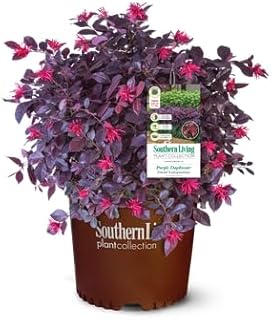
Product highlights: This compact evergreen shrub is ideal for small spaces, borders, and container gardens. It features dark purple foliage that maintains rich color throughout the year and offers pink spring flowers. It tolerates full sun to partial shade, making it adaptable to various garden locations. Its neat mounding growth habit provides a tidy, low-maintenance appearance for landscapes that demand year-round interest.
Autumn Royalty Azalea: Rebloomi ng Purple Blooms

Product highlights: Autumn Royalty is a reblooming purple azalea that provides extended beauty across multiple seasons. It grows well as a foundational plant and performs solidly in mass plantings. The shrub can reach up to several feet wide and tall in time, delivering dense flowering displays that attract butterflies and pollinators. Little pruning is required once established, though post-spring pruning can encourage future growth and flowering. Handle pruning after spring bloom to preserve buds for next season.
Cerise Charm Loropetalum: Dark Foliage, Red Spring Blooms

Product highlights: Cerise Charm features nearly black purple foliage that holds color through the growing season, with vivid red flowers in spring. The plant displays arching branches that contribute a refined, compact form suitable for landscape design, focal points, or sheltered borders. Its combination of striking foliage and bold blooms makes it a versatile choice for modern gardens seeking dramatic color contrasts.
Purple Rose Plant: Whole-Root, Hardy Blooms

Product highlights: This purple rose plant is offered as own-root stock, which can lead to more blooms, greater hardiness, and variety stability over time. The plant is delivered in a one-gallon container and is typically 12–16 months old, with rich soil to support robust growth. Suitable for outdoor planting in hardiness zones 5–9, it provides classic fragrance, color, and seasonal renewal for rose enthusiasts seeking purple-toned landscapes or borders.
Common Lilac Bush: Lavender Purple Blooms

Product highlights: Lilacs offer lavender-purple blooms with classic spring fragrance. This variety thrives in zones 4 through 8 and prefers full to partial sun. As a deciduous shrub, expect seasonal foliage shedding in winter, followed by vibrant blossoms each spring. Lilacs can serve as a transitional barrier or a scent-forward focal point in a garden design, balancing purple blooms with other perennial color schemes.
Buying Guide: Key Purchase Considerations
- Climate and hardiness: Match plant hardiness with your region’s winter lows and summer highs. Some options are best for zones 4–8, while others tolerate warmer climates.
- Bloom and foliage harmony: Consider how foliage color and bloom color work together across seasons. Loropetalum varieties emphasize foliage with spring blooms; azaleas and lilacs emphasize seasonal blossoms.
- Size and placement: Assess mature height and width to determine whether a plant fits borders, containers, or focal points. Compact forms are ideal for small spaces, while larger shrubs work as backdrop or specimen plants.
- Sun exposure: Most options prefer full sun to partial shade. If you have limited sun, prioritize shrubs noted for shade tolerance to preserve color and bloom.
- Maintenance needs: Some plants require minimal pruning after flowering, while others benefit from light shaping to maintain form and promote future blooms.
- Pollinator value: Species like lilacs and azaleas provide nectar for butterflies and bees, contributing to garden biodiversity.
- Soil and drainage: Ensure well-drained soil; amend heavy soils to improve drainage, especially for evergreen loropetalum varieties.
These selections offer diverse textures, colors, and bloom times to create year-round interest. When planning, consider color coordination with existing garden plants, seasonal transitions, and maintenance capacity to keep a purple-themed garden thriving.