Modern large-scale drip irrigation systems help conserve water while delivering targeted moisture to trees, shrubs, raised beds, and expansive garden plots. This guide highlights five top options designed for scalable setups, easy expansion, and reliable performance in American gardens. Each product section explains what makes it suitable for bigger installations, along with practical considerations for deployment, maintenance, and system integration. Whether you’re irrigating a commercial landscape or a sizable home garden, these picks balance durability, ease of use, and water efficiency.
| Product | Brand | Key Benefit | Ideal For |
|---|---|---|---|
| MIXC 200Ft Drip Irrigation System | MIXC | Universal 1/4″ components, adjustable copper nozzles | Raised beds, yards, large potted plant areas |
| Tondiamo 1000 Ft Drip Tape Kit | Tondiamo | Long run, 6-inch spacing, bundled accessories | Large landscape sections, farms, multi-zone setups |
| Raindrip R560DP Drip Watering System | Raindrip | Timer-ready, 20 drippers, scalable network | Container gardens, hanging baskets, medium to large beds |
| IRmm Drip Irrigation System | IRmm | 165 ft of distribution tubing, versatile emitters | Greenhouses, patios, medium-to-large gardens |
| EverZenHub Automatic Drip Kit | EverZenHub | 50 ft, quick-connect, brass nozzles, adjustable flow | Greenhouses, lawns, and garden beds requiring precise control |
MIXC 200Ft Drip Irrigation System

The MIXC system provides a universal 1/4 inch size set designed to fit US markets, addressing common hose mismatches seen with 5/16 inch solutions. It includes 2-way and 3-way connectors, tubing, and adjustable copper nozzles, enabling compact layouts across larger gardens. Bendable 20cm drip emitter rods with aluminum interiors support flexible placement, which is helpful when configuring irregular bed shapes or raised garden designs. A practical guideline is to limit to eight emitter rods per 50 feet of tubing to avoid overloading the line and to plan for additional tubing in larger areas. The 360-degree copper nozzles allow varied water flow patterns for drips, misting, and more, helping tailor coverage across diverse plantings.
For installations spanning multiple zones, this kit scales by adding length and extra emitters, making it suitable for mid-to-large landscapes. Its durable copper components provide longevity in outdoor conditions, while the modular fittings simplify on-site assembly. Maintenance typically centers on ensuring clean connections and flushing lines seasonally to prevent clogs. Consider pairing with a weatherproof timer or controller to automate functions across zones, which improves efficiency and reduces water waste in larger yards.
Large 3ft Tall 20 Gallon Tree Watering Bags (Set of 3)

Scale Wear Design’s large 20-gallon tree watering bags are designed for substantial landscaping applications, offering high-capacity water delivery directly to tree roots. The bags are UV-stable PVC with heavy-duty zippers, built to resist tearing under sun exposure. When filled, each bag holds approximately 20 gallons, with a potential to pair multiple bags for larger trees or extended watering periods. This method is particularly effective for long-term tree establishment and drought resilience in larger landscapes. Note that customers should verify tree size and root zone needs to determine the number of bags required per specimen and per irrigation cycle.
For large-scale configurations, these bags provide a simple, hands-off approach to deep watering. They pair well with drip emitters and slow-release schedules to encourage deeper root growth. While they are not a full irrigation system on their own, their capacity makes them a useful element in a hybrid setup that combines drip lines with targeted tree hydration. Regularly inspect zipper integrity and replace worn bags to maintain performance over time.
Large 3ft Tall Tree Watering Bags (Set of 3)

Another set of large-capacity bags from Scale Wear Design emphasizes durability and water delivery for sizeable trees. These 20-gallon bags are intended for extended release watering, allowing slow saturation around tree root zones. The product’s emphasis on rugged construction and UV stability makes it suitable for outdoor installations in sunny climates. As with other tree watering bags, plan for placement frequency and ensure coverage aligns with tree size, soil type, and irrigation goals. This option is best used as a supplementary component within an integrated irrigation strategy for mature landscapes or high-water-demand trees.
Raindrip R560DP Drip Watering System
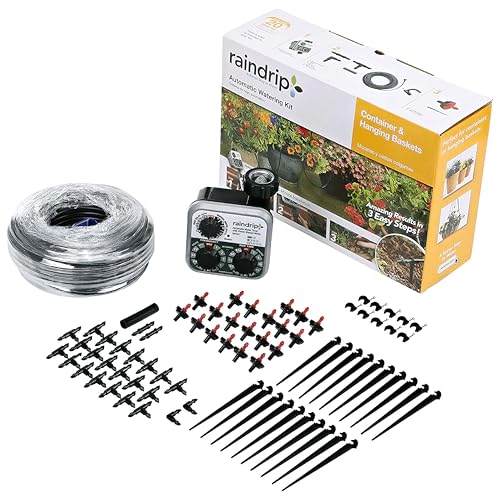
Raindrip’s R560DP model is designed for ease of expansion and control across multiple plants, including containers and hanging baskets. The kit focuses on user-friendly setup with a timer and drip network that can be tailored to approximately twenty plants. It includes 20 drippers and is adaptable for various garden layouts, from beds to balconies. The system emphasizes a straightforward three-step installation: connect to a water source, lay tubing, and attach drippers. Its scalable nature makes it suitable for larger container gardens or mixed beds where uniform water delivery is essential but extended to several zones.
For larger installations, consider adding a timer or zoned controller to schedule watering across several beds. Ensure fittings and tubing align with your water pressure and plant water needs. Regular checkups for leaks and clogs will help maintain performance in expansive setups where maintenance may be spread across multiple areas.
IRmm Drip Irrigation System

The IRmm system offers a substantial 165 feet of distribution tubing in a kit that includes multiple drip emitter options. The tubing construction uses ABS plastic, designed for weather resistance and durability in outdoor environments. The system supports various irrigation modes—micro droplets, sprays, and targeted watering—adjustable per emitter to fit plant needs. A key benefit in larger landscapes is the ability to tailor water delivery along long rows or beds, reducing runoff and improving efficiency. It is advisable to map zones and plan emitter placement to ensure even coverage across the entire layout.
Maintenance considerations include periodic cleaning of emitters, ensuring the tubing remains clear, and verifying that the terrain supports stable pressure for uniform output. This kit suits mid-to-large scale gardens, greenhouses, and patios where reliable, customizable irrigation is necessary without frequent replumbing.
Biling Solar Drip Irrigation System

The Biling solar kit integrates a built-in 2200mAh battery to run the watering schedule day and night without electrical outlets. It is designed for 15 potted plants and is ideal for remote beds or balcony gardens, aligning with eco-conscious goals by relying on solar power. The digital controller allows precise scheduling—adjusting duration and frequency for each plant, which supports efficient water use and plant health. All-in-one design minimizes wiring complexity and external components. For larger spaces, you can extend coverage by connecting additional tubing or combining with other drip lines to form a larger grid driven by solar power.
Consider weather patterns and sun exposure to position the solar panel for maximum efficiency. Regular battery maintenance and software updates (if applicable) help keep scheduling accurate in changing seasons. This option is well-suited for gardeners seeking a self-sufficient system with centralized control over multiple plant groups.
Buying Guide: Key Considerations For Large-Scale Drip Irrigation
- Scale and zoning: Map your landscape into zones that share similar water needs. Larger properties benefit from multi-zone controllers or timers that allow independent scheduling and precise coverage across beds, trees, and containers.
- Tubing size and compatibility: Choose tubing and fittings that match your water pressure and existing hoses. 1/4″ tubing is common for emitters, but longer runs may require pressure regulation or thicker-walled tubing to minimize pressure drop.
- Emitters and coverage: Select emitters that match plant needs—drip emitters for slow watering, micro-sprayers for broader foliage, and adjustable nozzles for misting or targeted root zones. Plan spacing to prevent dry spots and overwatering.
- Durability and weather resistance: Outdoor components should resist UV exposure, temperature swings, and potential chemical exposure from fertilizers. Materials like copper, brass, and UV-stable plastics tend to last longer in sun-drenched landscapes.
- Automation and controllers: A timed or sensor-based controller can dramatically reduce water waste. Look for compatibility with standard irrigation timers and expandability to add zones as the landscape evolves.
- Maintenance and troubleshooting: Regular flushing of lines, cleaning of emitters, and inspection for leaks are essential in large systems. Keep spare fittings and emitters on hand for quick repairs.
- Power sources and sustainability: Solar options can reduce electrical needs for remote installations, while battery backups help maintain irrigation during power outages. Consider energy usage and maintenance needs when selecting equipment.
- Installation complexity: Some kits are plug-and-play, while others require more technical setup. For expansive landscapes, professional installation may improve efficiency and ensure optimal layout.
- Water source and pressure management: Ensure your water pressure matches system requirements, and use pressure regulators if necessary to prevent emitter damage and uneven flow across long runs.
- Budget and expansion potential: Balance upfront kit costs with future expansion. Prioritize modular kits that allow adding zones, tubing lengths, and emitters without replacing existing components.