Controlling phosphate is crucial for sustaining vibrant corals and a healthy reef tank. The following selections are among the most effective phosphate removers designed for marine and reef environments, offering rapid reduction, safety for inhabitants, and clear water results. This guide highlights five standout options with diverse formats and dosing methods to fit different reef setups.
| Product | Brand | Format | Key Benefit |
|---|---|---|---|
| Phosphat-E Liquid Phosphate Remover (4.2 fl oz) | Brightwell Aquatics | Liquid, 4.2 fl oz | Fast phosphate elimination for heavily stocked tanks |
| Phosphat-E Liquid Phosphate Remover (8.45 fl oz) | Brightwell Aquatics | Liquid, 8.45 fl oz | Larger-volume option with same rapid action |
| Phos Correx – Advanced Phosphate Remover (125 ml) | Continuum Aquatics | Phosphate remover resin | Enhances water clarity and long-term balance |
| ClearMax Phosphate Remover | Fluval | Chemical media for filters | Absorbs phosphate, nitrite, nitrate for crystal clear water |
| PhosGuard 1 Liter | Seachem | Granular media | Reduces phosphate and silicate; popular reef choice |
Note: Each product has unique application methods. Always follow the manufacturer’s dosing guidelines and monitor phosphate with a reliable test kit to avoid abrupt shifts in tank chemistry.
Brightwell Aquatics Phosphat-E 4.2 oz
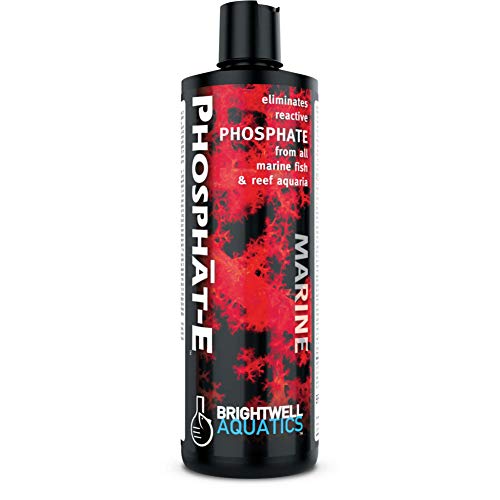
Brightwell Aquatics Phosphat-E Liquid Phosphate Remover offers enhanced phosphate elimination for heavily stocked reef and marine aquariums. It provides a quick, precise reduction of reactive phosphate, suitable for ongoing use to maintain lower phosphate levels. After treatment, note that some phosphate test kits may register false positives due to the product’s chemical mechanism, and a temporary slight cloudiness can occur. This is normal and typically resolves as the system stabilizes.
Brightwell Aquatics Phosphat-E 8.45 oz
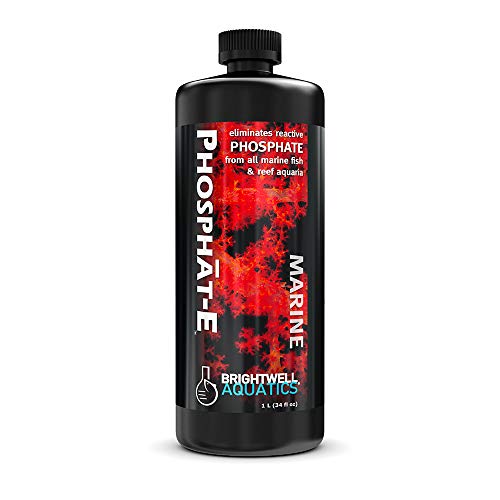
This larger 8.45-ounce bottle of Phosphat-E provides the same rapid phosphate reduction and reef-safe formulation as the smaller version. It is designed to support ongoing phosphate management in stocked reef systems while remaining safe for corals, invertebrates, and fish. Users should expect temporary cloudiness during initial dosing, which is a normal part of the process.
Continuum Aquatics Phos Correx (125 ml)

Phos Correx is an advanced phosphate remover designed to rapidly bind excess phosphate and support clearer water. In addition to phosphate reduction, it helps reduce unwanted phosphate buildup that can impact coral growth and overall tank balance. This product contributes to improved water clarity and stability, benefiting reef inhabitants and coral coloring over time.
Fluval ClearMax Phosphate Remover
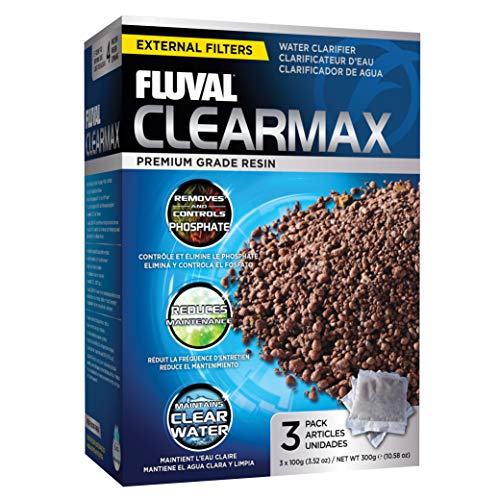
ClearMax Phosphate Remover, part of Fluval’s media range, is designed for use in canister filters and helps absorb phosphate, nitrite, and nitrate. The media supports water clarification and odor reduction while maintaining a healthy environment for fish, corals, and plants. This option suits users who want an all-in-one filtration media upgrade for phosphate management and water quality.
Seachem PhosGuard 1 Liter
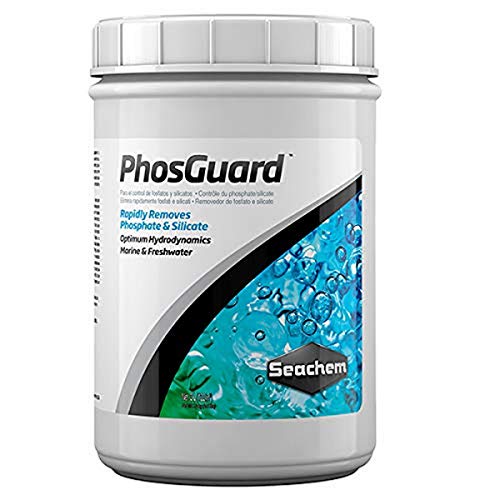
PhosGuard is a widely used resin-based phosphate remover from Seachem. It efficiently binds phosphate and silicate, contributing to clearer water and a reduction in algae growth potential. It’s a straightforward option for reef tanks seeking reliability and predictable performance, especially when paired with routine maintenance and monitoring.
Buying Guide: Phosphate Removers For Reef Tanks
- Form factor and dosing: Liquids (Phosphat-E) work quickly but require careful dosing to avoid sudden shifts; resins and media (Phos Correx, PhosGuard, ClearMax) offer steady, long-term removal when placed in filter systems.
- Tank size and stocking: Heavily stocked reefs may need more aggressive or higher-volume removers; smaller tanks benefit from precise dosing to minimize disruption.
- Reef compatibility: Choose products tested for reef safety. Some resins can alter alkalinity or affect invertebrate sensitivity if dosed improperly.
- Testing and monitoring: Regular phosphate testing helps track progress. Initial readings can be misleading after treatment; follow manufacturer guidance for retesting intervals.
- Water parameters: Manage other factors such as nitrates, carbon dosing, and lighting; phosphate reduction works best when combined with comprehensive nutrient control.
- Maintenance routine: For media-based removers, schedule media changes or replacements per product instructions to prevent saturation and compromised filtration.
- Cost and convenience: Liquids provide fast results but require ongoing dosing; media options reduce ongoing dosing but require space within filters or reactors.
In reef systems, selecting a phosphate remover often depends on tank maturity, bioload, and maintenance preferences. A combination approach—using a resin-based media for ongoing filtration alongside periodic liquid dosing during high-phosphate events—can offer balanced control. Always incorporate consistent water testing and monitor for signs of phosphate rebound, such as algal blooms or reduced coral growth, to adjust your strategy accordingly.