Finding the right dethatcher attachment can dramatically improve lawn health by removing thatch and allowing air, water, and nutrients to reach grass roots. The following selections are among the most relevant, compatible with typical lawn and garden tractors, and designed to pull behind your mower or tractor. Below, you’ll find quick summaries of each model, followed by detailed product sections and a practical buying guide to help you compare options.
| Product | Brand | Key Point |
|---|---|---|
| Agri-Fab 45-0295 48in Tow Behind Dethatcher | Agri-Fab Store | 48-inch swath, 24 tines, USA-made |
| Suchtale 40inch Tow Behind Dethatcher | Suchtale Store | 20 spring tines, rust-proof, wheel guide |
| YITAMOTOR 60 Inch Tow Behind Dethatcher | YITAMOTOR Store | 60-inch width, 24 tines, powder-coated |
| Suchtale 48inch Tow Behind Dethatcher | Suchtale Store | 24 spring tines, large coverage, durable |
| Agri-Fab 45-0294 40in Tow Behind Dethatcher | Agri-Fab Store | 40-inch swath, 20 tines, USA-made |
Each product below includes an overview of its construction, number of tines, and practical considerations for use with common lawn tractors. While all are designed to detach thatch effectively, factors like working width, tine count, and steel quality can impact performance on different lawn conditions. Review the specs to determine which model best fits your yard size, terrain, and maintenance routine.
Agri-Fab 48in Tow Behind Dethatcher

The Agri-Fab 45-0295 is designed to pull behind lawn and garden tractors, delivering a broad 48-inch dethatching sweep. It utilizes 24 durable spring steel tines to loosen dried grass, weeds, and compact soil. This model emphasizes heavy-duty construction and US manufacturing, promising reliability across seasonal thatch removal tasks. Its width helps cover larger lawn areas in fewer passes, optimizing mowing and dethatching workflows for medium to large properties. The product’s design supports straightforward mounting and operation with compatible tractors and hitch systems commonly found in American home yards.
Suchtale 40inch Tow Behind Dethatcher

This Suchtale model offers a 40-inch working width and 20 spring steel tines with heat-treated durability. The rust-proof, replaceable tines are designed to stay flexible under impact, reducing wear over time. A wheel system helps keep the dethatcher aligned behind the tractor, minimizing interference with obstacles on lawns. The unit is rated for straightforward lifting and lowering via a transport handle, and its ballast-focused frame supports stable operation. Use guidance suggests timing dethatching in milder seasons for optimal soil and root access.
YITAMOTOR 60 Inch Tow Behind Dethatcher

The YITAMOTOR dethatcher stands out with a wide 60-inch working area and 24 spring steel tines. The heavier steel frame is powder-coated for rust and corrosion resistance, helping the unit withstand outdoor storage and seasonal use. Each tine is replaceable with basic tools, ensuring long-term parts availability and reduced maintenance downtime. The design includes a lift handle for easy transport and a wheel-based guide to help maintain consistent pass depth as you traverse varied lawn terrain.
Suchtale 48inch Tow Behind Dethatcher
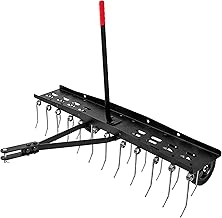
This 48-inch Suchtale dethatcher mirrors the 40-inch variant in design but widens the working width to increase coverage per pass. It features 24 spring steel tines that are rust-proof and replaceable, ensuring resilience through repeated dethatching cycles. A wheel guide and transport handle contribute to user-friendly operation, especially on lawns with uneven terrain. The dual-row tine arrangement purportedly enhances thatch removal efficiency, promoting lawn airflow and root access after operation.
Agri-Fab 40in Tow Behind Dethatcher
The Agri-Fab 45-0294 dethatcher features a 40-inch working width with 20 durable spring steel tines. Its thatch removal capability targets dead, matted grass while turning up soil and weed residues, enabling better planting conditions. Like the 48-inch model, it is marketed as USA-made and emphasizes sturdy construction suitable for pulling behind a lawn tractor. Its narrower width makes it a good fit for smaller yards or tighter spaces where maneuverability matters most.
Buying Guide: Essentials For Choosing A Tow-Behind Dethatcher
Size and reach: For larger lawns, a wider dethatcher (like 60 inches) reduces passes and saves time, but may be harder to maneuver in tight spaces. Smaller widths (40–48 inches) work well for modest yards and garden borders, offering better control around landscaping features.
Tine quality and quantity: More tines and heat-treated steel provide robust thatch removal and longer life. Replaceable tines simplify maintenance and reduce downtime if wear occurs. Consider whether a model uses single- or dual-row tines and how that impacts thatch uplift and root access.
Durability and corrosion resistance: Powder-coated or stainless steel frames resist rust from moisture and irrigation cycles, extending the life of the attachment in outdoor storage conditions. Look for models that clearly specify material thickness and frame construction for heavy-duty use.
Ease of use: Wheel-guided designs, transport handles, and simple hitch connections save time and effort during setup and use. Quick-attach or universal hitch compatibility helps ensure the dethatcher fits your existing tractor or mower configuration.
Maintenance and parts availability: Replaceable tines and readily available spare parts minimize downtime. Check if the brand provides clear maintenance guidelines and if replacement tines are easy to source.
Season timing and lawn health: Dethatching is typically most effective when the lawn is not under drought stress and the soil is moist but not waterlogged. Fall and early spring are common windows when dethatching can improve nutrient penetration and airflow for upcoming growth cycles.
Cost vs. value: While price isn’t listed here, balancing a higher initial investment against durability, wider coverage, and longer tine life is key. Consider long-term maintenance costs and warranty terms when evaluating options.