For land managers, homeowners, and turf professionals, controlling johnsongrass while protecting desirable grasses can be challenging. The following products are selective herbicides designed to target grassy weeds like johnsongrass with minimal impact on ornamentals and turf. This guide compares active ingredients, usage areas, and application notes to help you choose the right option for your turf, pasture, or landscape.
| Product | Active Ingredient / Type | Typical Use | Notes |
|---|---|---|---|
| Southern Ag Amine 2,4-D WEED KILLER, 32oz | 2,4-D amine; broadleaf weed control | Turf, pastures, rangeland | Economical; broadleaf control |
| Target 6 Plus Turf Herbicide (MSMA 48.2%) | MSMA; selective on grasses and some weeds | Cotton, golf courses, sod farms, rights of way | Use as labeled; monitor for restrictions |
| Monterey Grass Getter (8oz) with Measuring Spoon | Sethoxydim; selective grassy weed killer | Bedding plants, ornamentals, shrubs | Over-the-top; not for lawn use |
| The Andersons Barricade Granular Pre-Emergent | Prodiamine; pre-emergent weed prevention | Soil-based control; early spring/fall | Prevents weeds; not for existing ones |
| Southern Ag Surfactant for Herbicides | Non-ionic surfactant | Enhances results of various pesticides | Uses with most pesticides |
Southern Ag Amine 2,4-D WEED KILLER, 32oz

Product overview and use cases show that this formulation targets broadleaf weeds while remaining suitable for turf, pastures, rangelands, and roadside locations. Its low-use rate—typically 1 to 4 pints per acre—offers cost efficiency for larger properties. While designed primarily for broadleaf control, this product can complement a johnsongrass strategy when paired with selective grass-targeting products. It’s important to follow label directions for weed spectrum and application timing to minimize impacts on desirable grasses.
Target 6 Plus Turf Herbicide (MSMA 48.2%)
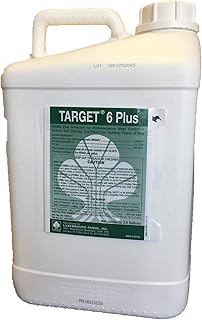
Target 6 Plus contains MSMA as the active ingredient and is used in a variety of settings, including golf courses and sport turf. It is formulated to control grasses and broadleaf species when used according to the label. The product notes recommend a mixing rate around 2 ounces per gallon of water for general applications, with specific rates varying by weed type and site. Environmental and regulatory considerations should be reviewed before application, especially on sensitive sites or where MSMA restrictions apply.
Monterey Grass Getter Bundle With Measuring Spoon

Grass Getter provides a selective post-emergent option for managing grassy weeds in ornamental beds, shrubs, and non-t lawn areas. The product label indicates it kills many annual and some perennial grasses, including johnsongrass, without injuring listed ornamentals when applied over the top as directed. It is not intended for use on established lawns. For landscapes, this can be a targeted way to reduce invasive grasses around plantings without broad turf disruption.
The Andersons Barricade Granular Pre-Emergent

Barricade is a professional-grade granular pre-emergent designed to prevent weed establishment by inhibiting seed germination. With active ingredients like prodiamine, it forms a soil barrier that reduces grassy and broadleaf weeds including crabgrass and poa annua. It is especially effective as part of a proactive weed management program in spring and fall. While it does not remove existing johnsongrass, it helps reduce future infestations when used as part of an integrated approach alongside post-emergent options.
Southern Ag Surfactant for Herbicides Non-Ionic

This non-ionic surfactant improves the performance of many herbicides by reducing surface tension and enabling better leaf coverage. Using a surfactant with proper herbicide selections can enhance uptake by target weeds such as johnsongrass, particularly on waxy leaves or in dry conditions. Always verify compatibility with the active herbicide and follow label recommendations for dosage to avoid phytotoxicity to ornamentals or desirable grasses.
Buying Guide
When choosing a selective herbicide approach for johnsongrass, consider weed stage, site sensitivity, and environmental regulations. Some products provide pre-emergent protection to reduce future johnsongrass establishment, while others offer post-emergent control that targets actively growing grasses. Here are key considerations:
- Weed stage and target: Post-emergent products can quickly reduce visible johnsongrass, but may require multiple treatments for persistent stands. Pre-emergents help prevent new germination but won’t eliminate established plants.
- Site and crop tolerance: Turfgrass type, ornamentals, and landscape plants vary in tolerance. Always read the label to ensure the product is appropriate for your site and that it won’t injure desirable vegetation.
- Active ingredients and mode of action: Different chemistries control different weed groups. A combination approach—such as using a grassy weed-specific product with a broadleaf herbicide or a pre-emergent—can provide balanced control.
- Application timing: Early-season pre-emergents are most effective before germination, while post-emergents work best on actively growing weeds. Weather conditions influence efficacy and safety; avoid applying under extreme heat or drought stress.
- Regulatory considerations: Some products (e.g., MSMA) have usage restrictions and regional limitations. Verify local regulations and label restrictions before purchase and application.
- Coverage and equipment: Ensure your sprayer or spreader is calibrated for uniform application. Surfactants can boost performance but must be compatible with the chosen herbicide.
For best results, implement an integrated weed management plan that combines mechanical control, cultural practices, and selective chemical treatments. Monitor plots regularly, document treatment responses, and adjust practices based on weed pressure and seasonal changes. Always follow label directions for rates, intervals, and safety precautions to protect human health, beneficial plants, and the environment.