Bees rely on a steady nectar and pollen supply, and a well-planned wildflower mix can support local pollinator populations while delivering vibrant late-spring through fall color to your yard. Below are five carefully curated seed blends designed to attract bees and other pollinators, featuring open-pollinated and non-GMO varieties. Each section highlights the plant mix’s key benefits, optimal planting notes, and what to expect across seasons.
Table: Summary Of Chosen Products
| Product | Key Benefits | Shade/Terrain Preference | Coverage |
|---|---|---|---|
| Seed Needs Pollinator Seed Mix Honey Bee Blend | 16 flower species; pure live seed; perennial focus | Full sun to light shade | Small packet; color-rich bloom |
| Mountain Valley Seed Company — Save the Bees Mix | 19 varieties; donation to Bee Conservancy | All-purpose garden or field | Bulk mix; broad coverage |
| GevaGrow Honey Bee Wildflower Mix | Annuals and perennials; continuous bloom | Sun to light shade | 1 lb tub; 250 sq ft typical |
| SWEET YARDS Bee Friendly Wildflower Seed Mix | 19 perennial varieties; high germination | Sunny spots; container-friendly | 1 oz packet; ample blooms |
| Tactiko Garden 26 Wildflower Seeds Mix | 26 varieties; 120k+ seeds; annuals + perennials | Open garden beds; borders | 4 oz bag; large-scale coverage |
Seed Needs Pollinator Seed Mix Honey Bee Blend

Seed Needs offers a pure live-seed wildflower blend designed to support pollinators with 16 species, suitable for perennial blooms that return over multiple seasons. The packet is relatively compact, measuring roughly 3.25 by 4.50 inches, which makes it convenient for homeowners with small plots or container gardens. The selection includes beloved favorites such as Black-Eyed Susan and Purple Coneflower, among others, and intentionally excludes fillers to maximize germination potential and bloom density. This mix is designed for open pollination and emphasizes color-rich displays that attract bees throughout the growing season.
Key considerations: Ensure full sun exposure for best germination; prepare soil by removing debris and lightly raking; sow in early spring or fall in mild climates; keep soil evenly moist during germination for 1–2 weeks. This seed blend is a solid choice for beginners seeking a straightforward, pollinator-focused planting with a spectrum of perennial blooms over time.
Mountain Valley Seed Company — Save the Bees Mix

This bulk mix centers on 19 non-GMO varieties designed to welcome a broad range of pollinators. The blend is part of Mountain Valley Seed Company’s national line and includes perennials and annuals, offering season-long color. A notable feature is the company’s support for the Bee Conservancy; with each purchase, a donation goes toward bee conservation. The mix is engineered to populate approximately 250 square feet of space, providing a lush display of nectar-rich blossoms that sustain bees across multiple bloom cycles.
Key considerations: Ideal for gardens, meadows, and larger plots; prepare a weed-free area to maximize germination; water consistently during initial growth; rotate plantings to maintain soil health. This product suits gardeners seeking a broad, bee-focused mix with a philanthropic angle and diverse color pathways across the season.
GevaGrow Bulk Wildflower Seed Mix — Honey Bee

GevaGrow’s 1-pound tub blends several annual and perennial varieties with a focus on nectar and pollen production. The mix emphasizes a continuous bloom cycle to sustain pollinators across seasons, delivering a visually rich transition from first-year color to long-term bed stability. Includes flowers that work well in pots and open garden spaces alike, making it a flexible option for varied landscapes. This mix is designed to establish a vibrant wildflower meadow that supports diverse pollinator life, including bees and butterflies.
Key considerations: Use in full sun; spread evenly for uniform germination; keep soil surface lightly damp during germination; plan for continual maintenance and occasional thinning to maintain plant health. The continuous-bloom design helps ensure pollinator resources from spring through late summer.
SWEET YARDS Bee Friendly Wildflower Seed Mix

SWEET YARDS markets a 19-perennial-strong mix designed to attract a variety of pollinators, including bees, butterflies, and birds. Packaged in a bulk 1-ounce packet with premium storage considerations, this blend is crafted for gardeners who want long-term color and habitat value. The mix emphasizes quality seed and open pollination, reducing the risk of invasive varieties and providing reliable germination with strong, lasting blooms that support pollinator health over multiple seasons.
Key considerations: Match planting to sunny locations; store seeds in a cool, dry place to maintain viability; provide consistent moisture after sowing; ideal for beds, borders, or container combinations. This option suits those prioritizing perennial backbone and a steady nectar supply for pollinators year after year.
Tactiko Garden 26 Wildflower Seeds Mix
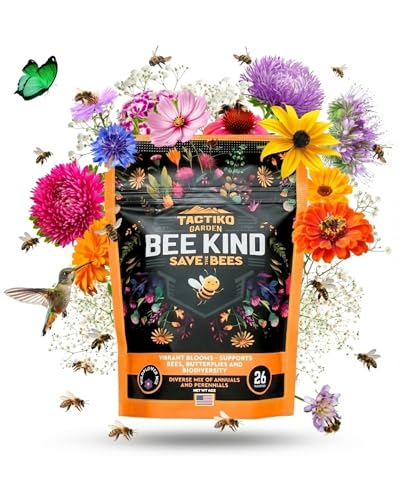
Tactiko’s 26-variety seed mix combines annuals and perennials with a focus on attracting bees, butterflies, and hummingbirds. The package contains 120,000+ seeds in a 4-ounce bag, designed to cover large areas up to 600 square feet. The blend is tailored for backyard meadows, garden borders, and larger landscape projects, providing quick first-year color along with enduring blooms in subsequent years. The seeds are USA-grown, supporting domestic agriculture and pollinator health.
Key considerations: Prepare a weed-free plot; sow evenly and press lightly into the soil; provide regular moisture until germination; consider ongoing maintenance to prevent weed overgrowth. This option is well-suited for those seeking a large-scale, long-term pollinator habitat with a robust seed count and diverse flower shapes.
Buying Guide: Key Purchase Considerations And Comparisons
What to look for when choosing wildflower mixes for bees:
- Pollinator focus: Look for blends specifically marketed to attract bees and other pollinators, with a mix of nectar-rich annuals and perennials.
- Seed origin and quality: Open-pollinated or non-GMO seeds tend to offer consistent germination and stable genetics that support long-term habitat value.
- Bloom longevity and diversity: A combination of fast-blooming annuals and long-lived perennials provides season-long color and ongoing nectar sources.
- Site compatibility: Consider sun exposure, soil type, and climate. Some blends perform better in full sun and well-drained soil, while others tolerate partial shade.
- Packaging and density: Bulk sizes are ideal for larger plots; smaller packets suit container gardens or small beds. Higher seed counts typically translate to denser, quicker ground cover.
- Environmental impact: Favor blends that avoid invasive species and support native pollinators; some brands also contribute to conservation efforts.
- Maintenance needs: Some mixes establish quickly but require ongoing removal of weeds; others may require less intervention but longer lead times for germination.
- Germination expectations: Fresh, high-germination-seed blends tend to perform better in the first growing season; store seeds properly to maintain viability.
Perspective considerations for gardeners:
- Small-space gardeners may prefer blends with strong perennial components to reduce reseeding demands and maintain color over time.
- Large-scale landscapes can benefit from bulk mixes that cover broad areas quickly and provide consistent nectar opportunities for pollinators.
- Container gardeners should verify seed size and growth habit to ensure plants won’t outgrow pots, and consider companion planting to maximize habitat value.