Maintaining a lush, weed-free lawn often hinges on lifting thatch and loosening compacted soil. A quality lawn mower dethatch blade can speed up the process, improve airflow, and help nutrients reach grass roots. This guide highlights five top dethatch blades that fit a range of mowers and mowing styles, with practical insights into compatibility, cutting performance, and durability. Use this selection to match your mower model and seasonal needs, whether you’re tackling light spring dethatching or heavy thatch removal in peak growing seasons.
Summary of chosen products
| Product | Brand | Compatibility | Key Benefit |
|---|---|---|---|
| Maxpower 330100 | Maxpower Store | 16 inch universal | Lightweight and versatile dethatching blade |
| Arnold 490-100-0083 | Arnold Store | 21/22 inch walk-behind (with adapters) | Wide compatibility and clean cuts |
| 490-100-0111 / 490-100-0008 | Arnold/Ryobi/Craftsman line | Up to 22 inch decks | Durable, multi-mount compatibility |
| Oregon 690-521-0 | Oregon Store | 20 inch dethatcher blade kits | Universal retrofit for many models |
| # 370-019 Power Rake | Force | Universal blade replacements | Cost-effective option |
Maxpower 330100 16-Inch Universal Power Rake/Dethatcher Blade
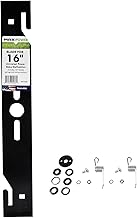
The Maxpower 330100 is a compact, 16-inch universal dethatcher blade designed for easy installation on many light- to mid-duty mowers. It measures 16 inches long with a 2-1/4 inch width and a 1-inch center hole, enabling straightforward mounting on compatible decks. The blade is intended to remove surface thatch and loosen compacted soil, helping grass blades absorb nutrients more efficiently. Its smaller form factor supports quick dethatching sessions without heavy equipment, making it a practical choice for homeowners with smaller lawns or sporadic dethatching needs.
Key considerations for this blade include compatibility with 16-inch mower decks and the availability of adapters for centers holes. While it’s suitable for light thatching tasks, users should assess their mower’s compatibility and ensure proper installation to prevent imbalance. Regularly inspect the blade for wear and replace as needed to maintain even dethatching performance. For best results, use with a mower that can operate at controlled speeds to avoid scalp or excessive thatch removal.
Arnold 490-100-0083 21-Inch/22-Inch Walk-Behind Lawn Mower Replacement Blade
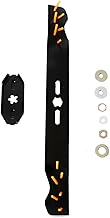
The Arnold 490-100-0083 blade offers broad compatibility with many walk-behind mowers, including brands like Troy-Bilt, Craftsman, Honda, Toro, and more. It fits 21-inch and 22-inch decks and comes with adjustable center hole patterns to accommodate 3/8, 7/16, and 5/8 inch hubs, plus a dethatching line. This design supports efficient grass cutting while improving thatch removal and moisture penetration. The blade’s sharp edges enable clean cuts, potentially shortening mowing time and reducing effort during dethatching sessions for mid- to large-sized lawns.
When selecting this blade, verify the mower deck size and the center-hole configuration on your current spindle. The kit’s included sizing options simplify mounting, though proper balancing is essential to minimize vibration. For best outcomes, pair with a mower equipped to handle light to moderate thatch loads without excessive resistance, ensuring consistent airflow and nutrient uptake in the turf.
490-100-0111 / 490-100-0008 Detatching Blade Set

This replacement blade set covers multiple listing numbers (490-100-0111, 645-80116A, 490-100-0008, 490-100-0012) and is designed to fit several Craftsman, Troy-Bilt, Bolens, Hu skee, Lawn-Boy, Murray, Poulan, Ryobi, Yard-Man, and similar walk-behind mowers up to a 22-inch deck. The blades are engineered for efficient mowing with improved weed removal capabilities, which can promote better water absorption and fertilizer uptake. Durability and stability are highlighted through the set’s continuing performance across mower models, reducing the need for frequent blade changes.
Practical considerations include confirming deck width and center-hole compatibility, as well as ensuring mounting hardware is included or available. The blades’ sharp edges are optimized for cutting performance, but operators should observe safety guidelines during installation and maintenance. For best results, use in moderate thatch conditions and maintain consistent mowing patterns to achieve an even lawn texture.
Oregon 690-521-0 Universal 20″ Dethatcher Blade

The Oregon 690-521-0 offers a universal 20-inch dethatcher blade designed to fit a broad range of mowers with side-mount or center-hole configurations. The kit typically includes the blade, fittings, washers, and push-on tines, making it a comprehensive upgrade for dethatching tasks. Its design targets moss and thatch removal, helping to promote better turf health and airflow. The universal nature makes it a flexible choice for owners of multiple mower brands, or those seeking a single replacement option for different models.
Consider whether your mower is compatible with a 20-inch deck and whether you need a full dethatcher kit (blade plus tines and fittings) or a simple blade replacement. Installation should minimize vibration and ensure a secure fit. For best outcomes, operate at appropriate speeds to maximize thatch removal without damaging the underlying turf.
# 370-019 Power Rake Detatching Blade
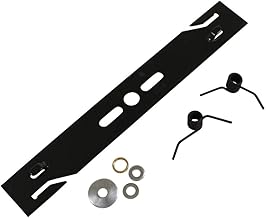
The Force “# 370-019 Power Rake Detatching Blade” is marketed as a universal blade replacement designed to fit multiple mower models. It emphasizes compatibility with a broad range of universal blade setups and offers a cost-effective option for dethatching. This blade is positioned as a practical, budget-friendly choice for homeowners who need to refresh lawn dethatching capabilities without purchasing an OEM blade specific to a single mower brand. The key advantage is broad applicability and straightforward installation, though users should confirm precise deck compatibility before purchase.
When evaluating this blade, assess your mower’s deck size and mounting pattern to ensure a secure, balanced fit. Regular inspection for dull edges and proper alignment helps prevent uneven dethatching and potential damage to grass crowns. For best results, combine dethatching with proper lawn maintenance cycles and soil feeding programs to optimize turf recovery after dethatching.
Buying Guide: Key Considerations For Dethatch Blades
Deck size and compatibility: Measure your mower deck (in inches) and confirm the center-hole pattern or mounting hardware. Some blades include multiple hole patterns to fit various hubs; others require adapters. Mismatched blades can cause imbalance and excessive vibration.
Blade type and width: Dethatching blades vary in width and edge design. Wider blades provide faster coverage for larger lawns, while narrower blades offer better precision for small or irregular-shaped areas. Check that the blade’s geometry aligns with your dethatching goals and mower capabilities.
Durability and material: Look for blades made from high-strength steel or alloy materials with anti-corrosion coatings. Durability matters for repeated dethatching sessions, especially when tackling thick thatch or compacted soil. Quality blades maintain sharpness longer and reduce the need for frequent replacements.
Performance and turf health: Effective dethatching depends on proper blade sharpness and a mower’s capability to maintain consistent speed. Dethatching should remove surface thatch without scalping or injuring the crowns. If your lawn shows signs of stress, reduce dethatching intensity or split into multiple passes over several days.
Installation and safety: Follow manufacturer instructions for mounting and balancing the blade. Disconnect the mower battery or spark plug before maintenance. After installation, test the mower at a slow speed to verify stability and balance before returning to full operation.
Cost vs. value: While OEM blades can be more expensive, universal or aftermarket blades offer cost-effective options. Compare warranty terms, compatibility, and replacement intervals to determine true value for your lawn care routine.
Maintenance frequency: Dethatching frequency depends on lawn conditions, grass type, and seasonal growth. In spring or early summer, dethatching is often followed by overseeding, aeration, and fertilization to promote quick recovery and a healthier turf.
Multiple perspectives: For small lawns, a lighter 16-inch dethatcher blade can deliver adequate results with minimal disruption. For larger or denser lawns, a 20–22 inch blade with robust center-hole compatibility may reduce mowing time and improve airflow through the turf canopy. Gardeners with a mix of mower brands benefit from universal blades or kits that cover several models in one purchase, simplifying maintenance.