Sticky traps provide a chemical-free approach to protect houseplants, gardens, and patios from fungus gnats, whiteflies, and other tiny flyers. This article highlights five highly relevant sticky trap products designed for indoor and outdoor plant care. Each option uses bright yellow bait and strong adhesive to capture pests, while remaining safe for people, pets, and edible plants. Use these traps to monitor infestations and reduce pest populations with minimal maintenance.
| Product | Brand | Type | Key Benefit |
|---|---|---|---|
| Mosqueda Yellow Sticky Traps | Mosqueda | Yellow Sticky Traps (36 Pack) | Odorless, safe, easy to insert |
| 58 Pack Flying Insect Traps | Cleanuper | Dual-Sided Sticky Traps (58 Pcs) | Double-sided capture, easy setup |
| SH5026 Houseplant Sticky Stakes | Safer | In-Soil Sticky Stakes (16 Traps) | Magnet-like targeting of pests |
| KIKALIFE Fruit Fly Trap & Fungus Gnat Traps | Kikalife | Yellow Traps (40 Pack) | Non-toxic, odorless, versatile use |
| MAXGUARD Yellow Stake Traps | Maxguard | Yellow Stake Traps (30 Pack) | Thick dual-sided glue, garden-friendly |
Mosqueda Yellow Sticky Traps for Pests
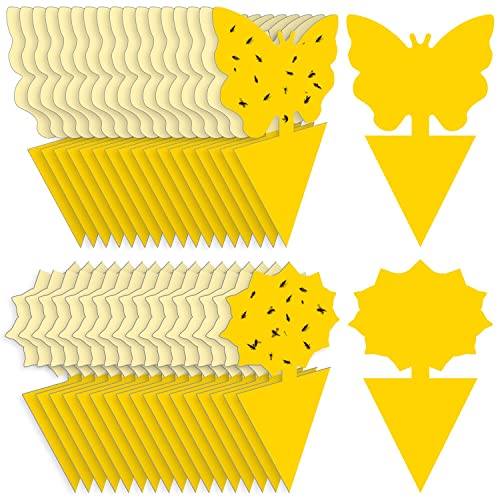
The Mosqueda traps use bright yellow color to attract flying pests and a high-quality glue to prevent escapes. They are designed for both indoor and outdoor use, making them suitable for potted houseplants, patios, and kitchens. The traps are odorless and non-toxic, posing no risk to people or pets when used as directed. Easy to apply, they can be inserted into soil or placed near plant pots with minimal handling.
58 Pack Flying Insect Traps for Plants

These traps are double-sided and designed to catch gnats, whiteflies, flies, and other small flying insects. They use top-grade glue that delivers a high capture rate while being safe and odorless. Their dual-sided design optimizes reach from multiple angles, and they can be inserted into soil or hung with the included wire for flexible placement around pots, gardens, and kitchen herb setups.
Safer Brand Houseplant Sticky Stakes

Safer’s Sticky Stakes attract and trap common houseplant pests, including aphids, whiteflies, fruit flies, and fungus gnats. They work without chemical insecticides, helping reduce infestations while protecting plant health and aesthetics. Ideal for homes with frequent pest issues, these stakes provide a magnet-like effect, drawing insects away from foliage and trapping them effectively.
KIKALIFE Fruit Fly Trap & Fungus Gnat Traps
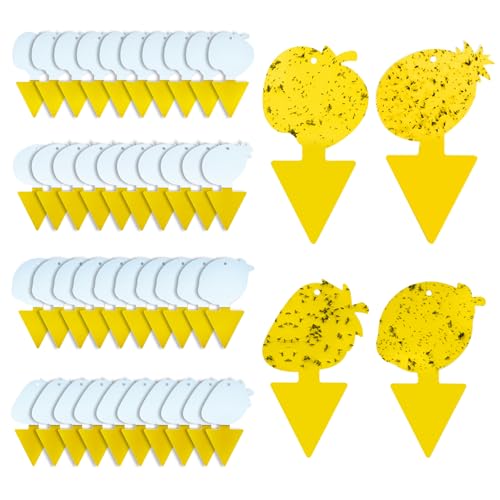
KIKALIFE’s traps are designed for both indoor and outdoor use, offering a potent mix of bright yellow bait and extra-sticky glue to capture fruit flies, gnats, whiteflies, and similar pests. The traps are non-toxic and odorless, safe around pets and children, and easy to place in soil or hang with the included wire. They’re suitable for pots, gardens, greenhouses, and more.
MAXGUARD Yellow Stake Traps

MAXGUARD Yellow Stake Traps offer a natural pest control option using industrial-grade adhesive on garden-themed stakes. They are designed for easy insertion into potted plants or hanging on trees, with a dual-sided glue system for enhanced capture. These traps are non-toxic and suitable for organic gardening and general houseplant care without resorting to chemical sprays.
Buying Guide: Key Purchase Considerations
- Target pests: Identify the common pests in your space (fungus gnats, fruit flies, whiteflies) and choose traps designed to attract and capture those species.
- Placement: Consider whether traps will be placed in soil, attached to stems, or hung from branches. Dual-sided or string-hang options increase coverage.
- Safety: Review whether the product is non-toxic and odorless, especially for homes with kids, pets, or edible plants.
- Longevity: Look for UV resistance and long-lasting adhesives. Some traps stay effective for weeks, reducing replacement frequency.
- Ease of use: Prioritize simple setup—peeling protective covers, inserting into soil, or using included wires or ties.
- Environmental impact: Prefer toxin-free, non-spray solutions if you follow organic gardening practices.
- Scale: For larger spaces, consider packs with higher quantities and easy-to-distribute formats to cover multiple pots and garden beds.
- Storage and reuse: Some traps are designed for single-use while others allow reuse after replacement of adhesive sheets; check product details.