The following curated selections spotlight hanging basket seed mixes that excel in containers, baskets, or borders. Each option offers a vibrant blend, easy growing guidance, and pollinator-friendly blossoms—ideal for American gardens seeking continuous color from spring through late summer. The list emphasizes open-pollinated, non-GMO seeds with clear germination instructions for success indoors and outdoors.
Summary of chosen products
| Product | Brand | Seed Type | Key Benefit |
|---|---|---|---|
| 5000+ Petunia Seeds — Mixed Rainbow | Lucky Stars | Open-pollinated Petunia | Vibrant rainbow blooms; great for pollinators |
| Seed Needs Cascade Lobelia Seeds | Seed Needs Store | Lobelia pendula | Trailing color for baskets and edges |
| Nasturtium Dwarf Tall Trailing Mix | HOME GROWN Store | Nasturtium tropaeolum | Edible blooms; fast growth, vigorous vines |
| 5500+ Petunia Seeds — Mixed Rainbow | Open-pollinated Petunia | Long-lasting color with bee-friendly blooms | |
| KVITER 2,000 Mix Dwarf Petunia Seeds | KVITER Store | Petunia nana compacta | Compact, tidy plants for small pots and containers |
5000+ Petunia Seeds — Rainbow Mix

This dwarf petunia blend delivers waves of red, pink, violet, yellow, orange, white, and lavender throughout the gardening season. The compact plants form a spreading carpet, ideal for hanging baskets, containers, and borders. The mix is described as open-pollinated and non-GMO, making it suitable for pollinator gardens that attract bees, butterflies, and hummingbirds. Germination guidance recommends indoor sowing 8–10 weeks before the last frost with light exposure; transplant after frost or direct sow once danger has passed. Gardeners with limited space can achieve dramatic color impact with these prolific, long-blooming plants.
Growing tips emphasize light-dependent germination, consistent moisture, and full sun to partial shade. While the seeds are forgiving for beginners, consistent watering and good drainage will maximize flowering potential. This variety performs well in hanging baskets, window boxes, and mixed borders, providing a reliable color display with minimal maintenance.
Seed Needs Cascade Lobelia Seeds

The Cascade Mix Lobelia seeds offer a vibrant palette including reds, blues, whites, and purples. Lobelia is renowned for its trailing habit, extending about 6–8 inches, which makes it a standout choice for cascading over basket edges or the sides of containers. They thrive in full sun to partial shade and require well-drained soil with regular moisture. For best results, sow indoors 8–10 weeks before the last frost to ensure a timely bloom. The mix is typically open-pollinated, providing a steady stream of colors throughout the season to complement other mixed plantings in hanging baskets.
As a trailing annual, lobelia complements bold petunias by filling gaps and creating a flowing silhouette. Proper spacing androutine deadheading will help extend flowering, while consistent watering prevents leaf scorch in hot climates. Gardeners should note that lobelia can be sensitive to drought, so mulch or consistent irrigation is beneficial in hotter regions.
Nasturtium Dwarf Tall Trailing Mix

HOME GROWN Nasturtium seeds present a tall trailing mix featuring 250+ premium heirloom seeds. Nasturtiums are known for their edible blooms and peppery flavor, adding culinary interest to gardens as well as decorative value. The variety includes single, double, and ruffled blooms in a spectrum of saturated tones. The seeds are non-GMO and open-pollinated, aligning with many pollinator-friendly garden goals. Germination is generally quick with warm soil, and the trailing habit makes them an excellent choice for hanging baskets, vertical containers, or trellised beds.
The kit emphasizes fast germination and vigorous growth, delivering a dramatic display with little maintenance. Planting guidance suggests sowing indoors to boost early bloom or direct sowing after the danger of frost for outdoor success. For best results in containers, ensure the soil drains well and place in a sunny or lightly shaded location. Nasturtiums also attract beneficial insects, helping to create a balanced container garden ecosystem.
Petunia Mix — Rainbow Edition (5500+ Seeds)

This extensive rainbow petunia mix mirrors the first option but packs even more seeds for extended color throughout the season. The description highlights open-pollinated, non-GMO varieties with the same daisylike trumpet-shaped blooms perched on bright green, spreading plants. The growing instructions are consistent: start indoors 8–10 weeks before the last frost with light exposure, then transplant outdoors after frost. It’s a strong choice for those who want a high-density display in hanging baskets, window boxes, or garden borders, attracting pollinators while delivering continuous color.
Gardeners can expect robust flower production, especially when provided with ample sunlight and regular watering. The large seed quantity can support multiple containers or a single, lush planter that becomes a focal point in outdoor spaces. As with other petunias, deadheading can extend blooming, while periodic feeding helps maintain vigor during peak heat.
KVITER 2,000 Mix Dwarf Petunia Seeds
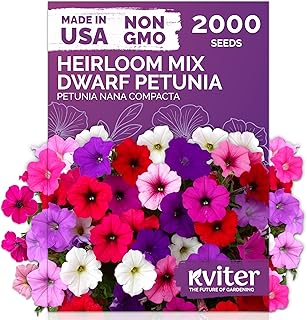
The KVITER 2,000 Mix offers a compact petunia selection designed for containers, window boxes, and small beds. The dwarf nana compacta type produces 10-inch-tall, 12-inch-spaced mounds ideal for neatly organized displays in hanging baskets and small pots. The color range includes red, pink, purple, and white, providing instant color without crowding. Seeds are described as organic and non-GMO, with quick germination typically within 7–14 days at warm temperatures. Gardeners will appreciate the ease of growth and the tidy habit, which helps maintain a neat, uniform look in containers.
Best results come with surface sowing and light soil coverage, ensuring moisture remains steady without waterlogging. The compact growth habit makes them well-suited for mixed container plantings alongside trailing lobelia or cascading nasturtium varieties for a dramatic, multi-layered effect. Regular feeding and deadheading will keep the color consistent through the growing season, while ensuring adequate sunlight helps maximize bloom quality and plant health.
Buying Guide
Key considerations for choosing hanging basket seed mixes
- Growing environment: Assess sun exposure, container size, and climate. Petunias and nasturtiums prefer full sun, while lobelia can tolerate partial shade.
- Bloom period and color range: Choose mixes that provide continuous color and a cohesive palette for your container design.
- Growth habit: Combine trailing, cascading, and compact varieties to create dimension and fullness in hanging baskets.
- Seed type and genetics: Open-pollinated and non-GMO seeds support biodiversity and reliable germination; verify seed counts for planning.
- Care needs: Check germination instructions, watering frequency, and whether seeds require light exposure for germination.
- Pollinator appeal: If attracting bees, butterflies, and hummingbirds is a goal, select nectar-rich varieties with extended bloom times.
- Maintenance level: Some mixes demand more deadheading or regular feeding; balance your time with plant selection.
Comparative notes
- Petunia-focused mixes provide broad color and long-lasting blooms but may require more frequent watering in hot climates.
- Lobelia adds vertical and trailing color, excellent for basket edges and layered arrangements, with sturdy growth in sunny to partially shaded spots.
- Nasturtium mixes combine beauty with edible flowers and vigorous trailing growth, adding culinary value to container gardens.
- Compact petunia varieties are ideal for small pots and window boxes, delivering tidy, dense color without overgrowing the space.
Consider combining two or more of the suggested mixes to achieve a dynamic, multi-layered hanging basket that stays colorful across seasons. Always verify compatibility with your local last frost dates and ensure proper drainage in containers to maximize germination and bloom performance.