Explore prime selections of narrow leaf blue-eyed grass that thrive in American gardens. This guide highlights hard-working blue-eyed grass varieties, their growing needs, and practical planting tips. Each featured plant comes with essential traits to help you choose the right fit for borders, rock gardens, or pathways.
Summary of Selected Products
| Product | Brand | Type | Key Benefit |
|---|---|---|---|
| Lucerne (Blue-Eyed Grass) Perennial | Perennial Farm Marketplace | Perennial | Eye-catching blue flowers; 8” height; ideal for edging |
| 150 Stout Blue-Eyed Grass Native Wildflower Seeds | Everwilde Farms | Seed Packet | Gold Vault packaging; extended storage |
| 200 Western Blue-Eyed Grass Native Wildflower Seeds | Everwilde Farms | Seed Packet | Gold Vault packaging; extended storage |
| Grass 1 Gal. Big Blue Liriope | Grass 1 Gal. Big Blue Liriope | Live Plant | Year-round foliage; versatile for shade |
Lucerne Blue-Eyed Grass Perennial

Perennial Farm Marketplace presents Sisyrinchium a. ‘Lucerne’, a native blue-eyed grass cultivar known for compact iris-like foliage and star-shaped blue flowers with a gold center. It blooms from May through July and reaches about 8 inches tall, making it an attractive border or rock garden accent. Plant in full sun to part shade, with well-drained soil. This cultivar is hardy in USDA zones 5–8, and it adapts well to edging along paths or low-traffic garden beds. Space about 12 inches apart for best coverage and airflow.
150 Stout Blue-Eyed Grass Native Wildflower Seeds

Everwilde Farms offers a seed packet featuring native blue-eyed grass with the Gold Vault packaging designed for extended storage and protection. The packet emphasizes seed quality with current lab test data displayed on the label. The resealable bag helps keep seeds fresh between planting seasons, supporting successful germination when started in prepared soil in sun or light shade. This option is ideal for gardeners expanding native wildflower corridors or rock-garden plantings that require low-maintenance sowing.
200 Western Blue-Eyed Grass Native Wildflower Seeds
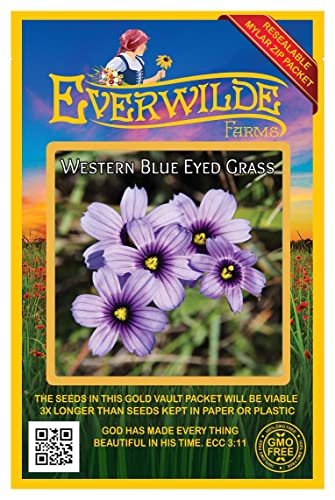
Another Everwildе Farms offering, this seed packet focuses on Western blue-eyed grass and includes the Gold Vault packaging for longer storage. The seed lot carries current lab test data on the packet and includes a resealable, reusable zipper bag for convenient storage of seed excess. Suitable for meadow-style plantings, wildflower blends, or borders where compact, low-growing accent plants are desired. Germination depends on soil temperature and moisture management.
Grass 1 Gal. Big Blue Liriope

Big Blue Liriope provides evergreen, grass-like foliage with purple to violet blooms that appear from summer into fall. While typically grown for foliage texture and ground cover, its robust, year-round presence complements narrow leaf blue-eyed grass by filling gaps in shade to part-sun areas. The mature plant grows around 18 inches wide and tall, making it suitable for edging, mass planting, or background contrast in mixed borders.
Buying Guide
Key considerations when choosing narrow leaf blue-eyed grass varieties:
- Light and soil: Most blue-eyed grasses prefer full sun to light shade with well-drained soil. Some varieties tolerate partial shade, but flowering and growth are usually optimal in sun.
- Size and growth habit: Plant height often ranges from 6 to 12 inches for blue-eyed grasses. Group them in clusters or line them along borders to create a crisp, iris-like edging effect.
- Hardiness and climate: Check USDA zone compatibility. Many blue-eyed grasses are hardy in zones 5–8, but local microclimates can influence performance.
- Water and drainage: Ensure soil drainage is good to prevent rhizome rot. Mulch lightly to retain moisture without smothering the roots.
- Propagation: Perennial varieties can be grown from division or transplants; seeds can establish new colonies for wildflower or meadow-inspired schemes.
- Seed packaging and storage: Gold Vault packaging from some seed brands offers longer storage life, which can be advantageous for gardeners who purchase in advance.
- Design context: Combine narrow blue-eyed grasses with edging plants, rock garden companions, or native wildflowers to emphasize color and texture contrast.
Overall, when selecting plants for narrow leaf blue-eyed grass, prioritize flowering impact, foliage texture, and site conditions. For ornamental use, pair compact perennial types with evergreen grasses to maintain year-round structure. Seed packets are a practical option for expanding native wildflower areas, while live plants deliver immediate greenery and seasonal blooms. Consider both aesthetics and maintenance needs to achieve the desired garden effect.