Roses reward gardeners with lush blooms when given steady nutrition. Slow release fertilizers provide consistent feeding over weeks or months, reducing the need for frequent applications while helping roses grow stronger roots and vibrant flowers. The following selections come from trusted brands and are widely compatible with different rose varieties. Each product below is formulated to deliver nutrients gradually, supporting steady growth and disease resilience.
Overview of selected products:
| Product | Brand | Type |
|---|---|---|
| Scotts Rose & Bloom Continuous Release Plant Food, 3 lb | Scotts | Granular; 2 months feeding |
| Schultz Spf48410 Rose & Flower Slow-Release Plant Food, 15-5-15, 3.5 Lbs | Schultz | Granular; slow-release |
| Espoma Organic Rose-Tone 4-3-2 | Espoma | Organic; monthly feeding |
| Great Big Roses – Soil and Rose Fertilizer Booster | Great Big Plants | Concentrate; soil booster |
| BioAdvanced All-In-One Rose and Flower Care Fertilizer | BioAdvanced | Granules; fertilizer plus pest and disease control |
Scotts Rose & Bloom Continuous Release Plant Food

Scotts Rose & Bloom is a granular, continuous release formula designed to feed roses, annuals, and perennials. The product emphasizes steady feeding, helping to promote beautiful blooms while reducing the need for frequent applications. It is advertised to feed for up to two months, delivering consistent nutrients that support robust flower production and healthy foliage. The formulation is suitable for use around the drip line of roses and other flowering plants, aligning with common rose care practices.
What to know about this option: The two-month feeding window provides predictable nutrition through peak growing seasons. The granules are easy to apply and can be part of a regular feeding routine for rose beds. Potential limitations include limited organic content and the need to reapply as soon as the two-month window passes or if rainfall mitigates the release rate. This option suits gardeners seeking a straightforward, widely available synthetic fertilizer with timed release.
Schultz Rose & Flower Slow-Release Plant Food
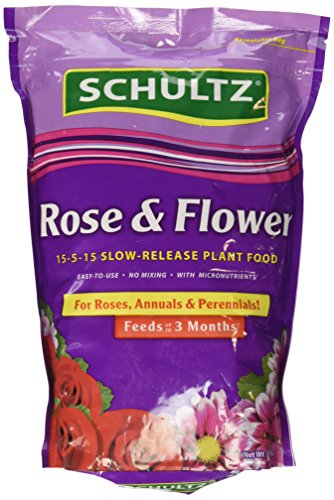
Schultz Spf48410 Rose & Flower Slow-Release Plant Food features a 15-5-15 analysis, designed to feed roses and flowering plants over a slow-release period. The 3.5-pound size makes it a practical option for mid-sized rose beds or several cycles of feeding throughout the season. The higher phosphorus and potassium content supports root development and bloom production, while the slow-release mechanism reduces the risk of fertilizer burn and soil imbalance when applied at the drip line as directed.
Key considerations: The balanced N-P-K ratio is favorable for flowering plants, especially roses that require steady energy for bloom cycles. Among potential drawbacks, reviewers sometimes note variability in actual release duration depending on moisture and soil conditions. This product is suitable for gardeners who prefer a reliable, non-organic blend with a clear feeding schedule.
Espoma Organic Rose-Tone 4-3-2
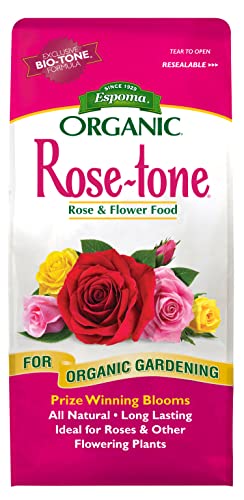
Espoma Rose-Tone is an organic fertilizer formulated specifically for roses and other flowering plants. The 4-3-2 blend includes 5% calcium and is designed for monthly use throughout the growing season. The package indicates that Rose-Tone is ready to use, with no mixing required, and recommends applying around the drip line followed by thorough watering. This option emphasizes natural ingredients and environmental safety, appealing to gardeners seeking organic feeding solutions.
Important points: Rose-Tone is marketed as kid- and wildlife-friendly and aims to improve soil health with natural inputs. While it provides consistent monthly nutrition, organic products may release nutrients more slowly than synthetic blends, potentially requiring longer lead times for visible bloom responses. It is a solid choice for gardeners prioritizing organic soil health and long-term plant vitality.
Great Big Roses Soil And Rose Fertilizer Booster

This product acts as a soil conditioner and rose fertilizer booster, designed to enhance soil structure and nutrient availability at the root zone. It emphasizes a compost-extract-based formula that improves fertilizer uptake by providing bioavailable humic acids and trace minerals, along with seaweed-derived nutrients. The booster aims to convert more rose fertilizer into plant-usable forms, supporting vigorous growth and strong flowering. It is particularly appealing for gardeners who want to maximize the effectiveness of existing fertilizers through soil conditioning.
Considerations: The booster’s strength lies in soil health benefits and enhanced nutrient uptake. It may be used in conjunction with other granular fertilizers to boost overall performance. Since it is a concentrate, adherence to label directions is essential to avoid over-application. This option suits those who value soil biology as a cornerstone of rose health and bloom potential.
BioAdvanced All-In-One Rose & Flower Care Fertilizer

BioAdvanced All-In-One Rose & Flower Care Fertilizer combines fertilizer with pest and disease protection. The product is presented as a comprehensive option for roses and other flowering plants, promoting robust root systems and vibrant blooms while defending against common pests such as adelgids, aphids, and whiteflies, and addressing diseases like Black Spot and Powdery Mildew. This integrated approach can simplify garden maintenance by delivering nutrition and protection in a single application, which may appeal to gardeners seeking convenience and broad-spectrum plant care in one product.
Practical considerations: The all-in-one design is convenient for those who want fewer products to manage. However, the combination of nutrients and pest/disease control means that timing and rotation of preventive measures remain important to avoid resistance or environmental impacts. Users should follow label guidance for application rates and intervals to optimize results and minimize potential phytotoxicity.
Buying Guide: Key Purchase Considerations
- Nutrition profile: Look for nitrogen-rich blends that support leaf growth and balanced phosphorus and potassium for root health and blossom production. Roses often benefit from slightly higher phosphorus for blooms and steady potassium for overall vigor.
- Release mechanism: Compare granular slow-release options, organic blends, and concentrated boosters. Synthetic formulas tend to release more quickly and predictably, while organic options support long-term soil health and microbial life.
- Application frequency: If you prefer fewer applications, choose products with longer release periods (two months or more) or concentrated boosters you mix with soil. Monthly options suit regions with distinct growing seasons.
- Soil health and safety: Organic or organically blended options improve soil structure and biodiversity. Synthetic fertilizers can provide rapid results but require careful application to avoid soil salt buildup.
- Ease of use: Ready-to-use mixtures and ready-to-use organic blends minimize preparation time. Consider whether the product requires watering after application to activate release.
- Coverage and size: Match product size to your rose bed area. Larger bags are more economical for extensive beds, while smaller packs suit containers or patch plantings.
- Plant protection integration: If pests and diseases are a concern, consider all-in-one products designed to provide fertilizer plus protection, while keeping in mind potential trade-offs with target-specific pest control.
- Certifications and ingredients: Organic labels (e.g., 4-3-2 Organic) indicate more natural inputs. Look for certifications or ingredient lists if you have environmental or allergy considerations.
In choosing the right slow release fertilizer for roses, assess your garden’s soil condition, climate, and rose varieties. A combination of soil health boosters with steady nutrient supply can yield the most consistent bloom cycles, strong canes, and vibrant foliage across the growing season. Always follow label directions for application timing and amounts to protect plant health and environmental safety.