Whether you’re establishing a new food plot or enhancing an existing one, selecting the right seed mixes and equipment can maximize deer nutrition and habitat. This guide covers top seed products designed for spring and fall planting, plus practical considerations for sowing, growth, and maintenance. Each option balances protein, palatability, and habitat value to support antler development, fawning and overall health.
| Product | Brand | Key Benefit | Planting Window | Notes |
|---|---|---|---|---|
| Conceal Deer Food Plot Seed | Whitetail Institute | Tall, thick cover from top to bottom | Spring | Potentially grows up to 8 ft tall |
| Imperial Clover Deer Seed | Whitetail Institute | ANTLER-BUILDING protein and forage quality | Spring or Fall | Cold, heat, and drought tolerant |
| Imperial Clover (4-Pound) | Whitetail Institute | Antler-building protein; hardy perennial forage | Spring and Fall | Half-acre coverage |
| PowerPlant Deer Seed | Whitetail Institute | High protein tonnage for late spring/summer | Spring/Summer | Vining soybeans and peas core |
| 5 Card Draw Seed | Evolved Harvest | All-season high-protein forage | Season-flexible | Includes oats, wheat, clover, chicory |
The selections emphasize protein-rich forage, habitat value, and resilience across varying climates. Consider plot size, soil type, access for maintenance, and preferred deer activity when comparing these options. Below are detailed profiles for five strong choices, followed by a practical buying guide to help you choose appropriate seeds and related equipment.
Whitetail Institute Conceal Deer Food Plot Seed

Conceal is designed to rapidly establish tall, thick cover in targeted areas of a plot. Its multi-height components promote a dense canopy from top to bottom, helping to create bedding screens and protective boundaries for deer and other wildlife. This mix is intended for spring planting and can reach substantial height, contributing to both concealment and forage value. Consider its growth potential in relation to mowing or selective thinning to maintain accessibility for feeding and security.
Whitetail Institute Imperial Clover Deer Seed

Imperial Clover combines clover’s high-protein profile with broad adaptability, delivering antler-building nutrition and robust forage across seasons. The seed is designed to tolerate a range of temperatures and soil conditions, supporting both spring and fall planting windows. It pairs well with other mixes to extend grazing periods and provide continuous cover. Its cold tolerance helps maintain forage later into fall and early winter in many regions.
Domain Outdoor Dirty Bird Food Plot Seed Mix

Domain Outdoor’s mix is tailored to attract multiple species, including doves, pheasants, turkeys, and deer, while providing habitat and food value. Packaged in a convenient quarter-acre-friendly format, it emphasizes variety and habitat structure. This can be attractive for mixed-use plots where you want a broad appeal for wildlife, plus a manageable seed bag size for small to medium plots. It’s a practical option when you want a diverse seed bed with diverse food sources.
Whitetail Institute PowerPlant Deer Seed

PowerPlant targets spring and summer grazing with a high-protein composition designed for intense antler growth, fawning, and lactation periods. Its core is a mix that emphasizes vigor and tonnage, with vining soybeans and peas that can outperform some conventional annuals under heavy grazing. This option is suitable for plots expecting sustained grazing pressure in late spring through summer, offering a robust protein foundation during critical deer nutrition windows.
Evolved Harvest 5 Card Draw Seed
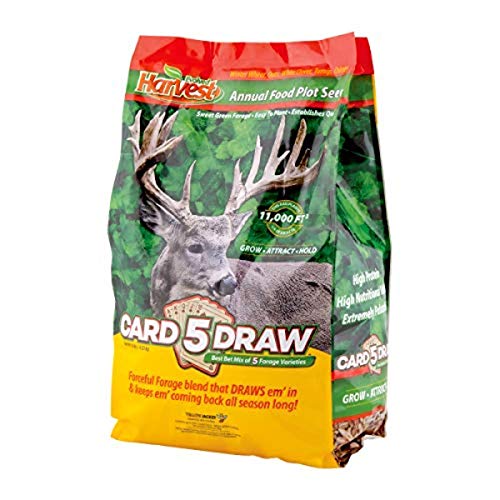
5 Card Draw blends oats, wheat, perennial white clover, chicory, and turnip varieties to deliver all-season high-protein forage. This mix is adaptable to a variety of soil conditions and planting times, making it a versatile option for regions with distinct seasonal shifts. Deer typically respond to the sweet taste and mineral-rich profile, while clover adds long-term forage with soil improvement benefits. It’s well suited for plots where you want a steady, multiseason food source with broad appeal for deer activity throughout the year.
Buying Guide: Key Purchase Considerations And Comparisons
Choosing the right seed mix requires balancing nutrition, habitat value, climate, and management goals. Here are essential factors to consider, along with quick comparisons for typical American deer plots:
- Protein and energy content: For late spring and summer, prioritize high-protein options like PowerPlant and Imperial Clover blends. For year-round forage, mixes with clover and chicory offer sustained nutrition.
- Grazing tolerance and habitat structure: If you need dense cover for bedding, Conceal’s multi-height components can create thick screens. For broader habitat value, diverse mixes like 5 Card Draw provide varied forage.
- Climate and soil adaptability: Choose seeds with proven cold tolerance and drought resilience if your area experiences temperature swings. Imperial Clover and other clovers generally perform well across climates.
- Planting window and maintenance: Spring-planted mixes often establish quickly, while fall-planted or dual-season mixes extend available forage. Consider your access for annual mowing, thinning, or re-seeding.
- Plot size and scalability: Larger plots may benefit from high-tonnage options like PowerPlant, while smaller plots can leverage compact bags like 2–4 lb Imperial Clover or the Domain mix for quick setup.
- Soil preparation: Some mixes tolerate minimal prep, while others perform best with a prepared seedbed. Assess your equipment and soil test results to optimize soil-to-seed contact.
- Maintenance plan: Establish a rotation schedule to prevent overgrazing in any one area. Some products support repeated planting in the same plot with limited disruption.
In practice, many hunters and land managers blend multiple products to cover various needs: a tall-cover seed for concealment, a high-protein forage mix for nutrition, and a mixed habitat blend for seasonal diversity. Always follow planting instructions on the product label and align seed choices with local wildlife management goals and land use regulations.