The right landscape fabric is a core component of an effective French drain system. It helps prevent soil and sediment from clogging the drainage channel while allowing water to pass through efficiently. When choosing, look for high permeability, strong tensile strength, and durability to withstand heavy loads and long-term exposure. Below, you’ll find five top-rated landscape fabrics suited for French drains, erosion control, and related drainage projects. A concise product summary table follows, helping you compare key specs at a glance.
| Product | Brand | Roll Size | Weight | Key Benefit |
|---|---|---|---|---|
| PioneerWorks Geotextile Landscape | PioneerWorks | 4 ft x 50 ft | 6 oz | Heavy-duty construction for high-load drainage and erosion control |
| Driveway Fabric 6×300 ft | DWALE | 6 ft x 300 ft | 3.5 oz | Commercial-grade, large area coverage for roads and drains |
| VEVOR Geotextile Landscape | VEVOR | 4 ft x 100 ft | 8 oz | High-strength, excellent permeability for drainage and filtration |
| Non Woven Fabric for Landscape Projects | VOLVEX | 4 oz; 3×50 ft | 4 oz | Strong filtration with high permeability for French drains |
| Sandbaggy Non Woven Geotextile | Sandbaggy | 3 ft x 100 ft | 4 oz | American-made with high tensile strength for tough drainage tasks |
Choosing the right fabric hinges on matching the fabric’s properties to your project’s demands. For French drains, you want a fabric that (1) allows rapid water flow, (2) resists tearing under foot and tool traffic, (3) resists clogging by soil particles, and (4) tolerates extended exposure to moisture. The products below have been selected for their balance of permeability, strength, and durability, making them suitable for residential and light commercial drainage work.
PioneerWorks Geotextile Landscape Fabric — 4×50 ft

Overview: This PioneerWorks geotextile is built for heavy-duty drainage and erosion control, featuring a high-density, non-woven polypropylene composition. Its 6 oz designation indicates a robust fabric capable of withstanding substantial loads while maintaining permeability. The product is marketed for use under concrete or pavement, which highlights its strength and durability in high-traffic environments.
What it does well: The fabric is designed for drainage, separation, and filtration in demanding projects. It stands out for erosion control and load-bearing applications, such as driveways and retaining walls. It helps prevent sediment from entering the drain while allowing water to pass through efficiently.
Key features: 8 oz density variant, enhanced tensile strength around 350N, and 440N load capacity in some configurations. It emphasizes soil-friendly permeability, ensuring water movement without creating weed barriers. It’s positioned as a construction-grade solution rather than a standard weed barrier, which is important for French drains and heavy-duty underlayment.
Applications: Ideal for French drains, driveway stabilization, erosion control, and underlayment for heavy pathways. The fabric is versatile for use behind retaining walls and along riprap channels, where robust filtration and drainage separation are required.
Driveway Fabric 6×300 ft — Commercial Weed Barrier
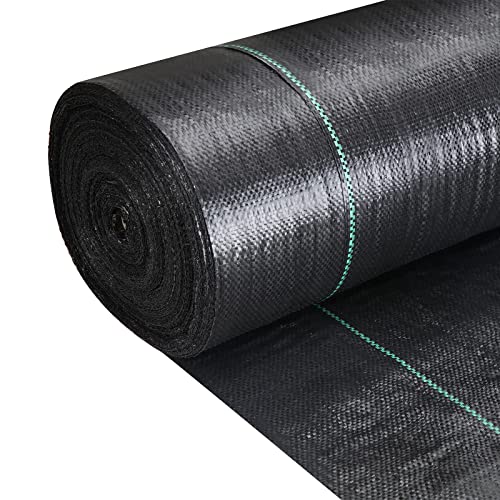
Overview: This product from DWALE is a large-scale driveway fabric designed for commercial use. It comes in a 6 ft by 300 ft sheet and features a 3.5 oz weight, striking a balance between stretch resistance and permeability. The packaging indicates fold packing to fit narrower widths, with clear guidance to open and spread to full width.
What it does well: The fabric provides a substantial surface area for large drainage projects, including French drains in expansive landscapes and road projects. It is designed to resist tearing under heavy installation and ongoing use, making it suitable for long-term drainage under pavements or heavy gravel layers.
Key features: Commercial-grade, heavy-duty geotextile with high durability. While it is not weed-specific, its structure supports drainage, filtration, and separation in big-scale drainage applications. It is particularly advantageous when you need to cover large widths with fewer seams.
VEVOR Geotextile Landscape — 4×100 ft, 8 oz

Overview: VEVOR offers a robust 8 oz non-woven geotextile fabric, engineered for heavy-duty drainage and erosion control. The product emphasizes high tensile strength (350N) and a strong load capacity (440N), aiming to deliver reliable performance in French drain projects and heavy ground cover tasks.
What it does well: Excellent permeability and soil-friendly design ensure water and air can move through while preventing soil particles from clogging drainage channels. This makes it a robust option for long-term drainage systems and filter layers in complex landscapes.
Key features: Non-woven PP fabric, erosion resistance, damp resistance, and tear resistance. The product promotes easy installation and precise cutting for custom fits, with a focus on consistent performance across varied project sizes.
VOLVEX Non Woven Fabric — 4 oz (3×50)

Overview: VOLVEX’s 4 oz nonwoven geotextile fabric focuses on drainage enhancement and filtration for landscape applications. It is designed to filter soil particles while enabling water and nutrient movement to the soil beneath, supporting healthy garden and drainage outcomes.
What it does well: High permeability and filtration properties help prevent sediment from entering the French drain, reducing clog risk. It supports drainage behind walls or in underlayment layers, contributing to stable soils and long-term system reliability.
Key features: High water permeability, strong filtration for drainage channels, and weed suppression with permeability. It’s suitable for multiple landscape installations, including retaining walls and underlayment layers for new construction projects.
Sandbaggy Non Woven Geotextile — 3 ft x 100 ft

Overview: Sandbaggy’s 4 oz nonwoven geotextile fabric is manufactured in the USA and marketed as industrial-grade. The 3 ft by 100 ft roll is designed for extensive drainage layouts, including French drains and road stabilization projects, with a focus on tensile strength and UV protection.
What it does well: This fabric emphasizes toughness and reliability—ideal for demanding drainage tasks where long-term performance is essential. The 100 lb tensile strength specification indicates strong resistance to tearing and stretching under stress.
Key features: Made in the USA, DOT-approved in some contexts, UV-protected to resist sun exposure, and built for extended service life in tough environments. It offers versatile use for bed drainage, landscape projects, and road work where robust filtration and drainage are required.
Buying Guide: Key Considerations For French Drain Projects
When selecting landscape fabric for French drains, weigh the following factors to ensure effective drainage and long-term reliability.
- Permeability vs. Filtration: Higher permeability improves drainage, but you still want enough filtration to prevent soil particles from entering the drain. Look for fabrics described as non-woven and engineered for drainage with explicit filtration properties.
- Tensile Strength and Load Capacity: French drains under driveways or near heavy foot traffic require fabrics that resist tearing. Review tensile strength and load capacity ratings, especially for heavy-load installations.
- Durability And UV Resistance: Outdoor fabrics must endure sun exposure, moisture, and temperature fluctuations. UV resistance helps extend service life in open landscapes.
- Size And Coverage: Large-area rolls reduce seams, but ensure you have a manageable width and length for your site. Consider folds and packaging notes from manufacturers to avoid waste during installation.
- Intended Use: Some fabrics are marketed for heavy construction under concrete or pavement, while others are weed barriers. For French drains, prioritize heavy-duty drainage fabrics that emphasize permeability and load tolerance rather than purely weed suppression.
- Compatibility With Surrounding Materials: If the drainage layer uses gravel or stone, choose a fabric that maintains filtration while allowing consistent water flow. Check compatibility with underlayment and retaining structures if applicable.
- Installation Tips: Cut fabric to fit the trench with excess at edges to wrap around filter materials. Avoid wrinkling and ensure a smooth surface to prevent soil infiltration and clogging.
Practical Installation Tips For French Drains
To maximize performance, follow practical steps during installation. Begin with trench preparation, ensuring a consistent depth and width. Lay the fabric with the treated side facing down, allowing the edges to extend beyond the trench to wrap around the gravel layer. Place a perforated pipe on a bed of gravel, then cover with additional gravel before final soil or sod. If you are installing behind a retaining wall or along a driveway, ensure the fabric spans the entire length of the trench and is secured to prevent wind or foot disturbances from causing shifting. Regular inspection and replacement of failing sections can extend the life of the drainage system.
Comparative Perspectives
To support your decision, consider these perspectives:
: Heavier fabrics (e.g., 8 oz) offer superior durability and load tolerance, but ensure that permeability remains high enough for efficient drainage. Lighter options (4 oz to 3.5 oz) can be adequate for lighter loads and smaller projects. : For large-scale drainage in commercial or long-run residential driveways, a wide roll with high coverage reduces seam risk and can be cost-effective over time. For smaller projects, a 4×50 ft roll may be sufficient and easier to manage. : Non-woven geotextiles generally outperform woven options for drainage and filtration due to better pore structure and stability under shear stresses. : Reputable brands with clear installation guidance and readily available replacement parts or extensions help maintain long-term performance. : If the project is in an area with strict environmental regulations or requires domestic production, consider USA-made fabrics and DOT-approved products where relevant.
In summary, the best landscape fabric for a French drain balances high permeability with strong filtration and robust durability. The products listed above are notable options across different project scales, from residential driveways to large commercial drainage systems. When selecting, align the fabric’s strength with the expected load and traffic, and prioritize installation-friendly features that minimize waste and complexity.