Maintaining a lush, resilient lawn begins with choosing the right fertilizer. For established lawns, the goal is to feed existing turf, strengthen roots, and enhance color without encouraging excessive soft growth that invites disease. The following selections are widely used in American yards and cover a range of needs from deep root development to rapid greening and weed control. This guide presents five well-regarded options, outlining key features, usage notes, and suitability for different grass types and climates.
| Product | Brand | Type | Key Benefit |
|---|---|---|---|
| Scotts Turf Builder Lawn Food | Scotts | Granular Fertilizer | Feeds all grass types; strengthens roots; improves water/nutrient uptake |
| Scotts Green Max Lawn Food | Scotts | Granular; Iron-Enhanced | Deep greening in days; iron for color boost |
| Scotts Turf Builder Triple Action | Scotts | Weed Killer + Fertilizer | Kills listed weeds; prevents crabgrass; feeds lawn |
| Scotts Turf Builder SummerGuard | Scotts | Granular Fertilizer + Insect Control | Feeds while protecting against insects in heat/drought |
| PetraMax Neighbor’s Envy | PETRAMAX | Liquid Lawn Fertilizer | 7-in-1 formula; deep green color and stress resistance |
Scotts Turf Builder Lawn Food

Scotts Turf Builder Lawn Food – Fertilizer for All Grass Types
Key features: Feeds and strengthens grass to help protect against future problems, builds strong, deep roots, and improves the lawn’s ability to absorb water and nutrients. It can be applied to both wet and dry lawns, making it versatile for different weather conditions. This product is suitable for all grass types and is a staple in many established lawns for consistent growth and resilience.
Scotts Green Max Lawn Food

Scotts Green Max Lawn Food, Lawn Fertilizer Plus Iron Supplement
Key features: Dual-action fertilizer with 5% iron to promote fast, deep greening in as little as a few days. It works with any grass type in spring, summer, or fall and helps maintain a vibrant color while feeding the lawn. The iron supplement supports a rich, dark green appearance without requiring additional iron applications.
Scotts Turf Builder Triple Action

Scotts Turf Builder Triple Action: Weed Killer and Preventer Plus Lawn Fertilizer
Key features: A three-in-one formula that controls listed lawn weeds, prevents crabgrass for up to four months, and feeds the lawn to promote a thick, green appearance. Suitable for established lawns where weed pressure is a concern, particularly in transitional seasons; note that it targets certain broadleaf and grassy weeds listed on the label.
Scotts Turf Builder SummerGuard Lawn Food with Insect Control
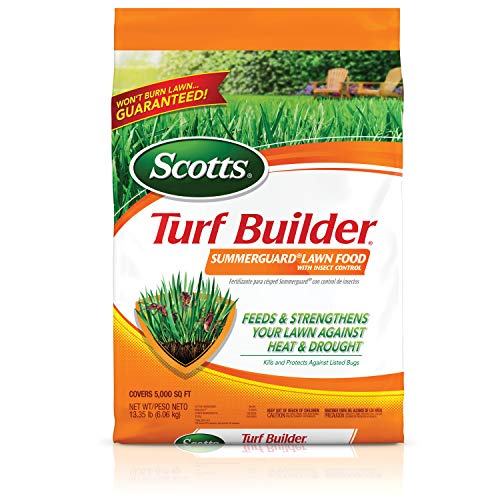
Scotts Turf Builder SummerGuard Lawn Food with Insect Control
Key features: Provides lawn nutrition while delivering insect control for listed pests, helping protect against heat and drought stress. This option is well-suited for regions with active insect populations during summer, offering a combined approach of feeding and pest protection in a single product. Apply to dry lawns for best results during peak insect activity.
PetraMax Neighbor’s Envy

PetraMax Neighbor’s Envy Grass Fertilizer for Lawn & Garden
Key features: 7-in-1 complete lawn care formula that consolidates nutrients for deep green color, root strength, stress resistance, and overall turf health. This liquid concentrate covers large areas (up to 16,000 sq ft) and includes nitrogen, iron, humic acid, sea kelp, and sulfur to bolster soil and plant vitality, making it a versatile option for established lawns seeking robust color and resilience.
Buying Guide: How to Choose The Right Fertilizer For An Established Lawn
Selecting the best fertilizer for an established lawn involves evaluating several factors that influence growth, color, and disease resistance. Below are key considerations to guide your decision:
- Application Timing: Early spring and late summer are common windows for feeding cool-season grasses; late spring through early fall suits warm-season lawns. Avoid applying during extreme heat or drought unless the product is designed for stress tolerance.
- Soil Test: Conducting a soil test helps tailor fertilization. It reveals nutrient deficiencies and pH, guiding the choice of fertilizer and any lime or acid adjustments needed for better nutrient uptake.
- Watering Practices: Proper watering after application enhances nutrient absorption. Follow label directions to prevent fertilizer burn and runoff; some products require watering after application, while others can be applied to dry turf with subsequent irrigation.
- Label and Safety: Always read the product label for coverage area, application rates, and safety precautions. Some products are labeled for specific square footage and weather conditions; ensure compatibility with your lawn size and local regulations.
In practice, many homeowners favor reputable brands that offer bundled weed-control and pest-protection options, especially in areas with notable weed pressure or insect activity. For established lawns, the priority is consistent feeding that strengthens roots and improves color, while selectively addressing weed concerns. A liquid option may be preferred when rapid greening is desired, whereas granular formulas suit broad, even coverage over large areas. Always begin with a clear plan based on lawn type, soil health, and local climate to achieve durable results over the growing season.