Choosing the right UVB and full-spectrum grow lights can optimize photosynthesis, boost vigor, and extend growing seasons for indoor plants. This guide highlights five prominent options that balance UV exposure, spectrum variety, and ease of use. Each product supports plant growth while offering features like timers, dimming, and adjustable stands. Read on to compare form factors, compatibility, and practical considerations for indoor gardening success.
| Product | Brand | Key Feature |
|---|---|---|
| LEOTER Grow Light | LEOTER | 80 LEDs, full spectrum 380-800 nm, timer, dimmable, adjustable gooseneck |
| yadoker LED Growing Light | yadoker | 72 LEDs, full spectrum 380-800 nm, height adjustable, 10-level dimming |
| AgroMax 4 Foot UV T5 | AgroMax | Pure UV spectrum in a T5HO bulb, fixture-compatible with 54W tubes |
| AC Infinity IONBEAM U4 | AC Infinity | UVB/UVA bars, 365nm and 395nm, digital dimming schedule |
| GooingTop LED Grow Light | GooingTop | 6000K white + red LEDs, 4/8/12 hour timer, gooseneck clip, USB/AC power |
LEOTER Grow Light For Indoor Plants
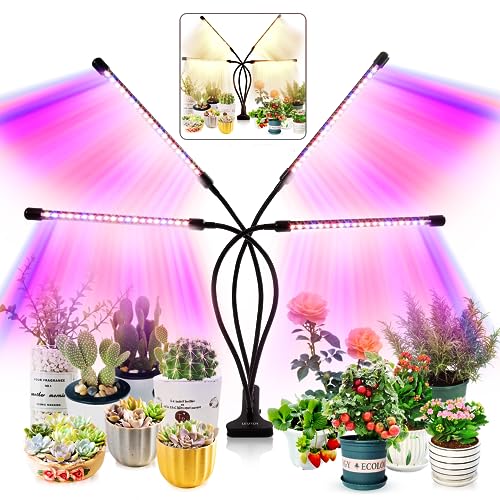
LEOTER’s LED lamp uses a mix of 80 efficient grow LEDs, including red and blue diodes plus a full-spectrum component to simulate natural sunlight. The device supports three spectral modes, consolidating red, blue, and full-spectrum outputs to target different growth stages—from seedling to flowering. A circular memory timer automates on/off cycles, with options at 3 hours, 9 hours, and 12 hours. Note that timer behavior may require a reset if the light is interrupted. Ten dim settings let growers tailor intensity to plant type and room conditions. The gooseneck design enables flexible placement, ensuring even coverage of pots or shelves. The unit can be powered via USB or standard AC power, which supports portable setups as well as fixed installations. This product is well-suited for compact indoor gardens and hobbyist setups seeking a versatile, user-friendly grow light.
yadoker Full Spectrum Growing Light

yadoker provides a 72-LED full-spectrum fixture designed to support year-round growth in indoor settings. Spanning 380 nm to 800 nm, the light covers essential wavelengths for germination, vegetative growth, and flowering. An adjustable pole system allows users to raise the light up to a substantial height, making it suitable for tall plants or dense plant clusters. Ten dimming levels let growers calibrate intensity, reducing heat output while preserving photosynthesis. The device’s height adjustability and broad spectrum help maximize photosynthetic efficiency for a range of houseplants, herbs, and small vegetables. For spaces with limited natural light, this unit offers a compact, scalable option with straightforward height guidance and brightness control.
AgroMax 4 Foot UV T5 Fluorescent Grow Light
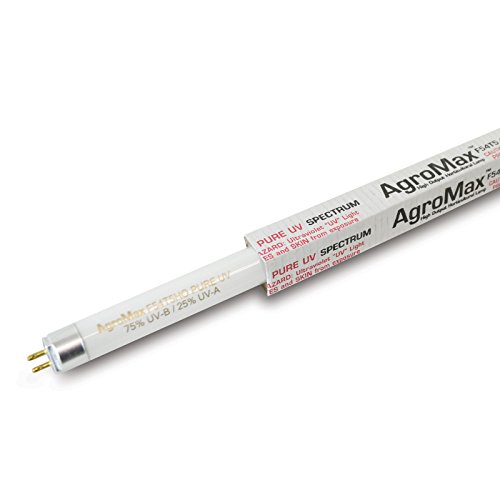
AgroMax offers a 4-foot UV-focused T5 fluorescent bulb designed for supplemental lighting in horticulture. This bulb is compatible with T5HO fixtures requiring 54-watt tubes, with a length of 45.75 inches and a mini bi-pin G5 base. It emphasizes a pure UV spectrum for enhanced plant responses such as increased cosmetic quality, vigorous flowering, and improved resin production in some crops. Given its specialized UV output, it is most suitable for systems already using primary grow lights where additional UV may stimulate targeted plant processes. Proper handling and safety considerations are advised when integrating UV-rich tubes into home grow spaces.
AC Infinity IONBEAM U4 UV LED Bars

AC Infinity’s IONBEAM U4 kit includes four 11-inch UV LED bars designed to augment primary grow lighting with targeted ultraviolet output. The configuration emphasizes 365 nm and 395 nm diodes to enhance fruiting and flowering while supporting general plant expression through simulated sun exposure. A digital dimming schedule controller enables precise timing without manual intervention, and the bars benefit from a fully sealed construction with a moisture-resistant design. This setup suits grow tents or compact greenhouses where supplemental UV is used to influence morphology, pigmentation, and reproductive development. The combination of daylight-quality output and programmable control makes it a practical option for enthusiasts seeking UV-specific modulation.
Buying Guide: Key Considerations For UVB And Full-Spectrum Grow Lights
- Light spectrum and plant stage: Plants generally benefit from a mix of blue (veg) and red (flower) wavelengths, with UV components supporting specific physiological responses. Match the spectrum to growth stage—seedling, vegetative, and flowering—and to the plant species you cultivate.
- UV safety and exposure: Prolonged UV exposure can stress or damage some plants and pose safety risks to humans. Choose fixtures with timers, dimming, and controlled ramp-up/down to minimize risk and ensure gradual adaptation for your plants.
- Intensity and coverage: Consider photosynthetic photon flux and the area covered by the lights. Larger setups may require multiple bars or higher-output panels to achieve uniform coverage without hotspots.
- Adjustability: Goosenecks, adjustable stands, and telescoping poles help place light precisely where plants need it, improving efficiency and uniformity across shelves or racks.
- Power and installation: Evaluate whether USB-powered options, AC adapters, or integrated power supplies align with your setup. Portability can be a benefit for seasonal or modular indoor gardens.
- Durability and moisture resistance: Indoor environments vary; LED bars with moisture protection and sturdy housings typically deliver longer lifespans in greenhouse or tent conditions.
- Maintenance and replacement: Consider bulb or LED life, replacement cycles, and ease of sourcing compatible parts, especially for specialized UV tubes like T5 UV bulbs.
When selecting a UV-related grow light, align the device with your plant types, space constraints, and desired maintenance level. For hobbyists seeking a versatile setup, fixtures offering full-spectrum coverage with adjustable timers and dimming levels provide flexibility across plant species and seasons. For dedicated UV enhancement, supplemental UVB/UVA options can be combined with primary lighting to influence flowering, vitamin synthesis, and pigment development—while ensuring safe operation and proper calibration.