The right blue pond dye can transform fountain water, making it look clear and vibrant while remaining safe for fish and wildlife. This guide reviews five top blue dyes, highlighting their color depth, coverage, and safety. Each product is evaluated for ornamental ponds, fountain displays, and water features to help you choose confidently.
Summary at a glance: the table below compares five popular blue dyes by size, typical coverage, and fish safety. All listed products are designed to tint water rather than stain hard surfaces when used as directed.
| Product | Size | Approx. Coverage | Fish Safety |
|---|---|---|---|
| KoiWorx Blue Dye | 16 oz | Small to mid ponds | Safe for fish |
| Pond Champs Blue Lake Dye | 1 gallon | Up to 1 acre | Safe for fish & wildlife |
| CrystalClear PondTint Blue | 16 oz | Up to 16,000 gallons | Safe for aquatic life |
| Pond Worx Blue Lake Dye | 1 quart | Up to 1 acre | Safe for people, pets, fish |
| Crystal Blue Lake Dye | 1 gallon | Up to 1 acre | Safe for fish |
KoiWorx Blue Dye — 16oz

Brand: Koi Worx. This dye adds a natural blue tint to pond water without staining rocks, plants, birds, or pets when diluted properly. It is marketed as safe for koi and other aquatic life, making it suitable for ornamental ponds and water features with fish. The 16-ounce bottle is designed for regular maintenance and color consistency. Consider this option if you want a clean, vibrant blue without altering the pond’s natural ecosystem.
Blue Lake Dye — 1 Gallon
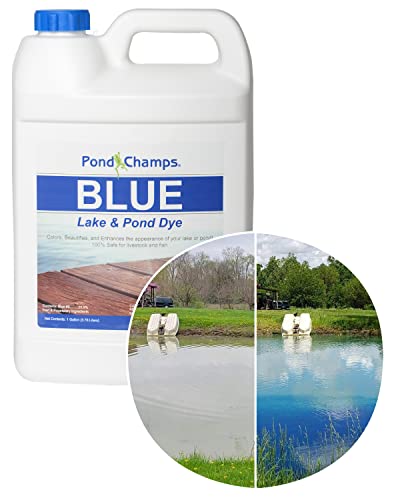
Brand: Pond Champs. This one-gallon dye is designed to enhance pond aesthetics by delivering a rich royal blue color that remains visible long after application. It’s geared toward ponds up to about an acre and emphasizes safety for fish, wildlife, pets, and children. The product highlights long-lasting color and a visually striking blue shade to complement natural surroundings.
CrystalClear PondTint Blue — 16 oz

Brand: CrystalClear. This ecofriendly dye aims to tint water blue without compromising clarity. It claims to treat up to 16,000 gallons per bottle, making it suitable for mid to large water features and koi ponds. The product emphasizes easy use, no mixing hassles, and a blue shade designed to enhance natural color while keeping water safe for aquatic life.
Pond Worx Blue Lake Dye — 1 Quart

Brand: Pond Worx. This product offers a true blue color with no added tints. It is described as suitable for ponds with varying turbidity, providing a deep blue appearance on clear water and a lighter tint when water is murky. It notes that results can vary with existing pond conditions and depth, making it a flexible option for different fountain displays and water features.
Crystal Blue Lake Dye — 1 Gallon

Brand: Crystal Blue. This one-gallon dye aims to provide a true blue hue for ponds, with guidance noting that clear water yields a deeper blue, while muddy water may show a lighter tint. It emphasizes careful observation before and after application to account for pond-specific conditions and color outcomes.
Buying Guide
When selecting a blue pond dye for fountains and ponds, consider these factors to balance aesthetics and safety:
- Color depth and shade: Look for dyes described as deep royal blue or bright blue. Some products may yield different intensities based on water clarity and existing conditions.
- Coverage and concentration: Larger ponds or fountains benefit from higher-capacity bottles (gallon or quart) and concentrated formulas. Verify how many gallons a bottle is designed to color.
- Water clarity and pond health: Clear water typically shows a deeper blue, while muddy water may appear lighter. Test a small section first to gauge perceived color.
- Safety for aquatic life: Ensure the dye specifies safety for fish, koi, and wildlife and follow dilution instructions precisely to avoid stress to aquatic organisms.
- Ease of use: Some dyes are pre-mixed or formulated for easy application with minimal stirring. Consider the maintenance routine for your fountain or pond.
- Environmental impact: Choose dyes labeled as ecofriendly or environmentally conscious, especially in habitats with wildlife, children, or pets nearby.
- Longevity vs. maintenance: Some products promise longer-lasting color, reducing the need for frequent reapplication, while others may require more frequent dosing after heavy rainfall or water changes.
- Compatibility with features: If your fountain has circulating pumps or aerators, ensure the dye will not deposit on equipment and will mix evenly in your system.
Additional considerations include regional water chemistry and the presence of plants or algae, which can influence tint perception. Always follow label directions and perform a small test application to confirm color results before treating entire water features. For best results, maintain a routine: test water clarity, observe color, and adjust dosing in small increments as needed.