Choosing the right filter is essential for maximizing drip irrigation efficiency and protecting emitters from sediment and debris. This guide reviews top-rated filters designed for 3/4″ irrigation lines, highlighting filtration mesh, flow capacity, and ease of maintenance to help American gardeners and small farmers pick a dependable option.
| Product | Brand | Mesh / Filtration | Notes |
|---|---|---|---|
| One Stop Outdoor 3/4″ Drip Filter | One Stop Outdoor | 155 Mesh | All-purpose, chemical resistant, large filtration area |
| Drip Depot Irritec 3/4″ Filter | Drip Depot | Mesh unspecified | Compact inline option for 3/4″ hose threads |
| Rain Bird PRF07530S Y Filter | Rain Bird | 20-30 PSI regulation, 200 mesh typical | Integrated pressure regulation with filtration |
| UPLYKKE Y Strainer 1-1/2″ | UPLYKKE | 88 GPM, 120 Mesh | Stacked filter design for high dirt capacity |
| DIG P09-155 Inline Filter | DIG | 155 Mesh (polyester) | All-purpose, flush cap included |
The selections below are evaluated on filtration capability, compatibility with 3/4″ lines, and maintenance ease. Each product is suitable for drip irrigation and micro sprinkler systems, helping protect emitters from sand, silt, and debris that shorten system life.
One Stop Outdoor 3/4″ Drip Filter

Product overview: One Stop Outdoor’s 3/4″ filter provides an all-purpose screen filtration solution for drip irrigation or micro sprinkler setups. The unit features a robust 155 mesh screen and a large filtration area designed to reduce cleaning frequency. Its resistance to common chemicals makes it suitable for varied irrigation waters. Hose thread connections are 3/4″ FHT to MHT, facilitating straightforward integration into existing lines. This filter is positioned to minimize friction loss while keeping debris from reaching emitters, a key factor for long-term reliability.
Drip Depot Irritec 3/4″ Filter
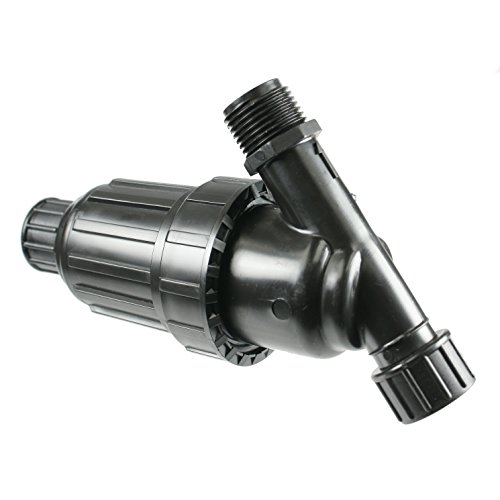
Product overview: Drip Depot Irritec offers a compact inline filter designed for 3/4″ hose thread installations. While specific mesh details aren’t listed, Drip Depot products are known for straightforward integration into drip systems. This filter aims to prevent particulates from clogging downstream components, making it a practical choice for moderate-sediment water sources and systems seeking simple maintenance.
Rain Bird PRF07530S In-Line Y Filter

Product overview: Rain Bird’s in-line Y filter combines filtration with 30 PSI pressure regulation in a single unit. The 3/4″ male pipe thread connections streamline installation, and the integrated regulator helps reduce downstream pressure variations that can stress emitters. The filter helps protect downstream components from debris, decreasing the risk of clogging and maintenance downtime in typical garden irrigation systems.
UPLYKKE Y Strainer, Disc Filter

Product overview: The UPLYKKE 88 GPM, 120 Mesh disc filter is built on a polypropylene body with a 1-1/2″ connection. Its stacked filter elements deliver high dirt-holding capacity and efficient filtration, making it suitable for higher-flow residential or small agricultural applications. The unit includes a hydraulic inspection port to monitor pressure and filter status, aiding in preventive maintenance planning.
DIG P09-155 Inline Filter
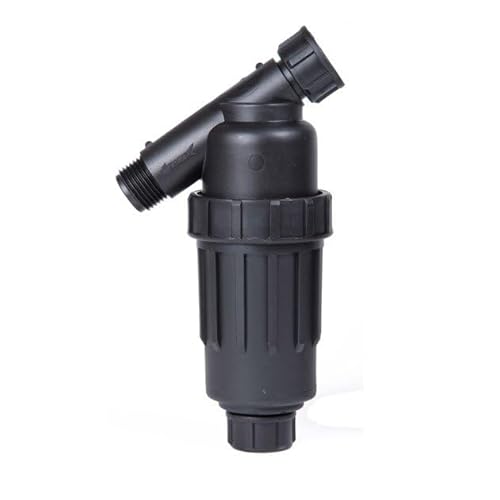
Product overview: The DIG P09-155 inline filter emphasizes ultimate filtration for irrigation systems, guarding emitters and valves from debris. It supports up to 120 PSI and a flow rate up to 13 GPM. The filter is available with 155 or 200 mesh polyester screens and features a large 14.9 square inch filtration area, designed to minimize pressure loss and reduce cleaning frequency.
Buying Guide
Key considerations when selecting a drip irrigation filter include filtration mesh, flow capacity, pressure tolerance, and ease of maintenance. Mesh size determines what particles are captured; finer meshes protect emitters but may clog faster, while coarser meshes reduce cleaning frequency but might allow more sediment through. Consider your water source: municipal supply tends to be cleaner than well or surface water, which may contain higher sediment loads.
- Filtration mesh: Common options range from 88 to 200 mesh. For finer emitters and micro-sprinklers, 155–200 mesh screens are common.
- Flow capacity: Match the filter’s flow rating to the system’s total flow. Overloading a filter can cause pressure drop and reduced performance.
- Pressure tolerance and regulation: Some filters include built-in pressure regulation, which can simplify installation and protect emitters from pressure spikes.
- Maintenance: Look for features like flush caps, removable screens, and accessible test ports. Ease of disassembly can reduce maintenance time.
- Materials and compatibility: Polypropylene bodies and polyester screens are common; verify chemical compatibility with irrigation additives or treatments.
- Installation footprint: Ensure the filter’s footprint suits your available space and that threaded connections match your existing lines (FHT vs MHT, GHT vs NH, etc.).
Performance considerations across the options include: filters with higher mesh counts provide finer filtration but can require more frequent cleaning in heavily sedimented water. Inline Y filters tend to conserve space while offering combined filtration and, in some cases, regulation. For larger systems or higher flows, disc-style or stacked-filter designs can offer greater dirt-holding capacity and longer service intervals. Always plan for periodic inspection and flushing to maintain optimal system efficiency.