Choosing the right geotextile fabric is essential for successful French drains. The ideal fabric offers strong filtration, durable separation, and reliable durability under varying soils and loads. This guide highlights five top options and explains how to match fabric strength, weight, and permeability to your drainage project. Each pick below is suitable for French drain applications, with notes on installation, longevity, and soil compatibility.
Summary of selected products:
- VEVOR Geotextile Landscape, 4ft x 100ft, 8 oz
- Fysatrix Geotextile Fabric, 6 oz, 4ft x 50 ft
- PioneerWorks Geotextile Landscape, 4ft x 50 ft, 6 oz
- VEVOR Geotextile Landscape, 15ft x 20ft, 4 oz
- PioneerWorks Geotextile Landscape, 4ft x 100 ft, 6 oz
VEVOR Geotextile Landscape 4x100ft – 8 Oz

Heavy Duty and High Strength Material: This fabric uses 8 oz non-woven polypropylene, delivering about 350N tensile strength and 440N load capacity. Its design emphasizes erosion resistance, damp-proofing, and tear resistance—benefits for heavy soil loads and extended exposure in outdoor French drains. The material is factory-engineered to maintain structure under stress, helping keep gravel in place while allowing drainage and filtration.
Ease of Installation: The roll is designed for straightforward installation—unroll, cut to size, and lay into the trench. The durable yet flexible fabric can adapt to curved trench lines or irregular yard features, minimizing waste and speeding up the project timeline.
Permeability And Soil Compatibility: This 8 oz non-woven fabric balances high filtration with good water passage. It promotes gravel filtration, water drainage, and air penetration, while protecting nutrient-rich topsoil from clogging the drain. It also functions well as a liner in some drainage setups, supporting long-term performance.
Fysatrix 6oz 4FTx50FT Geotextile Fabric
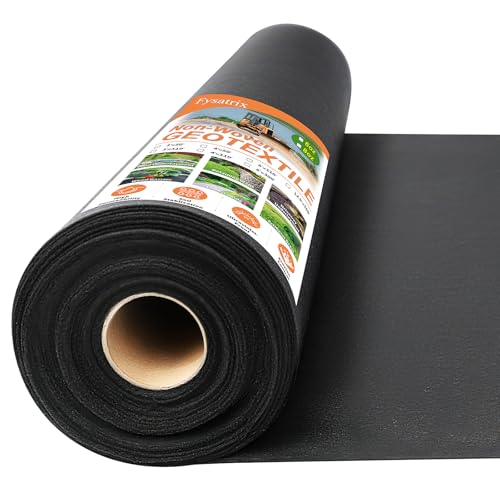
Heavy Duty Strength – 6 oz geotextile designed for demanding drainage tasks. The non-woven fabric is engineered to resist tearing and to maintain its integrity under outdoor conditions, making it suitable for long-lasting French drains and landscape stabilization projects.
Installation Versatility: The 4×50 ft size allows for precise tailoring to trench dimensions, reducing waste. Users can cut sections to fit curves or multiple drainage segments, which supports cleaner trench lines and reduced material usage.
Durability In Harsh Environments: The fabric is built to resist decay and sun exposure, sustaining performance across seasons. Its stability helps prevent clogging over time, promoting sustained drainage efficiency in varied soil types.
PioneerWorks Geotextile Landscape 4x50ft & 6oz

Heavy Duty and High Strength Material: This 6 oz non-woven geotextile offers 350N tensile strength with 440N load capacity, designed for foundational drainage and high-traffic conditions. It emphasizes erosion control and structural stability, making it suitable for driveways, retaining walls, and French drains where heavy loads are expected.
Exclusive Permeability And Soil-Friendly Design: Engineered for major drainage tasks, this fabric balances filtration with drainage. It is intended for use under concrete or pavement in some cases, with the ability to allow water movement while keeping sediments from clogging the system.
Wide Applications: Suitable for French drains, erosion control, driveways, and other heavy-traffic drainage projects. It supports filtration, separation, and drainage in a single layer, reducing the need for multiple fabrics in some builds.
VEVOR Geotextile Landscape 15x20ft – 4 Oz

Lightweight Yet Durable: This 4 oz non-woven geotextile provides reliable drainage and filtration for smaller or shallower French drains. It offers a balance of permeability and strength for garden-scale installations where a heavier fabric might be unnecessary.
Easy Handling And Installation: A 15×20 ft sheet covers substantial trench lengths with minimal seams, simplifying layout and reducing the number of pieces to join. It’s designed for straightforward deployment in typical yard drainage tasks.
Permeability And Soil Interaction: The fabric promotes gravel filtration and water movement while protecting soil nutrients. Suitable for underlayment in drainage channels where moderate loads are anticipated rather than heavy traffic.
PioneerWorks Geotextile Landscape 4x100ft – 6 Oz

Heavy Duty Performance For Large Projects: The 6 oz, 4×100 ft PioneerWorks fabric emphasizes high strength and long-term performance for large installations, including extended French drains or road/stabilization contexts. This product blends erosion control with robust filtration.
Construction-Grade Versatility: Marketed as suitable for drainage, separation, and filtration, it is positioned for more demanding projects such as retaining walls, riprap channels, and underlayment in driveways. It maintains permeability while resisting deformation under load.
Long-Term Stability: The fabric is designed to resist UV exposure and environmental wear, maintaining its form and function over years of outdoor use. It provides durable support for drainage infrastructure in challenging soils.
Buying Guide: Key Purchase Considerations for French Drain Geotextile Fabric
When selecting geotextile fabric for French drains, consider these factors to ensure effective drainage and long-term performance.
Weight and Strength: Geotextile fabrics come in weights such as 4 oz, 6 oz, and 8 oz. Heavier fabrics offer greater puncture resistance and tensile strength, which helps with underlayment in zones with heavy foot or vehicle traffic. Lighter fabrics reduce cost and may be appropriate for lighter loads or garden-scale drains.
- 8 oz fabrics are typically suited for heavy-load areas or under pavement where long-term stability is critical.
- 6 oz fabrics balance durability and flexibility for most residential French drains.
- 4 oz fabrics are adequate for light-duty landscaping drains and garden beds.
Permeability and Filtration: Filtration prevents sediment from clogging the drain, while permeability ensures adequate water flow. A fabric with good pore structure should balance catching fines without overly restricting drainage.
Soil Compatibility: In sandy soils, higher permeability helps water move quickly. In clay or silty soils, higher filtration helps prevent fines from entering the drainage gravel. Consider the soil type and expected groundwater load when choosing fabric.
Durability and Exposure: Exterior use requires UV resistance and rot resistance. Ensure the fabric maintains its structure in sun, moisture, and temperature fluctuations typical of outdoor installations.
Installation Convenience: Look for pre-cut lengths or manageable roll sizes, easy-to-cut options, and few seams. Features like roll width and length affect trench layout and labor time.
Application Scope: Some fabrics are marketed for heavy construction or erosion control, not just weed suppression. For French drains, prioritize fabrics designed for filtration, separation, and drainage with clear commentary on load tolerances.
Cost and Availability: Compare unit area cost and labor implications. While heavier fabrics may be pricier upfront, they can reduce maintenance costs by extending drain life in challenging soils.