Choosing the right filter for an irrigation system helps protect emitters, valves, and pumps from sediment, rust, and debris. This guide highlights top-performing filters available on Amazon, covering skid-free filtration, ease of maintenance, and compatibility with drip and sprinkler setups. Below is a quick overview of five well-regarded options to consider for residential and small-scale irrigation networks.
| Product | Mesh/Filtration | Best For | Key Benefit |
|---|---|---|---|
| One Stop Outdoor 3/4″ Drip Filter | 155 mesh | Drip systems and micro sprinklers | Large filtration area minimizes cleaning frequency |
| DIG P09-155 All-Purpose Filter | 155/200 mesh options | Drip lines and micro-sprayers | Versatile filtration with flush-cap feature |
| SimPure Spin Down Filter 100/1000 | 100 micron (and 500 micron options) | Whole-house pre-filter | Reusable, removes fine sediment before fixtures |
| Rusco 1-1/2″ Spin-Down Filter | Spin-down with 60 mesh | Well water and irrigation systems | Centrifugal filtration for easy debris removal |
| Rain Bird In-Line Y Filter | 3/4″ with 30 psi regulator | Drip irrigation systems | Filtration + regulator in one compact unit |
Note: The list emphasizes filters that balance filtration efficiency, ease of maintenance, and compatibility with common irrigation setups in American homes and gardens.
One Stop Outdoor Drip Filter With 155 Mesh Screen

All-purpose screen filter designed for drip irrigation and micro sprinkler systems. The 155 mesh screen offers solid filtration for typical residential irrigation debris. Its large filter area reduces friction loss and supports longer cleaning intervals, making maintenance simpler for homeowners managing yard watering networks. The unit’s chemical resistance supports a variety of common irrigation waters, helping protect downstream emitters and valves from particulate clogging.
DIG P09-155 3/4″ Drip Filter Kit
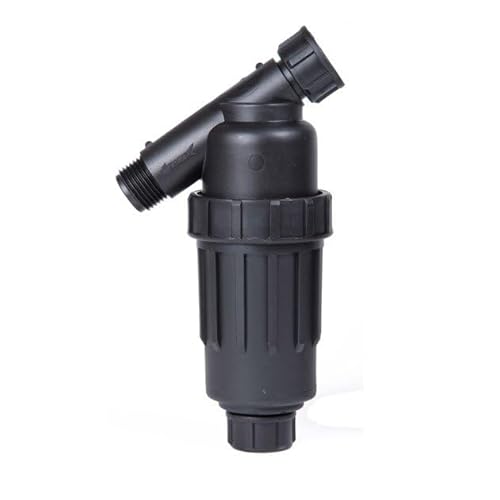
Inline Y-filter with 155 mesh polyester screen plus a flush cap provides robust filtration for drip systems and micro sprinklers. It supports operating pressures up to 120 PSI and flows up to 13 GPM, making it suitable for modest residential installations. The polyester screen options give flexibility for different debris loads, while the flush cap allows easy removal of accumulated sediment without disassembly.
SimPure Spin Down Sediment Filter

Reusable whole-house pre-filter designed to capture sand, rust, and other particulates before entering plumbing fixtures. It features a visually clear body to monitor sediment buildup and is compatible with city or well water systems. The device aims to reduce downline clogging and extend the life of irrigation pumps, tanks, and fixtures by removing larger debris early in the filtration process.
Rusco 1-1/2″ Spin-Down Filter System

Rusco’s spin-down filter employs centrifugal filtration to separate sediment from water. Its transparent, high-impact polymer housing offers visibility of debris and easy sediment removal. This makes it suitable for larger irrigation lines or well-water setups needing a simple, durable filtration stage that reduces the risk of clogging in pumps and downstream components.
Rain Bird In-Line 30 PSI Y Filter

This in-line Y filter combines filtration with a 30 psi pressure regulator, reducing downstream pressure and helping prevent emitter clogging. Its compact design simplifies installation in drip irrigation networks. The integrated regulator minimizes the number of separate components, which can streamline maintenance and ensure more consistent performance across zones.
Buying Guide: Key Purchase Considerations
Filtration needs vary by climate, water source, and irrigation design. When selecting a filter, consider filtration level, flow capacity, installation space, and maintenance needs. Spin-down and reusable filters are advantageous for well water or areas with frequent sediment. In-line Y filters with regulators can simplify setups by combining filtration and pressure control. Compatibility with existing tubing, thread sizes, and system pressures is essential for a smooth upgrade.
- Filtration rating: Higher mesh counts capture finer particles but may require more frequent cleaning. Balance your debris load with maintenance capacity.
- Flow and pressure: Ensure the filter supports your system’s GPM and PSI to prevent bottlenecks and maintain emitter performance.
- Maintenance: Spin-down and reusable filters offer easier sediment removal. Look for clear housings to monitor buildup without disassembly.
- Material compatibility: Choose filters with corrosion-resistant materials if you work with chlorinated water or fertigation solutions.
- Space and installation: Some units include regulators or flush caps, reducing the number of components to install and manage.
Across the options, users should evaluate whether a filter will be the primary line of defense before emitters, or part of a broader filtration stack including pre-filters at the main supply. For well water or systems with significant sediment, a spin-down or larger-capacity filter may pay off in longer intervals between cleanings. Drip-focused setups benefit from tighter filtration to protect emitters, while sprinkler systems may prioritize ease of maintenance and deburring capabilities.