Autoflower cannabis typically benefits from well-aerated, drain-friendly containers that prevent root circling and promote steady nutrient access. The following fabric pots are among the top options for autoflower setups, offering air pruning, strong construction, and easy handling. This guide highlights five standout choices, with a quick buying-at-a-glance table to help you compare essential details at a glance.
| Product | Size / Capacity | Fabric & Build | Why It Stands Out |
|---|---|---|---|
| AC Infinity Heavy Duty 5 Gal | 5 Gallon | 500G thick nonwoven fabric, reinforced stitching | Excellent air pruning and drainage for robust roots |
| HealSmart 2 Gal (6-Pack) | 2 Gallon | Durable breathable fabric, BPA-free | Great for small autoflower configurations and rotation |
| VIVOSUN 5-Pack 3 Gal | 3 Gallon | 300G thickened nonwoven fabric, serged handles | Strong handles and steady drainage for vigorous growth |
| Utopia Home 3 Pack 5 Gal | 5 Gallon | Polyester felt fabric, breathable and reusable | Good ventilation with durable, foldable design |
| FEED GARDEN 10 Gal 4 Pack | 10 Gallon (per bag) | Thick nonwoven fabric, reinforced double stitching | Superior aeration for larger autoflower setups |
Note: The following sections detail five selected fabric pots best aligned with autoflower growing needs, focusing on air pruning, drainage, durability, and ease of use. Each product is described with its key features and practical considerations for autoflower growers in American setups.
AC Infinity Heavy Duty 5 Gallon Grow Bags

AC Infinity’s 5-gallon fabric pots are designed to optimize autoflower rooting by using thick nonwoven fabric for air pruning and drainage. The 500G density aims to maintain structural integrity while allowing roots to breathe, reducing the risk of waterlogged soil. Nylon handles and reinforced stitching improve durability during transplanting or movement. The true-to-size capacity provides ample space for roots to descend without overloading the container, helping plants reach steady vegetative development and steady flowering. These bags are suitable for low-stress training approaches and can be used across multiple growing seasons with proper care.
HealSmart 2 Gallon Grow Bags (6-Pack)

HealSmart’s 2-gallon bags offer a compact option for smaller autoflower strains or for early-stage cloning-to-vegetative transitions. The breathable, BPA-free fabric supports air pruning, promoting healthier root systems and preventing waterlogging. The included handles add portability, making it easy to move pots to chase light or cooler microclimates. These bags are designed for reuse and sustainability, aligning with gardeners seeking long-term value and reduced waste. They are well-suited for multi-cycle growing or for experimenting with successive autoflower varieties in limited spaces.
VIVOSUN 5-Pack 3 Gallon Grow Bags

VIVOSUN’s 3-gallon fabric pots are built from 300G thickened nonwoven fabric to balance permeability with durability. The design emphasizes strong, serged handles to support heavier soil loads, reducing the chance of tearing during routine use or transplanting. Their breathable fabric supports air pruning and proper drainage, helping autoflower roots to spread and avoid circling. This size is versatile for small-to-medium autoflower setups or as a transition option between vegetative and flowering stages, especially when space is at a premium.
Utopia Home 3 Pack 5 Gallon Grow Bags

Utopia Home’s 5-gallon grow bags come in a 3-pack, crafted from premium polyester felt fabric that is breathable and reusable. The design emphasizes ventilation and drainage to promote healthy root development, with two sturdy side handles for easy relocation. The bags are designed to withstand outdoor weather and repeated growing cycles, making them a practical option for autoflower growers who rotate strains or set up seasonal grow tents. The light, collapsible nature of these bags also aids storage between grows.
FEED GARDEN 10 Gallon Grow Bags (4 Pack)
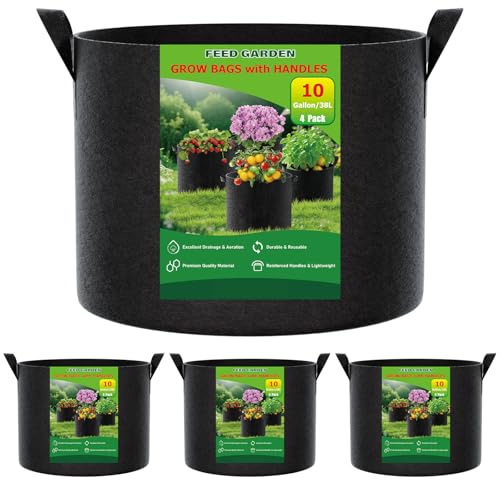
FEED GARDEN offers a 4-pack of 10-gallon grow bags with thick nonwoven fabric designed for robust aeration and drainage. The double-stitched reinforced handles provide dependable lifting for full bags of soil, which is helpful during transplanting or re-potting cycles in autoflower setups. The greater capacity suits larger autoflower strains or longer vegetative phases, accommodating more substantial root development and nutrient uptake. These bags are built for repeat use and prolonged growing seasons, aligning with garden and indoor tent configurations.
Buying Guide: Key Purchase Considerations for Autoflower Grow Bags
- Size and space: Autoflowers vary in mature height and root mass. Choose bag sizes that match your tent or grow cabinet dimensions and expected plant size. Smaller containers can favor compact sessions, while larger bags support more robust root systems for bigger yields.
- Fabric density and breathability: Higher fabric weight typically offers better durability but may reduce airflow slightly. Look for 300–500G nonwoven materials with proven air pruning properties to prevent root circling and overwatering.
- Drainage and water management: Fabric pots promote drainage; consider models with reinforced seams and strong handles for moving heavy bags. Self-watering or moisture-monitoring options can help manage water frequency in autoflowers.
- Durability and reuse: Reusable bags save money over multiple grows. Check stitching quality, handle strength, and material washability to ensure repeated cycles without failure.
- Portability and setup: Lightweight, foldable designs ease relocation for light exposure optimization and temperature control. Velcro or fold-flat storage is a bonus for small spaces.
- Environmental considerations: Fabric pots are often BPA-free and made of recyclable materials. Choose options that align with sustainable gardening practices and long-term use.
- Compatibility with training methods: For autoflowers employing low-stress training (LST) or other training techniques, choose bags with sufficient surface area and sturdy handles to support growth decisions without tearing the bag.
- Pricing and cycles: Compare cost per grow cycle rather than sticker price alone. Durable bags may have a higher upfront cost but reduce replacements over multiple autoflower cycles.