Choosing the right 10-gallon container can influence root health, drainage, and overall plant vigor. This guide highlights five practical options, spanning fabric grow bags and hard plastic pots, each with strong design features for durable, long-term use. Whether you’re growing tomatoes, shrubs, or large ornamentals, these containers balance aeration, water management, and portability to support robust plant development.
Summary of Selected Products
| Product | Brand | Type | Key Benefit |
|---|---|---|---|
| VIVOSUN 5-Pack 10 Gallon Grow Bags | VIVOSUN | Fabric Grow Bags | Heavy-duty nonwoven fabric with reinforced handles |
| Gardzen 20-Pack 10 Gallon Grow Bags | Gardzen | Fabric Grow Bags | Excellent aeration and root health with long lifespan |
| iPower 5-Pack 10 Gallon Grow Bags | iPower | Fabric Grow Bags | Thickened nonwoven material, reusable, breathable |
| JERIA 12-Pack 10 Gallon Grow Bags | JERIA | Fabric Grow Bags | Aeration fabric with built-in handles and labels |
| RooTrimmer 10 Gallon Plastic Nursery Pots | RooTrimmer | Plastic Pots | Thickened plastic, durable, side drainage holes |
VIVOSUN 10 Gallon Grow Bags

VIVOSUN’s 10-gallon grow bags use a sturdy 300g nonwoven fabric designed for moderate permeability. The material supports drainage without drying out soil too quickly, helping roots breathe and preventing waterlogged conditions. These bags feature reinforced handles sewn with serger stitches, improving load-bearing capacity when transporting soil-filled bags. The combination of breathable fabric and durable construction makes them well-suited for outdoor containers or greenhouse setups. Ideal for producing a well-aerated root zone, these bags are a practical option for seasonal crops and long-term plant projects.
Key considerations include how the fabric handles repeated watering cycles and the ease of storage when not in use. VIVOSUN’s design aims to minimize root circling by promoting air pruning, which can contribute to a healthier root ball. Farmers and home gardeners alike often appreciate the repeat-use potential of fabric bags, though they may require more frequent watering in hot climates. Overall, these grow bags balance durability with flexible sizing for diverse plant types.
Gardzen 10 Gallon Grow Bags

Gardzen’s 20-pack provides substantial capacity and expansive aeration through a non-woven fabric design. The bags are washable and reusable, with a three-year warranty that underscores their durability. Their breathable material supports robust root development by preventing root circling and encouraging a healthy root ball thanks to effective air pruning. The woven fabric aids drainage and air exchange, which can accelerate growth rates for many vegetables and berries. While the bags perform well under heat, they demand regular irrigation during peak sun to maintain consistent moisture levels.
When selecting fabric bags, consider whether you prefer more bags at a lower per-unit cost or fewer bags with larger individual footprints. Gardzen emphasizes longevity and reusability, making them a strong option for gardeners who plant across multiple seasons. They also support a lightweight, flexible approach to container gardening, which is advantageous for balconies or small yards.
Fsehyue 10 Gallon Backup: Plastic Pots

Fsehyue offers sturdy plastic pots with injection-molded construction designed to resist cracking and breakage. This 10-gallon model provides reliable durability for heavy transplanting and long-term use. The pots include multiple drainage holes to prevent waterlogged roots, while promoting soil aeration and root health. The smooth surface makes cleaning straightforward and allows for reuse across seasons, reducing waste. While plastic pots tend to be heavier than fabric bags, they offer superior stability in outdoor environments and are advantageous for heavier soil mixes or taller plants needing more anchored support.
For gardeners who value a fixed shape and quick setup, these pots deliver a predictable footprint. They are particularly suitable for tomatoes, shrubs, and larger ornamentals when durability and stability are priorities. Regular maintenance such as replacing soil between seasons will help maintain drainage effectiveness and plant vigor.
iPower 10 Gallon Grow Bags
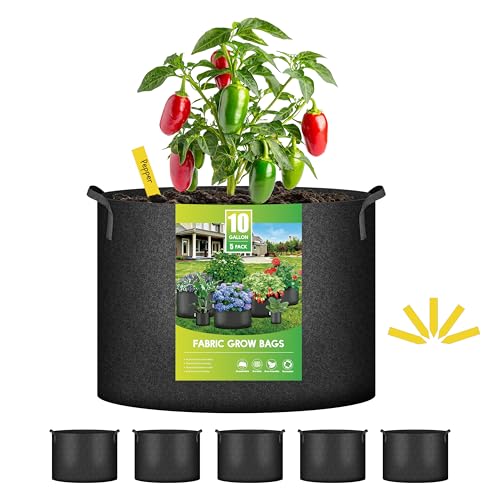
iPower’s 10-gallon grow bags emphasize thickened nonwoven fabric, similar to other fabric options, but highlight a characteristic: reuse over multiple seasons with proper care. The fabric is designed to be breathable and BPA-free, promoting healthier root formation through air pruning. The built-in strap handles add to portability, enabling easy relocation of containers as weather or light conditions shift. Gardeners often rely on these bags for crops that require significant root expansion, such as peppers, cucumbers, and larger herbs. Cleaning and drying after use help extend the life of the bags, ensuring continued performance in subsequent seasons.
From a maintenance perspective, fabric bags demand attentive watering schedules in dry, hot climates to prevent soil from drying too quickly. They also allow for flexible arrangement in small spaces, including patios or urban gardens. The trade-off for portability and aeration is sometimes mid-season irrigation management, but the overall root health benefits can be substantial.
10 Gallon Nursery Pots (Plastic, 5-Pack)

This 5-pack of injection-molded plastic pots emphasizes commercial-grade durability with thick walls designed to resist cracking and UV damage. The 10-gallon capacity supports a wide range of larger plants, from fruit trees to robust shrubs. The five bottom drainage holes enhance drainage and reduce the risk of waterlogging, while an elevated bottom profile promotes airflow and root pruning. As a non-breathable option, these pots require a well-devised watering schedule to avoid soil saturation, yet their rigid construction provides stable environments for heavy soils and big-root crops. They’re particularly useful in professional or semi-permanent setups where containers stay in place for extended periods.
When evaluating plastic pots, consider weight, portability, and the need for grid-based arrangement in a greenhouse or outdoor space. They pair well with standard potting mixes and can be a reliable choice for gardeners prioritizing durability and low maintenance over breathability.
Buying Guide: Key Purchase Considerations
- Container type: Fabric grow bags promote air pruning and root health through breathability, while plastic pots offer durability and a fixed footprint. Your climate and plant type often dictate the best choice.
- Drainage: Effective drainage prevents root rot. Look for bottom or side drainage holes and consider whether the container’s design supports evaporation and air flow for the plant’s species.
- Durability and reuse: Fabric bags typically last multiple seasons with proper care. Plastic pots can be longer-lived but are heavier and less forgiving to root pruning needs.
- Portability: If you need to move containers with soil, fabric bags and pots with sturdy handles provide easier relocation, especially for rooftop or balcony setups.
- Maintenance: Fabric bags require more frequent watering in hot weather, but are easier to store when not in use. Plastic pots are easier to clean and store but require careful soil management to avoid compaction.
- Root health: Air pruning and aeration promote healthier root systems in fabric options. For larger plants, ensure the container size aligns with expected root growth.
- Reuse and environment: Reusable options reduce waste. Choose products with clear guidance on cleaning and storage to maximize lifespan.
In practice, a mixed approach can work well: use fabric grow bags for annual crops and colorful perennials, while reserving rigid plastic pots for trees, shrubs, or plants needing stable depth. Consider the space you have, your watering routine, and your willingness to move containers as you select your 10-gallon options.