Choosing the right fertilizer spreader for a riding mower can dramatically improve lawn health with even application and reduced waste. This guide reviews five top options from trusted brands, focusing on capacity, spread width, and ease of use from the seat of a riding mower. Each product below is selected for compatibility with riding mowers and for delivering consistent results across medium to large lawns.
Summary of chosen products:
- Agri-Fab 45-0463: 130 lb tow-behind broadcast spreader, 10-12 ft spread
- Agri-Fab 45-0527: 110 lb tow broadcast spreader, rustproof hopper
- Scotts Turf Builder EdgeGuard DLX: holds up to 15,000 sq.ft, EdgeGuard tech
- Agri-Fab 45-0288: 175 lb tow-behind drop spreader, large coverage
- Buyers Products ATV Broadcast Spreader: 100 lb capacity, rain cover included
Agri-Fab 45-0463 Tow-Behind Spreader

Agri-Fab’s 45-0463 model is designed for riding lawn mowers, featuring a 130-pound hopper and a 10-12 foot spread width. Built in the USA, it emphasizes durability with a straightforward control system mounted from the tractor seat. The larger hopper helps reduce refill interruptions on bigger lawns, and the flow control is accessible without leaving the mower seat. This model balances capacity with maneuverability, making it suitable for mid-size yards that require frequent, even applications.
Agri-Fab 45-0527 Tow-Behind Broadcast Spreader

This model offers a 110-pound capacity with a rustproof poly hopper and spreader plate, enhancing longevity in varied weather. Designed to be towed behind a riding mower, it provides a reliable spread pattern for seed, fertilizer, salt, or ice melt. The rust-resistant construction helps preserve performance across seasons, and the lightweight design reduces strain on mower hydraulics while covering substantial lawn areas in fewer passes.
Scotts Turf Builder EdgeGuard DLX Broadcast Spreader

The Scotts DLX spreader is pre-calibrated for easy setup and delivery. Its EdgeGuard technology helps keep lawn products off driveways, sidewalks, and landscaping, which is particularly helpful for riders performing routine fertilization on manicured lawns. With a spread capacity designed for roughly 15,000 sq.ft., this unit is well-suited to mid-sized yards where precision and convenience are prioritized.
Scotts Turf Builder EdgeGuard Mini Broadcast Spreader

Although smaller, the EdgeGuard Mini is a versatile option for riding mower owners with compact yards or those who want a handheld option for targeted applications. It features EdgeGuard technology to prevent product overspray and is pre-calibrated for straightforward use. Its 5,000 sq.ft. capacity makes it ideal for patches, patchy lawns, or smaller landscapes where precision is critical.
Agri-Fab 45-0288 Drop Spreader
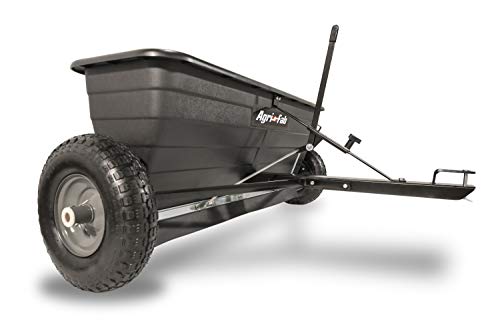
This drop spreader model carries 175 pounds of material with a 40,000-square-foot reach, roughly equating to about an acre. It’s designed to pull behind lawn tractors and can efficiently deposit material in rows, which can be advantageous for consistent turf coverage in larger lawns. The substantial hopper size minimizes refills for big residential plots while offering dependable spreading control.
Buyers Products ATV Broadcast Spreader

The Buyers Products ATV spreader is built for rugged, year-round performance with a 100-pound capacity and a 12V motor. It includes a rain cover to protect materials from moisture, making it a versatile choice when working with riding mowers in varying weather. This model provides a robust option for those who require dependable operation in tough outdoor conditions while maintaining consistent distribution.
Buying Guide: Key Considerations For Selecting A Spreader For A Riding Mower
- Capacity versus fuel and refill intervals: Larger lawns benefit from higher hopper capacities (e.g., 110–175 pounds), reducing downtime during application windows.
- Spread width and pattern consistency: Wider spread widths save time but may require careful calibration to avoid overspray on sidewalks or landscaping.
- Mounting and compatibility: Tow-behind and pull-behind designs should align with your mower’s hitch type and ballast capacity to prevent impact on steering and traction.
- Material compatibility: Look for rustproof or polymer hoppers for longevity in varied weather; consider corrosion resistance if using salt or ice melt.
- Calibration and ease of use: Pre-calibrated units save setup time; models with inline flow control from the seat reduce downtime and improve convenience.
- Durability and weather protection: Units with protective covers or rugged motors (such as a 12V motor) perform better in outdoor conditions over multiple seasons.
- Maintenance and parts availability: Brands with readily available replacement parts help minimize long-term maintenance costs.
- Price-to-performance balance: Compare hopper capacity, spread width, and built-in protection features to determine overall value for your lawn size and mowing schedule.
Additional Notes on Use And Performance
For best results, measure your lawn’s square footage and track application rates recommended by product manufacturers. When using on riding mowers, ensure the spreader’s hitch adds minimal drag and that the unit’s weight is well balanced. Regularly inspect the spread plate and hopper for wear, and clean after use to prevent clogs. When applying near plant beds, edges, or driveways, opt for spreader models with EdgeGuard or similar containment features to minimize product loss and maximize lawn health.