Raised beds require soil that drains well, retains moisture, and nourishes plants evenly. The following selections are among the best garden soils and soil mixes designed for raised bed gardens, vegetables, herbs, and ornamental plantings. Each option emphasizes organic ingredients, improved texture, and beneficial microbial activity to support robust root systems. Use this guide to compare for your climate, bed size, and plant goals.
| Product | Key Benefit | Ideal For |
|---|---|---|
| Espoma Organic Raised Bed Mix | Organic ingredients with mycorrhizae | Vegetables, herbs, and organic gardens |
| FoxFarm Raised Bed Planting Mix | Moisture retention with earthworm castings | Raised beds and containers |
| Miracle-Gro Organic Raised Bed & Garden Soil | Quick-release nourishment, peat-free | Vegetables, herbs, flowers |
| Wakefield Biochar Blend with CarbonBoost | Enhanced water retention and soil health | Raised beds and garden beds |
| True Organic Raised Bed Food | Organic fertilizer tailored for raised beds | Herbs, vegetables, and fruits |
Espoma Organic Raised Bed Mix

Espoma Organic Raised Bed Mix is designed specifically for raised garden beds and outdoor containers. This rich blend includes earthworm castings, alfalfa meal, kelp meal, and feather meal to supply nutrients gradually. The MYCO-TONE component (mycorrhizae) helps establish beneficial fungal relationships that improve nutrient uptake and root development. The product is ideal for organic gardening and supports healthy, vigorous growth in vegetables, herbs, and ornamentals.
FoxFarm Raised Bed Planting Mix

FoxFarm Raised Bed Planting Mix arrives as a ready-to-use formula for quick setup in raised beds and containers. The mix includes earthworm castings and oyster shell and is designed for vegetables, flowers, fruits, and herbs. It emphasizes moisture retention while maintaining drainage to prevent overwatering. This blend is particularly suitable for gardeners seeking a hassle-free option that supports consistent yields in raised bed environments.
Miracle-Gro Organic Raised Bed & Garden Soil
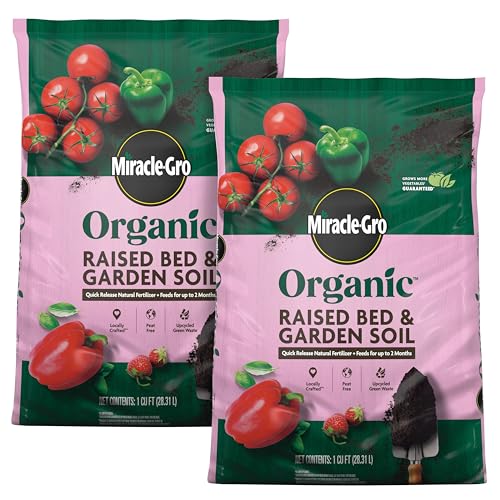
Miracle-Gro Organic Raised Bed & Garden Soil combines organic ingredients with quick-release natural fertilizer to feed plants for up to two months. The peat-free formulation upcycles green waste, aligning with more sustainable gardening practices. This product is suitable for gardeners who want a ready-to-use mix that supports robust growth in raised beds without the need for additional amendments in the short term.
Wakefield Biochar Blend with CarbonBoost

Wakefield Biochar Blend combines CarbonBoost technology with premium biochar to improve aeration and microbial activity in raised bed soils. The blend is designed to enhance water and nutrient retention, reducing irrigation needs. It also includes a probiotic and mycorrhizae mix to promote a thriving root environment, making it a strong choice for gardeners focused on long-term soil health and plant vigor.
Soil Seed & Water Dan’s Gold Organic Dairy Compost

Dan’s Gold Organic Dairy Compost is an aged compost product that enriches soil health and improves water retention. It’s OMRI-listed for organic use, making it suitable for raised beds where organic certification is important. This compost helps raise soil organic matter and supports beneficial soil organisms over time.
True Organic Raised Bed Food

True Organic Raised Bed Food is an organic fertilizer tailored for raised beds. It features a blend designed to support abundant growth of herbs, vegetables, and fruits. The formula uses seabird guano, shrimp and crab shell meal, and other proven nutrients to nourish plants and enrich soil. Application is straightforward, with a recommended schedule every two months to sustain plant health throughout the growing season.
Buying Guide: Key Purchase Considerations
When selecting soil for raised beds, consider texture, nutrient content, and long-term soil health. The following factors help compare options:
- Organic vs. synthetic nutrients: Organic blends deliver slower, steady nutrition and support microbial life; synthetic blends may provide quick nutrient availability but can reduce soil biology over time.
- Texture and drainage: A well-balanced mix should hold moisture without becoming waterlogged. Look for blends that include compost, coco coir, or perlite to aid drainage.
- Soil biology: Mycorrhizae and beneficial microbes improve nutrient uptake and root growth. Some products explicitly advertise these ingredients (e.g., MYCO-TONE or probiotic blends).
- Raised-bed compatibility: Choose products designed for raised beds or containers to ensure appropriate particle size and moisture behavior.
- Certification and sustainability: Peat-free or upcycled components appeal to eco-conscious gardeners and may align with local regulations.
- Feeding schedule: Some blends include slow-release or quick-release fertilizers. Plan your feeding routine according to plant needs and bed design.
- Climate and crop type: For vegetables, prioritize nutrient-rich organic mixes; for ornamentals, blends focusing on moisture retention and soil structure may perform better in hot, dry climates.
Comparative Considerations
- Ready-to-use vs. mix-your-own: Ready-to-use formulations save time but limit customization; raised bed mixes may require extra amendments in sandy or clay-heavy soils.
- Moisture management: Mixtures with biochar or perlite generally improve water retention without sacrificing drainage, which is critical in raised beds.
- Long-term soil health: Products emphasizing organic matter and microbial life tend to support healthier soil ecosystems over multiple seasons.