Choosing sinking pond foods ensures bottom-dwelling and transitioning fish get balanced nutrition, especially when surface feeding is challenging. This guide highlights reliable sinking formulas that support growth, health, and feeding ease across common pond species. The selections focus on sinking pellets designed for goldfish, koi, and other pond residents, with a mix of treat-friendly options and staple diets for year-round feeding.
| Product | Brand | Size | Key Benefit |
|---|---|---|---|
| MICROBE-LIFT Sinking Fish Food Pellets (14 oz) | MICROBE-LIFT | 14 Oz | Balanced nutrition for new fish and surface-shy or bottom-feeding fish |
| MICROBE-LIFT MLLSPLG Sinking Pellets (5.75 lb) | MICROBE-LIFT | 5.75 Lb | Primary feeding option with stress-resilience for pond fish |
| TetraPond Spring And Fall Diet (3.08 lb) | Tetra | 3.08 Lb | Seasonal nutrition for koi and goldfish in cool to warming temperatures |
| Hikari Wheat Germ (Sinking) 11 Lb | Hikari | 11 Lb | High digestibility in cooler water conditions |
| Kenzen Koi Food Primary Sinking Diet (7mm Pellet, 10 lb) | Kenzen | 10 Lb | Year-round sinking diet with solid protein and fat content |
Note: The selections emphasize sinking formats compatible with a variety of pond ecosystems, from small water gardens to larger koi ponds. Each product is designed to drop below the surface, reducing surface feeding pressure while supporting growth, health, and nutrient utilization across common pond fish.
Microbe-Lift Sinking Fish Food Pellets 14 Oz

MICROBE-LIFT Sinking Fish Food Pellets are designed for newly added pond fish and those adjusting to a new environment. The sinking format is beneficial for bottom-feeding species and stressed fish that feed below the surface. Use is described as a primary food, fed three times per week per container directions. Suitable for warmer spring and summer temperatures, these pellets aim to support balanced meals and steady growth during transitional periods.
Microbe-Lift MLLSPLG Sinking Pellets 5.75 Lb

This larger-format sinking pellet variant supports pond populations with a higher feeding demand while maintaining a baseline of balanced nutrition. The product emphasizes ease of feeding for new or stressed fish and reiterates a simple feeding routine of three times per week. Its composition is designed to promote healthy growth and reduce digestive stress in a range of pond environments.
TetraPond Spring And Fall Diet 3.08 Lb

Designed for transitional seasons, this diet supports koi and goldfish in cooler water conditions. It’s formulated with wheat germ to provide digestible protein when temperatures drop, while floating sticks help with easy visual feeding cues and digestion. This option is ideal for ponds where temperature consistently fluctuates and demand a diet optimized for cool-weather metabolism.
Microbe-Lift Sinking Fish Food Pellets 40 Lb

A bulk option for larger ponds or multiple tanks, this sinking pellet formula maintains the same feeding principles—balanced nutrition, suitability for transitioning fish, and a primary food approach. It supports steady growth for koi and goldfish while accommodating higher feeding frequency in well-established pond ecosystems.
Kenzen Koi Food Primary Sinking Diet 7mm Pellet
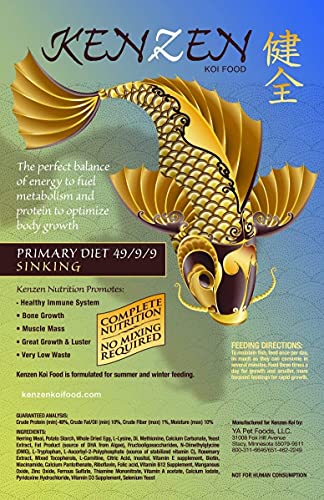
With a 7mm pellet size, Kenzen Koi Food supports year-round feeding with a nutritionally balanced profile that emphasizes protein and fat content. The product highlights a 49% minimum crude protein and 9% minimum crude fat, aiming to sustain growth, energy, and health for koi and other pond fish across seasons while maintaining manageable pellet size for mid-to-large fish.
Buying Guide: Sinking Pond Food — Key Considerations
When selecting sinking pond foods, consider the following factors to align with your fish species, pond size, and climate.
- Species suitability: Goldfish and koi have different digestive needs. Choose formulas explicitly labeled for koi, goldfish, or general pond fish.
- Water temperature: Many sinking diets are optimized for specific temperature ranges. In cooler months, wheat germ-based or easily digestible proteins help avoid digestive stress.
- Pellet size and density: Match pellet size to fish mouth size. Smaller pellets suit younger or smaller fish; larger pellets suit bigger koi and goldfish.
- Digestibility and ingredients: Look for high-quality protein sources and limited fillers. Higher digestibility reduces waste and improves pond water quality.
- Feeding frequency: Follow container guidelines and adjust based on pond occupancy, temperature, and fish activity. Avoid overfeeding to minimize waste.
- Seasonal feeding: Some diets are marketed as spring/fall or year-round; plan transitions to maintain digestion and metabolism across seasons.
- Water quality impact: The right sinking diet reduces surface feeding and can help manage sediment and nutrient loads when used correctly.
- Bulk purchases: For larger ponds, consider bulk options to reduce cost per pound without sacrificing quality.
Selecting sinking fish food involves balancing nutrition, temperature, fish size, and feeding behavior. The products highlighted above provide a range of options across common pond species, enabling consistent feeding practices that support health and growth while accommodating bottom-feeders and transitioning fish.