When choosing panels for greenhouse glazing, clarity, durability, and safety matter most. This guide highlights five strong options that resemble acrylic performance—whether you need clear, shatterproof PET sheets or sturdy polycarbonate panels designed to withstand weather. Each product features UV resistance, light transmission, and impact strength to help keep plants thriving while protecting investments in greenhouse infrastructure.
Summary of selected products
- CALPALMY 5 Packs of 24x36x0.04’’ PET/Plexiglass Panels (Unbreakable, Lightweight)
- FAHKNS 6 PCS Polycarbonate Greenhouse Panels, 4′ x 2′ x 0.32″ (Twin-Wall, High Light Transmission)
- Hotop 6 Pcs Polycarbonate Greenhouse Panels, 4′ x 2′ x 0.24″ (Double Layer, UV Protected)
- DGSL 6 Pcs Polycarbonate Greenhouse Panels, 4′ x 2′ x 0.16” (Twin-Wall, Weather Resistant)
- Quibbay 6PCS Polycarbonate Greenhouse Panels, 4′ x 2′ x 0.32” (Three-Layer Honeycomb, UV Protected)
CALPALMY PET Panels: Clear, Unbreakable Plastic Sheets

The CALPALMY PET panels offer crystal-clear visibility with PET sheets that resemble acrylic in clarity. They’re designed as shatterproof substitutes for glass, making them a practical choice for greenhouses, play areas, and craft setups. The 0.04″ thickness provides a balance between protection and flexibility, while remaining lightweight for easy handling. These panels help protect crops, posters, and decorative displays without the risk of dangerous shards in high-traffic spaces. Their suitability for children’s rooms adds a safety-forward option for family gardens and learning spaces.
FAHKNS Twin-Wall Polycarbonate Panels, 4′ x 2′ x 0.32″
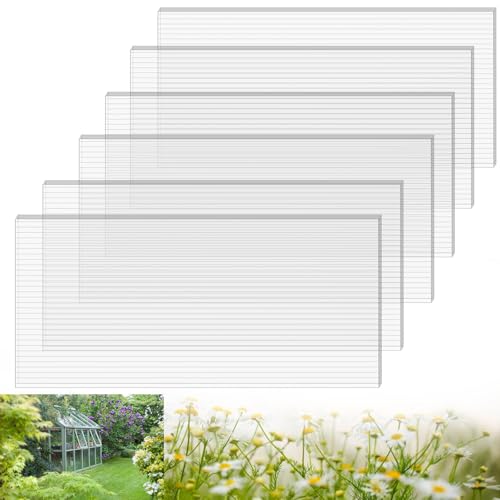
FAHKNS panels are built from high-strength twin-wall polycarbonate, delivering 80% light transmission while filtering UV rays. This combination promotes robust plant growth with reduced risk of sunburn. They’re designed to endure heavy winds and impacts, offering long-lasting durability in outdoor environments. The material helps maintain warmth in winter and coolness in summer, contributing to a stable greenhouse climate across seasons. With a temperature tolerance spanning -44°C to 120°C, these panels perform reliably in varied climates.
Hotop Polycarbonate Panels, 0.24″ Thick

Hotop’s 0.24″ polycarbonate panels are designed for reliable greenhouse coverage. The panels are cuttable to fit unique greenhouse shapes, though professional tools are recommended due to panel hardness. They offer a clear, bright glazing that helps plants grow while maintaining a protective environment. The solution is suited for seasonal gardens and nurseries that require a weather-resistant cover with straightforward customization and installation.
DGSL 6 Pcs Twin-Wall Polycarbonate Panels, 0.16″

DGSL’s 0.16″ twin-wall panels deliver solid light transmission and strong impact resistance. They’re designed for all-weather outdoor use, maintaining warmth in winter and enabling cooling in summer. With a wide temperature range and shatter-resistant construction, these panels suit cold climates and high-wind areas where steady performance is essential for plant health and greenhouse resilience.
Quibbay 6PCS Honeycomb Polycarbonate Panels, 0.32″

Quibbay panels use a three-layer honeycomb polycarbonate construction for enhanced strength and reduced weight compared with glass. They offer UV protection that blocks 99.9% of UV rays, helping prevent sun damage to plants. The honeycomb design supports better insulation and noise reduction, while maintaining approximately 70% light transmission to support photosynthesis. They’re rated for a wide operating temperature range, suiting varied climates and long seasons of cultivation.
Buying Guide: Key Considerations When Selecting Greenhouse Panels
- Light transmission and diffusion: Balance high light transmission with even diffusion to avoid hotspots. Twin-wall and honeycomb designs often provide better diffusion than single-layer sheets.
- UV protection and aging: UV-resistant coatings extend panel life and reduce yellowing. Some panels offer UV protection with clear, long-lasting clarity.
- Impact resistance and safety: Shatterproof or unbreakable materials reduce hazard risk, especially in family spaces and busy greenhouses.
- Insulation and climate control: Choose panels with good thermal performance to maintain stable temperatures, crucial for year-round growth.
- Durability and weather tolerance: Consider wind, hail, and temperature extremes in your region. Twin-wall and heavy-duty polycarbonate generally perform well in diverse climates.
- Ease of installation and customization: Panels that can be cut or easily trimmed help fit irregular greenhouse frames. Professional tools may be required for precise cuts.
- Weight and handling: Lighter materials simplify installation and reduce structural load, but ensure sufficient rigidity and rigidity for long-term use.
- Safety and maintenance: Favor materials that resist cracking, fading, and staining. Easy cleaning helps maintain clarity and plant health.
When evaluating options, map panel properties to your greenhouse goals: year-round climate stability, light-demanding crops, safety for households with children, and maintenance considerations. Acrylic-like PET sheets can provide clarity with safety, while polycarbonate panels often offer superior impact resistance and insulation. Each listed product has a distinct balance of light transmission, durability, and ease of installation, allowing you to select the best fit for your greenhouse setup.