Choosing the right sand or sediment filter for an irrigation system helps protect pumps, emitters, and valves from sand, silt, and debris. This guide reviews top spin-down and sand filtration options available on Amazon, highlighting how each model fits residential and small to midsize irrigation setups. We compare flow capacity, filtration mesh, maintenance visibility, and compatibility to help you choose the best filter for dependable irrigation performance.
Summary of featured products:
| Product | Brand | Approx. Flow | Filtration Mesh | Best For |
|---|---|---|---|---|
| Rusco 1-1/2″ Spin Down Separator | Rusco | Up to 50 GPM | Not specified, 50 GPM model | General sand/sediment filtration |
| H2O PRO Spindown Sediment Filter | Star | Well/Irrigation systems | Visible, clear body | Easy sediment monitoring |
| SimPure Spin Down Sediment Filter | SimPure | Typical whole-house use | 100 micron screen (stated) | Reusable, flushable pre-filter |
| 100 Mesh Rusco Vu-Flow Spin Down | KleenWater/Rusco | Up to 50 GPM | 100 mesh (~152 microns) | Two can holders for filtration |
| DIG P09-155 Drip Filter | DIG | Up to 13 GPM | 155 or 200 mesh options | Drip irrigation protection |
Rusco Spin Down Separator Sand/ Sediment Filter
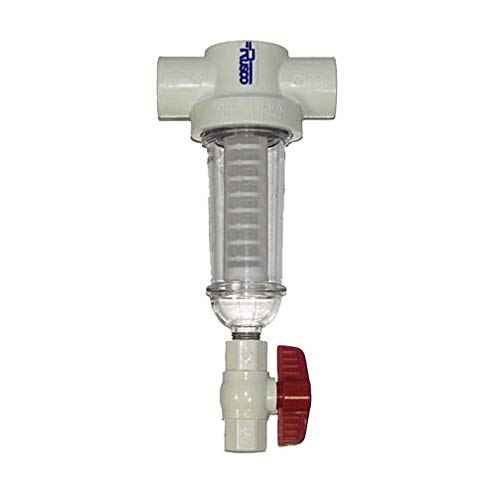
The Rusco Spin Down Separator offers a 1-1/2 inch connection with a filtration approach designed for sediment and sand removal at up to 50 GPM. The unit is built for easy flush-and-reuse operation. While the product listing emphasizes dimensions and basic type, the design is compatible with common irrigation configurations and helps reduce debris reaching pressure tanks and filters. The visible sediment indicator allows users to determine when flushing is needed, supporting straightforward maintenance in irrigation setups.
H2O PRO Spindown Sediment Filter

The H2O PRO Spindown Sediment Filter is designed for well and irrigation pump systems, with a clear, reusable body for easy monitoring of sediment buildup. It fits 1″ and 1-1/2″ piping and includes adapters. This tee-style design protects plumbing fixtures, pressure tanks, and sprinkler components by capturing sand and sediment. The visible particles in the clear filter body help determine flush timing, supporting proactive maintenance and system longevity.
SimPure 100/500 Micron Spin Down Filter

The SimPure Spin Down Sediment Filter is designed to protect home plumbing and irrigation lines from debris, rust, and sediment. It emphasizes a 100 micron stainless mesh and a durable, flushable, reusable design. The filter reduces sediment ingress to fixtures, appliances, and sprinkler systems, contributing to longer life for pumps and emitters. The product is positioned as a general pre-filter for well and city water supply lines, making it suitable for irrigation applications that require dependable pre-filtration.
100 Mesh Rusco Vu-Flow Spin Down

This Rusco Vu-Flow model emphasizes a 100 mesh screen to achieve approximately 152 microns filtration, aided by a two-can holder design for filtered output. It targets sediment removal in well or irrigation water lines and supports installation in systems needing compact, efficient spin-down filtration. The configuration suits filter replacements and ongoing sediment management in sprinkler and irrigation networks.
DIG P09-155 Drip Irrigation Inline Filter
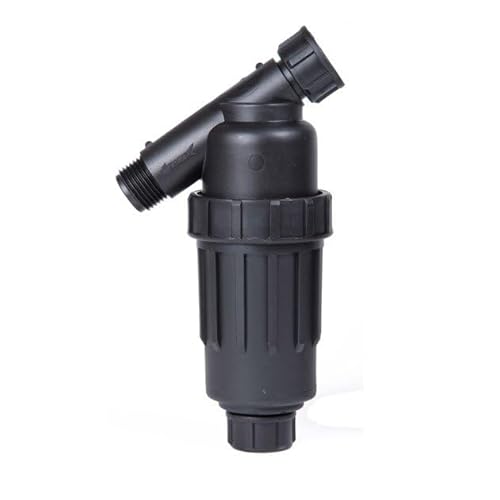
The DIG P09-155 inline Y filter is designed for drip irrigation and micro sprinkler systems, offering 155 or 200 mesh polyester screens and a flush-cap design. It supports filtration up to 120 PSI and flow rates up to 13 GPM. The large filtration area minimizes cleaning frequency and reduces pressure loss, contributing to consistent emitter performance and longer overall irrigation system life.
Buying Guide: Key Considerations For Filtration In Irrigation Systems
- Filtration mesh and micron size: Finer meshes capture smaller particles but can increase flow resistance. Choose 100–155 mesh for well water with fine sand and general irrigation, or finer options if your system experiences frequent clogging.
- Flow capacity: Match the filter’s GPM rating to your irrigation demand. Undersized filters may clog quickly, while oversized units can add unnecessary cost and space needs.
- Maintenance visibility: Clear or partially transparent housings help you see sediment buildup and schedule flushes, improving reliability and reducing unexpected downtime.
- Compatibility and installation: Confirm pipe size (1/2″, 3/4″, 1″, 1-1/2″) and connector type. Spin-down filters and inline Y-filters have different installation footprints and maintenance styles.
- Material and durability: Stainless or brass valve components, corrosion-resistant housings, and robust screens extend filter life in outdoor irrigation environments.
- Replacement parts and availability: Easy access to replacement screens and seals reduces maintenance downtime and keeps irrigation running smoothly.
- System integration: Evaluate how a filter interfaces with pumps, pressure tanks, backflow preventers, and emitters to ensure steady pressure and reliable filtration.
- Maintenance workflow: Spin-down filters typically require periodic flushing; inline Y-filters may require all-system shutdowns for cleaning. Consider your preferred maintenance routine.
Selecting the right sediment or sand filter for an irrigation system involves balancing filtration efficiency, flow needs, and maintenance practicality. The options reviewed here cover a range of configurations—from spin-down separators with visible sediment indicators to inline drip filters with replaceable screens—so you can tailor the choice to your water source, flow requirements, and maintenance preferences.