Geogrids and geofabrics play a crucial role in reinforcing retaining walls, slope stabilization, and soil erosion control. The right geogrid distributes loads, reduces settlement, and extends the life of wall structures. This guide highlights five high-performing geogrids suitable for residential and light commercial projects, drawing from popular Amazon options. Each entry includes key specifications, material notes, and typical use cases to help you compare performance and select the best fit for your project.
| Product | Brand | Size / Coverage | Tensile Strength | |
|---|---|---|---|---|
| Universal Retaining Wall Geogrid Roll 4′ x 98′ | Yeaborn | 4′ x 98′ (392 sq ft) | 50 KN | Bottom layer for walls and roads; stabilizes ground and walls |
| Bi-Directional Universal Retaining Wall Geogrid 33′ x 3′ | FULEIYA | 33′ L x 3′ W | 30 KN | Reinforcement, soil stress distribution, erosion control |
| Bi-Directional Geogrid for Retaining Wall 3′ x 164′ | KFURNIKN | 3′ W x 164′ L | Noted in features: 0.8 x 0.8 inch mesh; strong yet flexible | Driveways and walls; load distribution and stability |
| HZCGJMY 3′ x 65′ Retaining Wall Geogrid Roll | HZCGJMY | 3′ W x 65′ L | Noted: strong polypropylene; 0.32 m-N/deg aperture stability | Reinforcement and slope stabilization |
| Vechor 3′ x 164′ Gravel Grid Geogrid | Vechor | 3′ W x 164′ L | Noted: high-strength polypropylene | Soil reinforcement and erosion control |
Below you’ll find concise product sections with direct links, image context, and essential features to help you compare performance for retaining wall projects.
Yeaborn Universal Retaining Wall Geogrid Roll

The Yeaborn geogrid is a universal fiberglass grid designed for retaining walls and slope stabilization. Size is 4′ by 98′ with a coverage of 392 sq ft, material is fiberglass, color black, and tensile strength is listed at 50 KN. Intended to serve as a bottom layer to strengthen and stabilize soil and walls, contributing to a durable and uniform landscape surface. The material’s high tensile strength and corrosion resistance support long-term performance in varying soil and weather conditions. This product aims to reduce wall cracking and ground settlement, improving load distribution and service life.
FULEIYA Bi-Directional Geogrid For Retaining Walls
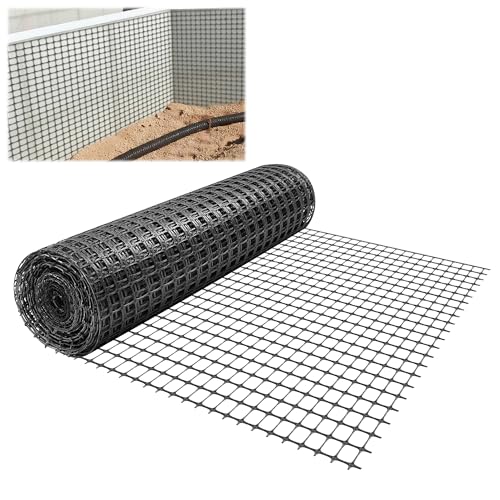
The FULEIYA geogrid provides 30 KN tensile strength in both directions, offering robust roadbed and soil reinforcement. Its biaxial mesh is designed to suppress soil settlement during construction by distributing stresses evenly across the wall. The geogrid is described as tough and easy to cut, made from high-strength fiberglass with good resistance to corrosion and temperature variations. It is suitable for walls, driveways, and erosion control projects where flexible sizing and durable load distribution are needed.
KFURNIKN Bi-Directional Retaining Wall Geogrid

KFURNIKN offers a 4 ft by 50 ft geogrid with 0.8 x 0.8-inch mesh holes, designed to deliver uniform stress distribution and prevent deformation for walls and driveways. The product uses premium polypropylene and emphasizes UV and chemical resistance, contributing to durability in diverse environments. Its portability (weight around 8.2 lbs per roll) supports easy handling and installation for homeowners and professionals alike, with easy cutting to fit specific layouts.
HZCGJMY 3′ x 65′ Retaining Wall Geogrid Roll

The HZCGJMY geogrid is built to last with strong polypropylene construction, offering deformation resistance and chemical resistance. It provides reinforcement in both directions (3′ by 65′), with mesh characteristics that support stable load transfer and wall integrity. The roll-up design allows for convenient transport and faster construction, which can save time and labor on project sites while improving wall performance over time.
Vechor Gravel Grid Geogrid for Retaining Wall

Vechor’s gravel grid geogrid focuses on soil reinforcement and erosion control with a 3′ x 164′ format. Made from high-strength bidirectional polypropylene, it emphasizes resistance to deformation, aging, and oxidation while being recyclable. Its 0.8-inch mesh and roll-size design simplify installation on sloped or flat surfaces, allowing for efficient load distribution and stabilization across a range of landscape projects.
Buying Guide
- Material and durability: Fiberglass vs polypropylene geogrids offer different tensile strengths and temperature resistance. Fiberglass tends to excel in high-tension applications, while polypropylene provides durability and UV resistance in varied climates.
- Tensile strength and direction: Check whether the wall design requires bi-directional reinforcement and ensure the stated tensile strength aligns with the wall height and soil conditions.
- Mesh size and aperture stability: Smaller mesh can offer finer load distribution but may be harder to install. Look for stable aperture metrics (e.g., 0.8 x 0.8 inch) when planning for uniform stress distribution.
- Roll dimensions and coverage: Larger rolls reduce joints but may be heavier to handle. Plan for overlapping and overlaps to ensure continuous reinforcement along the wall.
- Installation considerations: Some geogrids are easier to cut and fit; others require heating or specific handling. Consider project scale, crew experience, and tools available.
- Climate and soil compatibility: Choose materials with corrosion and chemical resistance appropriate for local soil chemistry, moisture, and temperature ranges.
- Drainage context: For walls adjacent to water-prone soils, pairing geogrids with non-woven geotextiles or drainage fabrics may enhance drainage and reduce pore pressure buildup.
- Budget and long-term maintenance: Higher tensile strength and robust materials can reduce future maintenance costs by minimizing cracking and movement.