The right geocell ground grid can transform a soft or sloped driveway into a stable, permeable surface that drains well and resists rutting. This guide highlights five top geocell options favored for driveways, parking pads, and path stabilizing. Each product features high-density polyethylene (HDPE) construction, deep cells for strength, and simple installation. Below, you’ll find clear specifications, installation notes, and a buying guide to help you compare options for your property and climate.
| Product | Depth | Coverage (approx.) | Load Bearing |
|---|---|---|---|
| GRITSPIKE 40FT Gravel Driveway Grid | 5 cm | 40 ft long | Heavy-duty for cars, RVs, trucks |
| MIWOOYY 2″ Thick, 6.5 ft x 16.5 ft | 2 in | ~108 sq ft | 1885 lbs per sq ft when filled |
| MIWOOYY 2″ Thick, 6.5 ft x 33 ft | 2 in | ~214 sq ft | 1885 lbs per sq ft when filled |
| Sunnyglade 4″ Thick, 16.5 x 6.5 ft | 4 in | ~107 sq ft | 1880 lbs per sq ft when filled |
| PURPLE STAR 1N 16.4 x 9.8 ft | 2 in | 160 sq ft | 1885 lbs per sq ft when filled |
Note: All figures reflect typical density when cells are fully filled with gravel, soil, or sand. These products are suitable for driveways, garden paths, and slopes, providing stable support while preventing erosion and washouts.
GRITSPIKE 40FT Gravel Driveway Grid

The 40FT gravel driveway grid is engineered from HDPE to support heavy loads, including cars, RVs, and trucks. Its 5 cm deep honeycomb structure distributes weight evenly, reducing rutting and surface collapse. It’s designed for driveways, parking pads, and construction routes, making it a strong choice for long-term stabilization on uneven terrain.
Installation is straightforward: unfold, anchor with 32 ground stakes and 40 fasteners, then fill with gravel, soil, or sand. The system is beginner-friendly and requires no contractor. It helps stop gravel migration and protects slopes or loose soil, making it suitable for backyard paths and hillside stabilization as well as driveways prone to washouts.
MIWOOYY 2″ Thick Grid, 6.5×16.5 ft

This geocell grid is a versatile option for slopes and flat areas, ideal for light load reinforcement, garden paths, patios, and parking surfaces. Made from eco-friendly HDPE, it offers abrasion resistance and chemical stability, performing well in varied soil conditions. When filled, it can bear up to 1885 lbs per square foot, making it suitable for driveways, walkways, and RV parking on moderate slopes. Its lightweight design simplifies handling during DIY projects.
MIWOOYY 2″ Thick Grid, 6.5×33 ft

This longer option shares the same durable HDPE construction and high load-bearing capacity as the shorter variant, but covers a larger area for bigger driveways or extended paths. Installation follows the same steps—unfold, anchor, and fill. The grid’s tensile strength supports driveways and walkways against rutting, washouts, and soil movement, making it a practical choice for homeowners with expansive or sloped surfaces.
Sunnyglade 4″ Thick Ground Grid, 16.5 x 6.5 ft
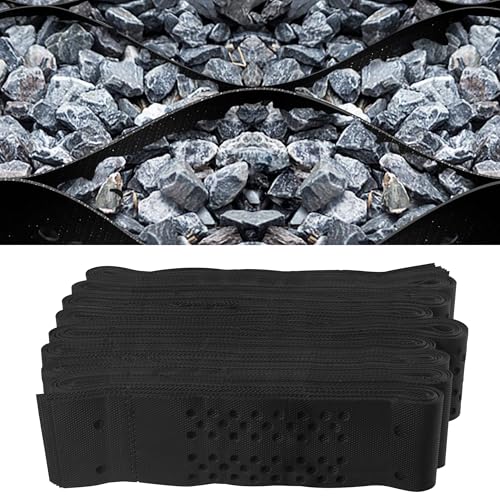
The 4-inch-deep geocell grid provides substantial stability for slopes and soft ground. With a 16.5 by 6.5-foot footprint and approximately 107 square feet of coverage, this option suits driveways and pathways where erosion control is essential. Constructed from HDPE, the grid resists deformation, oxidation, and aging, and it can be cut or adjusted to fit irregular contours. It folds for storage and simplifies on-site handling for DIY projects.
PURPLE STAR 1N 16.4 x 9.8 ft Grid

This 2-inch-deep grid covers 160 square feet and is designed to expand a stable base for slopes, walkways, and parking areas. It provides large bearing capacity (1885 lbs per sq ft when filled) and easy expansion to fit your site. The grid connects and cuts to shape, letting you tailor the layout to irregular driveways or garden paths while minimizing erosion and gravel loss.
LXVOOEE Gravel Grid Kit, 4.4×33 ft

This kit includes multiple grids and hardware for a sizeable driveway or walkway project. The 2-inch depth provides reliable support with a total length of 33 feet per run. The kit’s grids are welded for enhanced tension strength and include stakes and clips for tidy, sturdy installation. Suitable for driveways, parking lots, and slopes, it helps control erosion and ground movement on challenging terrain.
Buying Guide: Key Purchase Considerations
To choose the best geocell ground grid for your driveway, consider the following factors:
- Load requirements: Evaluate expected traffic, including vehicles, boats, or heavy equipment. Higher load-bearing cells are typically deeper (3–4 inches) and have denser cell structures.
- Soil and slope: Steeper slopes or loose soil benefit from deeper grids and larger cell openings to reduce washouts and ensure retention of fill material.
- Material and durability: HDPE is standard for its chemical resistance, UV stability, and flexibility. Check for welded seams and the grid’s lifetime under local weather conditions.
- Size and expansion: Measure the area to cover and plan for future expansions. Larger formats reduce the number of seams but may be heavier to handle.
- Ease of installation: Look for DIY-friendly kits with staking hardware and clear assembly steps. Some systems are foldable and reversible, aiding storage and adjustments.
- Fill material: Gravel, soil, or sand can be used. Choose fill that matches your climate, drainage needs, and desired appearance.
- Maintenance: Consider cleaning, weed suppression, and longevity of the fill material. A well-installed grid minimizes ongoing upkeep.
- Environmental impact: Recyclability and compatibility with local soil and drainage regulations may affect long-term suitability.
Compare options by depth, coverage, and load rating to align with your driveway’s size and expected usage. For sloped properties, prioritize grids with stronger seams and higher fill density to maintain surface integrity over time.
In summary, the five highlighted products provide a range of depths, sizes, and coverage suitable for American driveways and paths. Each option offers DIY-friendly installation, substantial load-bearing capacity, and erosion control benefits. Choose based on your area’s slope, traffic, and preferred fill material to achieve a stable, durable, and visually cohesive driveway surface.