Choosing the right filtration system for well water involves balancing sediment removal, chemical reduction, and overall system longevity. This article highlights five highly relevant filters that address common well-water challenges, from sediment-laden supply to algae-friendly tastes and chlorine remnants. Each option offers distinct advantages, so you can compare filtration stages, materials, and compatibility to fit your home’s needs and your local water quality.
| Product | Brand | Key Benefit |
|---|---|---|
| Membrane Solutions 5 Micron 10″x2.5″ | Membrane Solutions | Durable 5-micron sediment filtration for wells |
| Waterdrop Whole House System | Waterdrop | 5-stage filtration reduces iron, manganese, chlorine |
| Express Water 3-Stage | EXPRESS WATER | Heavy metal, chlorine, and scale reduction |
| PUREPLUS 5 Micron 10″x4.5″ | PUREPLUS | Pleated sediment filtration with large filtration area |
| Aquasana EQ-WELL-UV-PRO-AST | Aquasana | Multi-stage with UV and KDF for well-water protection |
Membrane Solutions 5 Micron 10″x2.5″ String Wound Filter
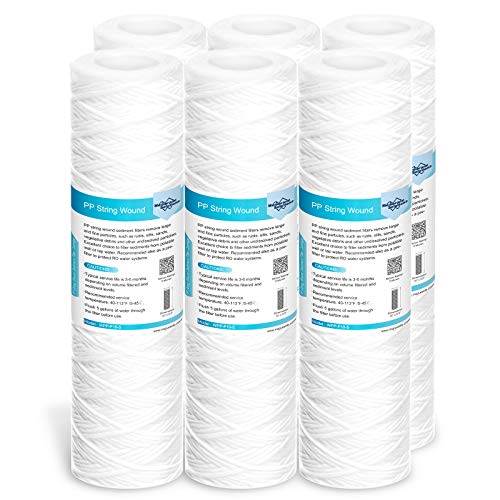
This 5-micron string-wound sediment filter is designed to fit most 10-inch housings, making it a versatile prefilter for well-water systems and RO setups. It uses food-grade polypropylene, is lead- and BPA-free, and aims to minimize leaching while delivering reliable dirt holding capacity. The filter is positioned as a longer-lasting option for low-quality feeds with heavy sediment, offering higher flow rates relative to standard PP sediment filters. Ideal as a prefilter before more advanced filtration stages.
Key features include four times the dirt-holding capacity and double the flow rate of standard polypropylene filters, enhancing service life in sediment-rich wells. The universal 10 x 2.5-inch size ensures broad housing compatibility, simplifying replacement cycles for property owners managing well water.
Waterdrop Whole House Water Filter System

This 5-stage filtration system targets well water impurities with a focus on iron and manganese reduction, along with chlorine removal and odor control. Its 10″x4.5″ configuration houses an iron/manganese reducing filter and a coconut-shell carbon (GAC) stage to improve taste and odor. The setup emphasizes durability, is tested for high-pressure conditions, and boasts a longer replacement cycle when aligned with typical USA water pressures. It’s designed to deliver cleaner water across all taps in homes with wells.
Features highlight strong filtration performance against iron, manganese, and chlorine, plus a robust build that endures common household water pressures. A longer service life can translate into fewer replacements and greater overall value, depending on your well’s water chemistry.
Express Water 3-Stage Whole House Filtration

The Express Water Ultimate Protection system provides a three-stage approach to reducing contaminants throughout the home. It focuses on heavy metals, chloramine, chlorine, PFAs, lead, and arsenic, with a design aimed at whole-house coverage. The unit includes a durable stainless steel bracket and a stand frame, as well as pressure-release features and gauges to monitor filter changes easily. This setup is suitable for homes seeking comprehensive protection against a broad spectrum of well-water contaminants.
Considerations include the balance between filtration depth and maintenance complexity. The three-stage approach offers broad coverage but may require more frequent monitoring of stage changes to maintain optimal water quality at all taps.
PUREPLUS 5 Micron 10″x4.5″ Whole House Pleated Sediment Filter

This 5-micron pleated sediment filter is designed to deliver a larger filtration area with a dense inner structure and 3D weaving. The pleated design improves dirt-holding capacity and filtration efficiency for well water, with a reported service life of 3–6 months and a flow rate around 2.5 GPM. It is compatible with many standard 10-inch housings and is commonly used as a prefilter in whole-house systems or as a replacement cartridge for RO prefilters.
Certification and material notes emphasize BPA-free, European EC1935-2004 compliance, and REACH, appealing to buyers seeking safe, well-regulated filtration components. The filter aims to balance strong sediment capture with steady water flow across multiple taps.
Aquasana Whole House Well Water Filter (EQ-WELL-UV-PRO-AST)

Aquasana’s system is tailored for well water, combining carbon, KDF, UV, and salt-free scale-control media. The multi-stage approach targets bacteria, viruses, and minerals that contribute to adverse taste and scale buildup, while preserving beneficial minerals. The included bypass kit and brass components add durability and flexibility for installations. It is designed to provide long-term water quality improvements, with a substantial filter-life claim under typical well-water conditions.
Considerations include the UV stage for disinfection and the salt-free scaling approach, which can be advantageous for minimizing mineral buildup without adding water-softening salts. The system is best suited for households seeking comprehensive well-water treatment with an emphasis on taste, odor, and scale prevention.
Buying Guide: Key Purchase Considerations And Comparisons
Water well filtration requires aligning filtration stages with water quality, household size, and maintenance willingness. Consider these factors to choose the right system:
- Water quality and contaminants: Identify primary concerns (sediment, iron, manganese, chlorine, taste, bacteria). A sediment-pre-filter is essential for wells with turbidity, while carbon and KDF stages address chemical contaminants.
- Filtration stages vs. maintenance: More stages can offer broader protection but may need more frequent filter changes. Balance depth of filtration with replacement costs and service intervals.
- Flow rate and pressure compatibility: Ensure the system matches your home’s water pressure and daily usage. Higher GPM ratings and durable housings support multi-tap homes.
- Material safety and certifications: Look for BPA-free components and certifications (EC1935-2004, REACH). Food-grade materials reduce leaching risk in drinking water.
- Disinfection considerations: UV and advanced media (KDF, salt-free conditioners) provide additional protection for well water with microbial concerns but require electricity and maintenance awareness.
- System integration: Consider prefilters for RO systems, whole-house compatibility, and ease of installation. Some units include monitoring gauges and bypass options for future upgrades.
- Maintenance planning: Create a schedule based on the filter lifecycle and water quality fluctuations. Wells can vary seasonally, affecting replacement timing.
In summary, the best filter for your well depends on your priority—sediment control, taste and odor improvement, heavy metal reduction, or disinfection. A layered approach, starting with a strong sediment prefilter and adding carbon or UV stages as needed, often yields the most reliable, long-term water quality improvements for well systems.