Choosing the right flooring for an outdoor playground involves balancing safety, durability, drainage, and maintenance. The following selections focus on rubber and interlocking tile systems, plus wood deck tiles, to cover a range of climates and usage scenarios. The products below are geared toward corrosion resistance, slip resistance, and easy cleaning, helping create a safer play environment for children and a durable surface for adults supervising or maintaining the space.
Summary of selected products:
| Product | Material/Type | Key Benefit | Size (approx) |
|---|---|---|---|
| Uniboho Outdoor Rubber Floor Mats | Rubber with drainage holes | Heavy-duty, water/snow/slush drainage, versatile use | 60 x 35 inches |
| RevTime Easy-DIY Interlocking Tiles | Rubber interlocking tiles | Ultra thick, shock absorption, quick DIY install | 20″ x 20″ tiles (pack of 2) |
| THYOI Deck Tiles (Acacia Wood) | Natural Acacia wood with PPC base | Premium wood look, versatile cut-and-fit, good drainage | 10 tiles (10 sq ft) |
| Goovilla Plastic Interlocking Tiles | High-density plastic | Lightweight, all-weather, easy snap-assembly |
Note: The final selection focuses on five options that balance safety, installation ease, and long-term maintenance for outdoor play spaces common in American settings.
Uniboho Outdoor Rubber Floor Mats

These heavy-duty outdoor rubber mats feature drainage holes designed to shed water, snow, salt, and slush. They’re suitable as a restaurant mat, kitchen mat, safety mat, gym mat, or bar mat but adapt well to outdoor playground zones where people move between equipment and seating. The mats are made of durable rubber and polyester blends that resist moisture—though there may be a noticeable scent initially due to rubber composition. Cleaning is straightforward: vacuum, sweep, or hose off, followed by air drying for best performance. They stay in place well on vinyl, wood, tile, and cement floors.
RevTime Easy-DIY Interlocking Outdoor Rubber Tiles

These interlocking rubber tiles are 45mm thick and designed for high durability, anti-slip performance, and shock absorption. The surface is wear-resistant and highly elastic, offering comfort for prolonged play or activity. The tiles are water-permeable due to a micro-porous granule composition, enabling quick drainage. An easy snap-in design uses pole-connected plastic pegs to secure tiles without adhesive, making installation straightforward for DIY projects. They’re well-suited for playgrounds, outdoor gyms, sport decks, and backyard play areas where drainage and slip resistance matter most.
THYOI Deck Tiles, Acacia Wood

THYOI deck tiles use 100% natural acacia wood with a PPC base, combining a premium look with outdoor durability. They are designed for all-weather use and are easily cut to fit irregular shapes, making them suitable for pool surrounds, patios, and garden pathways. The tiles help create a solid, stable surface that drains well thanks to the gap layout and interlocking system. This option provides a warmer, more natural feel underfoot compared to rubber mats, suitable for spaces that balance active play with aesthetic appeal.
Goovilla Plastic Interlocking Tiles — 9 Pack, Dark Grey
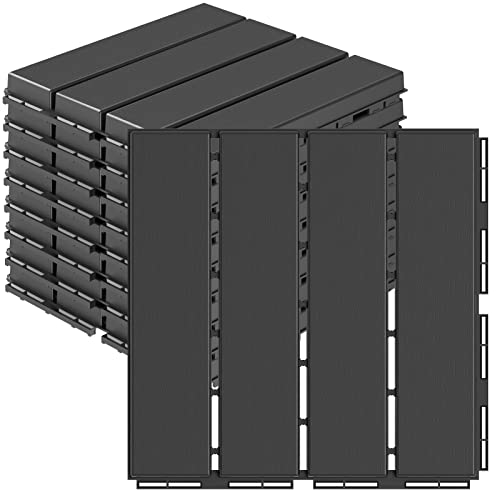
These lightweight, high-density plastic tiles are designed for all-weather use with an upgraded interlocking system that snaps together quickly and securely. They’re notably durable under direct sun, rain, and snow, with built-in drainage channels to reduce standing water and discourage slippery surfaces. The tiles are easy to install and remove, making them a flexible choice for seasonal playground setups or temporary outdoor play areas in schools or backyards.
Goovilla Plastic Interlocking Tiles (Second Variant)
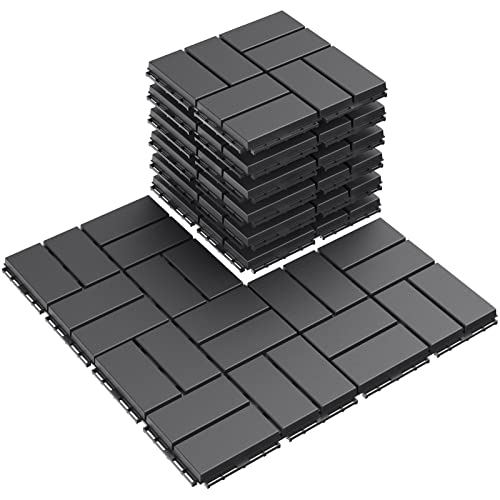
Another Goovilla option in the same family, this variant emphasizes the eight-flat with six drains design for enhanced water drainage and air flow, helping to keep surfaces dry and safe after rain or sprinkler play. The product line is designed for quick, tool-free installation and quick rearrangement if the play layout needs to be changed seasonally or after school programs.
Buying Guide: Key Considerations For Outdoor Playground Flooring
- Safety ratings and impact absorption: Look for surface materials that provide adequate fall protection at the intended play height. Rubber tiles and mats typically offer better shock absorption than hard plastics or wood when properly installed.
- Drainage and water management: Outdoor play surfaces should shed water quickly and prevent puddles. Interlocking tiles with drainage channels or perforated mats reduce slip hazards and maintain a clean surface after rain or sprinklers.
- Durability and climate compatibility: Consider local climate—sun exposure, freezing temps, and precipitation. Rubber and high-density plastics resist weathering, while natural wood requires sealing and maintenance to sustain long-term performance.
- Installation and maintenance: Interlocking designs simplify installation and replacements. Check for tool-free assembly and ease of cleaning. Rubber mats can be hose-cleaned, and plastic tiles can be scrubbed with mild cleaners; wood tiles may need periodic sealing.
- Texture and grip: A non-slip texture reduces the risk of slips and falls. Some textures are easier to clean and maintain visually than others, so choose based on expected foot traffic and soil/dust levels.
- Aesthetics and compatibility: Wood tiles offer a natural look that blends with landscaping, while rubber and plastic options lean toward modern, low-maintenance aesthetics. Consider how the surface complements play structures and surrounding features.
- Maintenance budget and lifecycle: Rubber and plastic options generally require less ongoing maintenance and replacements may be more frequent in high-traffic areas, whereas wood tiles may incur sealing and refinishing costs over time.
Across these choices, the best selection depends on the priority of safety, installation simplicity, and climate. For high-traffic playground zones with frequent exposure to moisture, rubber mats and interlocking tiles provide reliable slip resistance and drainage. For aesthetic or mixed-use spaces, wood deck tiles offer a more natural look while still enabling modular layouts. Evaluate space dimensions, expected use, and maintenance capacity when deciding.