For greenhouse growers seeking consistent carbon dioxide enrichment, selecting the right CO2 generator or controller is essential. This guide reviews five strong options that balance reliability, safety, and ease of use, helping you optimize photosynthesis and crop outcomes. Each product section highlights its core strengths, installation notes, and how it fits typical greenhouse setups.
Summary of selected products
| Product | Brand | Type | Key Benefit |
|---|---|---|---|
| CO2BAG XL | CO2BAG | Maintenance-free, steady natural enrichment | |
| ICC-510 CO2 Controller | Inkbird | Controller + Sensor | Automatic CO₂ regulation with light-sensing adjustments |
| MagTool 2025 CO2 Kit | MagTool | DIY Aquarium CO₂ Generator Kit | Integrated solenoid, bubble counter, high durability |
| ICC-500T CO2 Controller | Inkbird | Controller + Sensor | Programmable CO₂ range with alarms and calibration |
| Hygger 5L CO2 Generator System | Hygger CO2 | Tank-based CO₂ Kit | Motor valve timing and quick-release setup for precise control |
CO2BAG XL – Natural CO₂ Generator

The CO2BAG XL offers a maintenance-free approach to indoor carbon dioxide enrichment. It provides a steady release of CO₂ without the need for tanks, regulators, or electricity. Ideal for greenhouse spaces where a simple, safe, and ongoing CO₂ source is desirable, this natural generator helps support more efficient photosynthesis, potentially accelerating growth and improving color, flavor, and yields. The design emphasizes safety for both plants and handlers, with a steady release profile suited for growers who prefer low-fuss solutions in larger grow rooms or greenhouses.
Key features include accelerated plant growth and higher yields due to a consistent CO₂ supply, effortless maintenance since no power source is required, and safety for people and plants with a controlled release rate. For greenhouses, this option can complement other environmental controls, providing a reliable baseline CO₂ enrichment without ongoing operational complexity.
Inkbird ICC-510 CO2 Controller

The Inkbird ICC-510 CO2 Controller combines a dual-output design with an intelligent light sensor and universal power supply. This controller can drive CO₂ equipment while simultaneously coordinating ventilation, creating a stable greenhouse atmosphere. The light-sensing capability helps align CO₂ output with photosynthetic demand, promoting energy efficiency and healthier plant development. With a broad input voltage range, it suits various greenhouse configurations and electrical environments, making it a flexible choice for growers who want precise, automated control without frequent recalibration.
Core advantages include maintaining ideal CO₂ levels for growth, automating adjustments as light levels change, and compatibility with CO₂ regulators, inline fans, and other hardware. The ICC-510 is well-suited for medium to large grow spaces that require coordinated enrichment and air exchange to prevent CO₂ buildup or depletion during peak light periods.
MagTool 2025 Upgraded 2.5L CO2 Kit
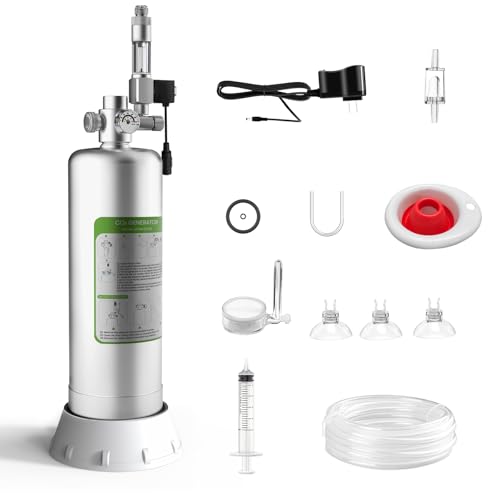
The MagTool 2025 kit integrates a robust 304 stainless steel bottle with an integrated solenoid and bubble counter, plus safety and control features. The bottle’s durability, corrosion resistance, and higher pressure tolerance are designed to support consistent CO₂ delivery in planted tanks and greenhouse spaces that rely on precise dosing. The redesigned, compact body reduces leak risk, and the integrated solenoid with a bubble counter simplifies monitoring. A built-in safety approach includes a manual shut-off and a relief valve for safe operation under pressure. This kit is especially suitable for growers experimenting with timed CO₂ injections or those seeking a compact, all-in-one system for smaller greenhouses or dedicated propagation rooms.
Key considerations include safety mechanisms, high-quality stainless construction, and a streamlined design that minimizes installation complexity. While it aims at aquarium use, its features translate well to enclosed greenhouse environments where controlled, timed CO₂ delivery matters for photosynthetic efficiency and crop quality.
Inkbird ICC-500T CO2 Controller
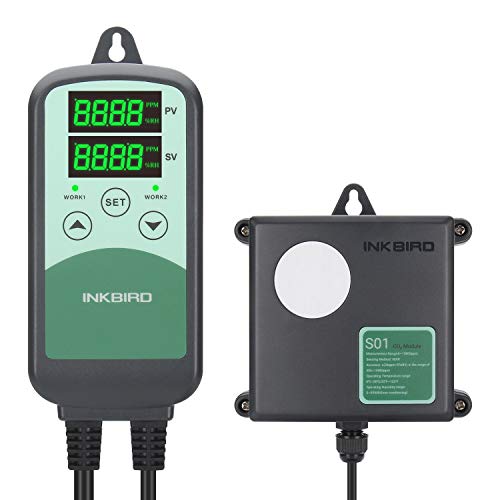
The Inkbird ICC-500T CO2 Controller provides programmable CO₂ management with a dedicated sensor. Its dual-outlet design lets users connect CO₂ generators or regulators on one circuit and exhaust or ventilation on another, enabling balanced enrichment and air exchange. Programmability includes CO₂ ppm targeting, calibration options, and alarm features to alert growers about deviations from set ranges. This controller is particularly suitable for greenhouses that require consistent CO₂ levels across multiple zones or areas, enabling centralized control without manual adjustments. The ICC-500T emphasizes reliability, ease of use, and the ability to integrate with existing CO₂ hardware for scalable greenhouse operations.
Buyers should consider the synchronization between CO₂ injection and ventilation, the required sensor calibration schedule, and compatibility with existing regulators or inline fans. The device supports a scalable approach to climate management, pairing well with larger greenhouses or multi-zone setups that need dependable automation and fault alerts.
Hygger 5L Aquarium CO2 Generator System
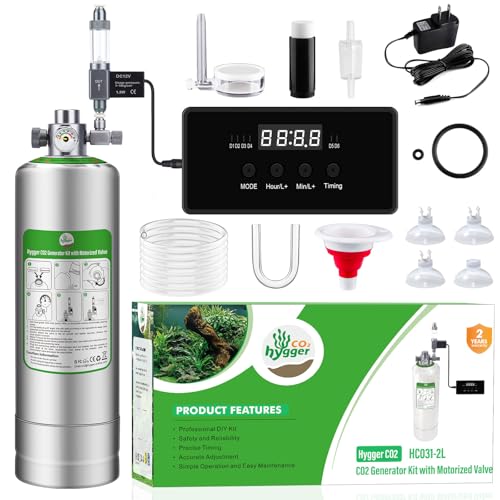
The Hygger 5L system emphasizes motorized valve timing and a quick-release structure for easy installation and maintenance. The 5L bottle holds a substantial amount of CO₂ source and supports precise timing for injections, which helps stabilize indoor CO₂ concentrations in greenhouses and large grow rooms. A built-in navigation of nose-to-tail components—diffuser, valve, and tubing—reduces setup complexity and leak points. While motorized valves can introduce light operational noise, the system is designed for scheduled injections, enabling consistent carbon delivery aligned with plant demand. The 5L capacity makes it suitable for moderate to larger greenhouses seeking more controlled, timer-driven CO₂ supplementation.
Considerations include ensuring proper insulation of tubing to minimize leaks, matching motor valve timing with crop growth stages, and implementing routine maintenance checks for seals and connectors. This system offers a balance of automated control and straightforward setup, appealing to growers prioritizing reliable dosing with tangible, repeatable results.
Buying Guide: Key Purchase Considerations For Greenhouse CO₂ Enrichment
- Enclosure size and layout: Match CO₂ source type and controller capacity to the greenhouse footprint, ceiling height, and air circulation. Larger spaces often benefit from a combination of automated controllers and adequate fans for uniform mixing.
- Control strategy: Decide between passive natural sources (like CO2BAG), regulated systems with sensors, or a hybrid approach. Controllers with ppm targets, light sensors, and alarms reduce manual adjustments and energy waste.
- Safety and compliance: Look for built-in safety features such as automatic shutoffs, relief valves, and alarms. Ensure any equipment complies with local electrical codes and safety standards for indoor agriculture.
- Maintenance and reliability: Stainless steel and high-quality components extend life for CO2 systems. Consider ease of refills, ease of cleaning, and whether the system requires frequent calibration or part replacements.
- Installation complexity and scalability: Some units are plug-and-play with minimal setup, while others require wiring, ducting, or zone planning. Choose a solution that can scale with your greenhouse as needs grow.
- Cost of ownership: Factor in initial hardware costs, consumables (for natural CO₂ sources or refills), and ongoing energy or maintenance costs. Budget for potential replacements or upgrades as crops and spaces evolve.
- Compatibility: Ensure controllers work with your existing regulators, inline exhaust fans, and monitoring equipment. Cross-compatibility reduces integration friction and downtime.
- Environmental integration: CO₂ management should coordinate with temperature, humidity, and light controls. A holistic climate management approach yields more consistent plant performance and reduces stress on crops.