The right rain sensor can prevent overwatering, reduce water waste, and protect your landscape. This article highlights five top rain sensors that work with a variety of irrigation controllers, balancing automatic response to weather with easy setup. Each product is evaluated on reliability, ease of use, and adaptiveness to different climates. Read on to compare features and find the best fit for your system.
| Product | Brand | Key Feature |
|---|---|---|
| Orbit 57069N Rain and Freeze Sensor | Orbit | Detects rain and low temperature; weather-resistant connection |
| Rain Bird CPRSDBEX Wired Rain Sensor | Rain Bird | Automatic shutoff with adjustable rainfall settings |
| Rainbird Wireless Rain and Freeze Sensor System | Rain Bird | Wireless control with frost protection |
| Hunter Wireless Mini Clik Rain Sensor | Hunter Industries | Debris-tolerant; works with many controllers |
| Hunter Rain-Clik Wired Rain Sensor | Hunter | Fast rain response; versatile mounting options |
Note: The table provides quick comparison of the five selected rain sensors. Each product section below expands on how the sensor works, installation considerations, and typical compatibility. Prices are not included to keep the focus on features and performance.
Orbit 57069N Rain and Freeze Sensor for Sprinkler Controllers
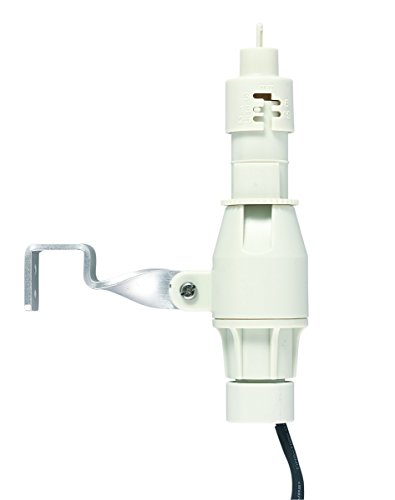
The Orbit 57069N sensor automatically detects rainfall and low temperatures to suspend irrigation. It uses weather-resistant wire runs from the controller to an eave or other open area, enabling the water-absorbing disks to expand when wet. The system is designed to protect zones from unnecessary watering during rain and freezing conditions, potentially reducing water usage and equipment wear. Compatibility with many standard sprinkler controllers makes it suitable for a broad range of residential setups. Easy installation and a straightforward sensor-to-controller connection are emphasized in its design.
Rain Bird CPRSDBEX Wired Rain Sensor

The Rain Bird CPRSDBEX is a wired rain sensor with mounting bracket and wire included. It automatically shuts off and restarts the sprinkler system when rainfall is detected, aiming to conserve water and reduce utility costs. Users can quickly adjust rainfall sensitivity from 1/8″ to 3/4″ with a dial, enabling customization to plantings and soil types. The adjustable side vent ring helps the sensor dry out after collecting water, which can improve long-term reliability in variable climates. Wiring integration favors homeowners with wired controllers seeking simple, reliable rain detection.
RainBird Wireless Rain And Freeze Sensor System
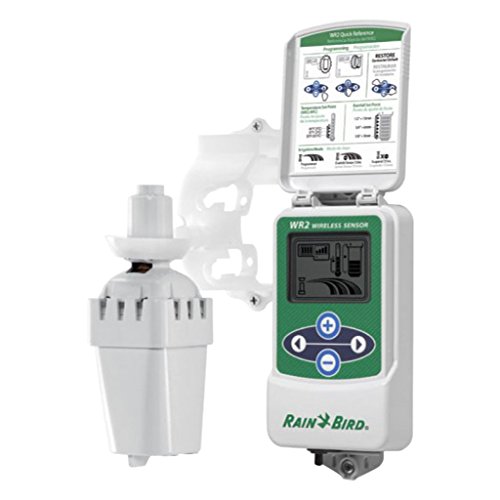
This wireless Rain Bird system includes a rain sensor and a freeze sensor to shut off irrigation when needed. It can save up to 35% on water usage by preventing unnecessary watering during rain or freezing conditions. The interface is designed to be intuitive, with icon-driven programming for straightforward setup. Settings allow rainfall from 1/8 inch to 1/2 inch and freeze thresholds from 33°F to 41°F. Note that compatibility varies by controller model, so reviewing compatibility is recommended prior to purchase.
Rain Bird – WR2-RFC Wireless Rain/Freeze Sensor Complete Kit

The WR2-RFC complete kit provides a wireless rain and freeze sensor solution, designed for ease of installation and reliable signal transmission. The system supports off-timing during rain events and temperature-based shutoffs, with straightforward pairing to compatible controllers. While offering solid wireless performance, users should confirm compatibility with their existing irrigation controller and ensure proper range and obstruction considerations for optimal operation in larger properties or areas with many walls or metal surfaces.
Hunter Wired Mini-Clik Rain Sensor

The Hunter Mini-Clik is a wired rain sensor that suspends irrigation when rainfall is detected, typically from ⅛” to ¾”. It is designed to be debris-tolerant, promoting reliable operation in challenging outdoor environments. Compatible with most Hunter controllers and many other brands, this sensor emphasizes compatibility and straightforward integration. The unit aims for quick field setup and dependable rain-triggered shutoff to prevent overwatering and reduce water waste.
Hunter Sprinkler Rain-Clik Rain Sensor

The Rain-Clik Rain Sensor from Hunter features built-in Quick Response technology to command a controller to shut off as rain begins. It can be mounted on an eave or flat vertical surfaces such as a wall or fence, with a gutter-mount option available for edge installation. This design supports rapid reaction to rainfall, helping to minimize overspray and runoff. It is suitable for a wide range of irrigation setups and emphasizes ease of installation, durability, and reliable rain detection.
Buying Guide: Key Considerations for Rain Sensors
When choosing a rain sensor, homeowners should weigh several factors to ensure the best fit for their irrigation system:
- Controller compatibility: Verify whether the sensor is wired or wireless and confirm compatibility with your existing controller model and brand.
- Detection threshold: Look for adjustable rain thresholds (e.g., 1/8″ to 3/4″) to match soil type, plant needs, and local climate.
- Weather resilience: Consider outdoor-rated housings, UV resistance, and ease of weatherproofing for long-term reliability.
- Mounting options: Assess whether the sensor requires wall, eave, or gutter mounting and ensure mounting locations reflect typical rainfall exposure.
- Response time: Rapid rain detection minimizes wasted irrigation, especially on short, heavy rain events.
- Power and wiring: Wired sensors may be simpler for some setups, while wireless systems offer flexibility but may need a stable signal.
- Maintenance: Debris tolerance and venting features can reduce false readings and improve longevity.
- System integration: Ensure the sensor can resume irrigation automatically after conditions improve, and check for any manual override requirements.
Practical considerations include the size of the property, the number of zones, and the presence of nearby structures that could affect sensor readings. For larger landscapes or areas with frequent microclimates, a wireless system with a clear line of sight might be advantageous. In tighter spaces or heritage homes, a wired solution may offer robust performance with minimal interference. Regardless of choice, a properly calibrated rain sensor can deliver meaningful water savings and protect plantings from overwatering.