Raised garden beds require specific fertilizers to maximize plant health and productivity. Choosing the right fertilizer depends on soil quality, plant types, and desired results. Below is a summary of some top fertilizers designed for raised garden beds, combining organic nutrients, slow-release formulas, and natural soil enhancers to meet diverse gardening needs.
| Product | Brand | Key Features |
|---|---|---|
| Miracle-Gro Performance Organics Raised Bed Plant Nutrition Granules | Miracle-Gro | Natural & organic ingredients, feeds vegetables, fruits, herbs, flowers quickly |
| True Organic Raised Bed Food | True Organic | Rich organic blend, optimized for raised beds, long-lasting nourishment |
| Miracle-Gro Raised Bed Plant Food | Miracle-Gro | Feeds for up to 3 months, supports all raised bed plants |
| Jobe’s Organics Granular Garden Fertilizer | Jobe’s Organics | OMRI certified organic, no synthetic chemicals, 2-5-3 NPK formula |
| Miracle-Gro Organic Raised Bed and Garden Soil | Miracle-Gro | Organic soil with quick-release fertilizer, peat-free, feeds up to 2 months |
Miracle-Gro Performance Organics Raised Bed Plant Nutrition Granules
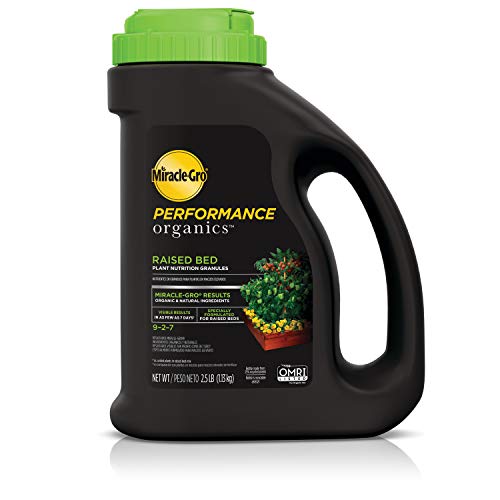
The Miracle-Gro Performance Organics Raised Bed Plant Nutrition Granules are designed specifically for raised bed gardening. This organic and natural plant food feeds vegetables, fruits, herbs, and flowers effectively. It begins showing results in as few as 7 days, helping plants thrive faster compared to unfed ones. It supports sustainability by focusing on organic ingredients suitable for raised bed ecosystems, enhancing soil health while promoting robust plant growth.
True Organic Raised Bed Food for Vegetables and Herbs

True Organic Raised Bed Food offers a premium blend optimized for raised beds and large containers. Its rich formula contains seabird guano, shrimp and crab shell meal, and other nourishing components. This fertilizer requires application every two months during the growing season to maintain consistent nourishment. It supports abundant growth of vegetables, herbs, flowers, and fruits while enriching the soil organically and sustainably.
Miracle-Gro Raised Bed Plant Food for Up to 3 Months

The Miracle-Gro Raised Bed Plant Food feeds your raised garden beds for up to 3 months, making it a low-maintenance option for busy gardeners. It is effective for a variety of plants including fruits, flowers, vegetables, and herbs. Using this fertilizer in conjunction with Miracle-Gro Raised Bed Soil can further enhance harvest yield, offering a comprehensive feeding solution for raised bed gardeners.
Jobe’s Organics Granular Garden Fertilizer for Vegetables and Tomatoes

Jobe’s Organics Granular Garden Fertilizer is a USDA OMRI-listed organic option formulated with a 2-5-3 NPK ratio ideal for vegetable and tomato plants. Its granular form minimizes runoff and mess, promoting responsible application. Free from synthetic chemicals, this fertilizer supports sustainable gardening practices, enriching soil and encouraging vibrant, high-yield produce in raised beds.
Miracle-Gro Organic Raised Bed and Garden Soil with Natural Fertilizer

This product combines OMRI-listed organic soil with a quick-release natural fertilizer, feeding plants for up to 2 months. The peat-free soil mix is perfect for raised beds and guaranteed to boost vegetable harvests versus unfed plants. It simplifies soil preparation by providing nutrients and ideal soil structure in one product, promoting healthier root development and sustained growth.
Buying Guide for Fertilizers Suitable for Raised Garden Beds
Choosing the best fertilizer for raised garden beds depends on several key factors:
- Type of Fertilizer: Organic fertilizers improve soil health and are eco-friendly, while synthetic options may offer quicker results but less soil enrichment.
- Nutrient Content (NPK): Look for balanced ratios suited to your plants. For vegetables, a higher phosphorus content supports root and fruit growth, while nitrogen promotes leafy development.
- Release Rate: Slow-release fertilizers provide sustained nutrition reducing the frequency of application, while quick-release formulas show rapid effects.
- Application Frequency: Some fertilizers require reapplication every few weeks, while others can feed plants for months. Consider your maintenance preference.
- Compatibility with Soil: Choose fertilizers designed or optimized for raised beds, as these environments differ from traditional garden soil.
- Additional Ingredients: Beneficial components like mycorrhizae, worm castings, and biochar improve soil aeration, moisture retention, and microbial activity.
- Certified Organic: For organic gardening, ensure fertilizers are OMRI-listed or inspected to confirm they meet organic standards.
- Ease of Use: Granular fertilizers are easy to apply and store, while soil mixes can combine soil and fertilizer but may be bulkier.
Comparing these factors based on your raised bed plants and gardening style will help you achieve optimal plant health and abundant harvests.