Managing Poa annua, or annual bluegrass, requires targeted prevention and reliable pre-emergent formulas. The following selections are popular among American homeowners for reducing Poa annua germination while protecting healthy turf. Each product below is chosen for features that help curb Poa annua emergence, compatibility with common grasses, and practical application guidance. Read on to compare options and find a fit for your lawn care routine.
| Product | Brand | Key Benefit | Coverage (approx.) |
|---|---|---|---|
| Scotts Halts Crabgrass & Grassy Weed Preventer | Scotts | Pre-emergent protection for crabgrass, Poa annua, and other grassy weeds | 10,000 sq. ft. |
| Liquid Harvest Mesotrione | Liquid Harvest | Broad-spectrum pre/post-emergent with broadweed coverage; selective for several grasses | Varies by application |
| Hi-Yield Atrazine Weed Killer | VPG | Controls or suppresses Poa annua and other common weeds | Label-dependent |
| Scotts WeedEx Prevent with Halts | Scotts | Season-long crabgrass prevention with fall Poa annua protection | 5,000 sq. ft. |
| 0-0-7 Granular Prodiamine Pre-Emergent (18 lb) | Yard Mastery | Solid crabgrass and Poa annua prevention across multiple grass types | 6,000 sq. ft. |
Scotts Halts Crabgrass & Grassy Weed Preventer

Scotts Halts Crabgrass & Grassy Weed Preventer is a granular pre-emergent designed to stop weed germination before it begins. It targets crabgrass and various grassy weeds, including Poa annua, in the fall for winter suppression and in early spring for season-long protection. The product is formulated to be effective even when weather changes occur after application, making it a practical choice for variable climate conditions across the United States. Use on a dry lawn and ensure even coverage for best results. For lawns susceptible to Poa annua, this product helps reduce germination in cooler seasons when annual bluegrass tends to emerge.
Liquid Harvest Mesotrione – 8oz

Mesotrione is a potent herbicide that begins working quickly after application, with full weed death typically visible within 2-3 weeks. It is versatile, targeting a broad range of broadleaf species and grasses. Activation requires moisture, such as rainfall or applied irrigation. While effective for many weed species, practitioners should note exclusions for certain grasses and conditions—proper application is key in avoiding damage to desirable turf. Mesotrione is suitable for common lawn types like Kentucky Bluegrass, Tall Fescue, and St. Augustine (sod only), making it a flexible option for diverse American yards seeking Poa annua control in appropriate settings.
Hi-Yield Atrazine Weed Killer
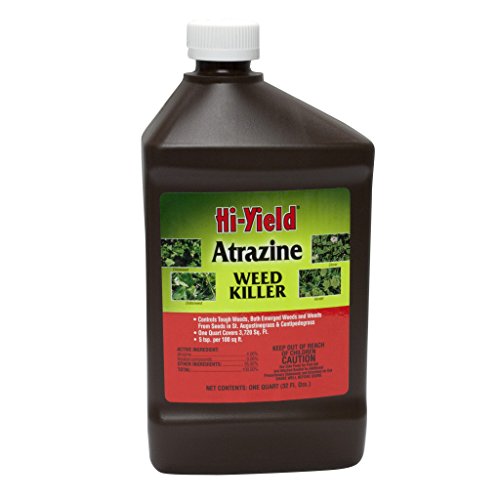
Atrazine-based products act as broad-spectrum herbicides that can suppress or control Poa annua among other common lawn weeds. This formulation is designed for use on St. Augustine and Centipede grasses, offering a targeted approach for lawns with those turf types. When dealing with Poa annua, Atrazine can provide preventive or suppressive benefits, but users should follow label directions closely and consider compatibility with existing turf and environmental regulations. Proper timing in early spring or fall can maximize effectiveness while minimizing turf stress.
Scotts WeedEx Prevent with Halts
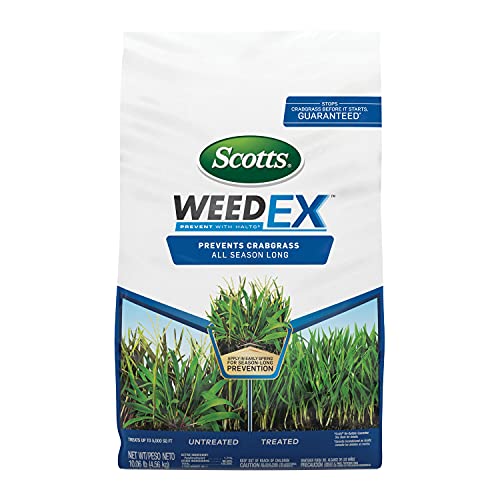
Scotts WeedEx Prevent with Halts focuses on season-long crabgrass prevention while providing fall protection against Poa annua, henbit, and chickweed. This dual-season approach helps keep lawns cleaner throughout the year, reducing Poa annua germination during the critical late-fall window and maintaining lawn health through spring growth. It’s particularly suitable for homeowners who want a straightforward, single product solution for ongoing weed prevention across multiple seasons.
0-0-7 Granular Prodiamine Pre-Emergent (18 lb)

This granular pre-emergent uses prodiamine to provide robust weed prevention, with a focus on crabgrass and Poa annua (annual bluegrass) suppression. It is marketed as versatile across all grass types, including warm-season and cool-season varieties. By applying at appropriate intervals in spring and fall, homeowners can establish a robust barrier that minimizes Poa annua germination while keeping the lawn healthy and productive. The 18-pound bag covers roughly 6,000 square feet at a rate of about 3 pounds per 1,000 square feet, offering a compact option for smaller to mid-sized lawns.
Buying Guide: Key Purchase Considerations For Poa Annua Prevention
Choosing the right weed killer for Poa annua involves evaluating several factors. First, identify your grass type and climate zone, since some products perform better on St. Augustine or Centipede lawns, while others are designed for cool-season grasses like Kentucky Bluegrass or Tall Fescue. Second, consider timing: most Poa annua prevention occurs in early spring or fall, and some products provide year-round protection with seasonal reapplication. Third, weigh the breadth of weed targets: Poa annua is often accompanied by other annuals like chickweed or henbit; select a product with a broad weed spectrum if you want fewer applications. Fourth, assess safety and label guidance to avoid turf injury, water contamination risks, or restrictions in your state. Fifth, factor in coverage area and application method (granular vs. liquid) to fit your lawn size and preferences. Finally, consider whether you want a multi-season solution (such as a product offering both spring and fall protection) or a single-season treatment for targeted needs. Compare label cautions, re-entry intervals, and compatibility with overseeding or fertilizer programs to choose a compatible, effective option.
For lawns with Poa annua pressure, pre-emergent barriers are most effective when applied before weed seeds germinate and when soil temperatures favor germination timing. Always read the product label for application rates, timing windows, and state-specific guidelines. When in doubt, consult local extension services or lawn care professionals to tailor a program to your soil type, sun exposure, and irrigation practices.