Choosing the right disposable plant pots helps ensure healthy root development, easy handling, and efficient transplanting. This guide highlights five top options, covering different sizes, materials, and uses—from seed starting to transplanting mature seedlings. Each pick includes drainage, durability, and practical features to support both indoor and outdoor gardening projects for American readers.
| Product | Size | Material | Best For |
|---|---|---|---|
| Bluckincle 100 Pcs Plant Nursery Pots | 4 inch opening | Soft plastic | Seed starting and transplanting |
| JERIA 50-Pack Peat Pots | 3.15 inch | Biodegradable peat | Eco-friendly seedlings |
| Augshy 40 Pcs 4″ Pots | 4 inch | PP plastic | Durable, reusable starter pots |
| JERIA 100-Pack 6 Inch Pots | 6 inch | Plastic | Larger transplants |
| DUNPUTE 120 Pack 4 Inch Pots | 4 inch | Plastic | High-volume seed starting |
Bluckincle 100 Pcs Plant Nursery Pots

Bluckincle offers a 100-pack of 4-inch plastic nursery pots with drainage holes, ideal for starting seeds and transplanting seedlings. Made from soft yet durable plastic, these pots are lightweight and easily reshaped when compressed or extruded. The rustic red color complements many home decors, and the included plant labels help manage ID for multiple plantings. Each pot measures about 4 inches at the opening, 2.6 inches at the bottom, and 3.2 inches tall, providing ample space for young roots and easy handling.
Features to note include: durable yet flexible material, a plentiful quantity for large projects, and waterproof white plant tags to help identify each seedling. The combination of size, durability, and labeling makes these pots suitable for indoor or outdoor seed starting, cuttings, and transplanting from small seedlings to larger containers.
JERIA 50-Pack Peat Pots With Labels

JERIA’s peat pots are biodegradable seed-starting containers designed to reduce transplant shock. Each pack includes 50 pots with 50 plant labels, measuring 3.15 inches in diameter. Made from recycled pulp and binding agents, these pots breathe like clay, providing a healthy environment for root growth. They degrade quickly when planted or incorporated into soil, turning into organic nutrients for plants. Ideal for starting flowers, herbs, and vegetables, these pots are particularly attractive for eco-conscious gardeners seeking an earth-friendly option.
Augshy 40 Pcs 4″ Plastic Nursery Pots
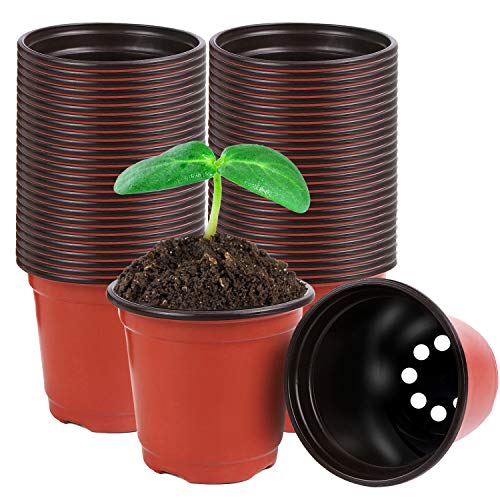
Augshy’s kit includes 40 plastic seed starting pots, each around 4 inches in diameter. Constructed from PP material, these pots are designed to resist deformation and maintain shape after handling. The design emphasizes practicality with a simple, brick red exterior and dark interior. These pots are durable and visually appealing, making them suitable for hobbyists and more serious gardeners who want reliable, reusable starting containers for a variety of plants, from succulents to herbs.
DUNPUTE 120 Pack 4 Inch Pots

DUNPUTE offers a bulk 120-pack of 4-inch nursery pots with drainage holes to prevent waterlogging and promote healthy root development. These pots are lightweight yet durable, designed for easy stacking and storage when not in use. The bottom drainage design, along with a raised rim for handling, makes them well-suited for routine seed starting, cuttings, and transplanting in both indoor and outdoor settings.
Buying Guide: Key Purchase Considerations
When selecting disposable plant pots, consider the following to ensure you choose the best option for your gardening needs:
- Size and compatibility: Match pot size to plant type and growth stage. Seed starting typically benefits from 3-4 inch pots, while larger transplants may require 6 inch or bigger.
- Material and durability: Plastic pots are lightweight and reusable; peat pots are biodegradable but may require transplanting into soil sooner. Consider how many reuse cycles you expect and storage space.
- Drainage: Adequate drainage holes prevent root rot and promote air circulation. Look for pots with multiple drainage holes and consider whether you need matching saucers or trays.
- Biodegradability: Biodegradable pots reduce waste but may have shorter lifespans. They’re ideal for seedlings that will be planted directly into the garden.
- Labels and organization: Pots with included labels or compatible tagging helps manage large projects and multiple species.
- Cost and quantity: Bulk packs offer savings for large projects but assess storage and disposal needs after use.
- Indoor vs outdoor use: Some pots tolerate sunlight and heat better; others are simpler for indoor starter setups.
- Stackability and storage: Pots that stack flat save space until the planting season.
Overall, the five selections provide a balanced mix of traditional plastic pots, biodegradable options, and bulk packs suitable for seed starting, cuttings, and transplanting in varied gardening contexts.