Spider mites can quickly escalate in greenhouses and indoor gardens, demanding fast-acting solutions that are safe for edible plants when used as directed. This guide highlights five top bug bombs and spray products effective against spider mites, mites, and related pests. Each option emphasizes rapid action, broad coverage, and plant safety, helping you choose the right product for your space and crops.
| Product | Brand | Key Benefit |
|---|---|---|
| Doktor Doom Total Release Fogger | Hydrofarm | Large-area coverage; low-residue formula |
| Ortho Home Defense Backyard Mosquito and Bug Killer Area Fogger | Ortho | Wide exterior coverage; targets multiple pests |
| BugMD Spider Repellent Indoor & Outdoor Spray | BugMD | Pet-safe, peppermint-based deterrent |
| Bedlam Insecticide Spray | MGK | Broad pest control including dust mites |
| CHOMP! Insect and Pest Control Spray | CHOMP! | Plant-based formula; kills on contact |
Introduction to the selection criteria: The products below were chosen for their demonstrated effectiveness against spider mites or related mite species, broad coverage areas, plant safety when used as directed, and availability in aerosol or ready-to-use spray formats that are suitable for indoor gardening and greenhouse settings. Each entry includes a direct link to Amazon, an image, and a concise summary of core features.
Doktor Doom Fogger For Greenhouses

Hydrofarm’s Doktor Doom Total Release Fogger targets a broad spectrum of greenhouse pests, including spider mites, thrips, aphids, whiteflies, scale, and mealybugs. The fogger is designed for large-area coverage up to 5,500 cubic feet, making it suitable for enclosed spaces with dense plant growth. It uses natural pyrethrin to provide quick knockdown while breaking down with hours, leaving no long-lasting residues on edible crops when used as directed. It’s labeled as safe for indoor plants, fruits, and vegetables, which supports its use in controlled environments where edible crops are present.
Ortho Home Defense Backyard Mosquito Area Fogger

Ortho’s area fogger is designed for outdoor coverage, delivering rapid control of mosquitoes and a range of garden pests, including mites when encountered in outdoor or semi-enclosed spaces. The fogger provides up to 2,250 square feet of coverage, helping reduce mite populations on outdoor plants and ornamentals. While primarily marketed for outdoor pest control, its broad reach can be advantageous for greenhouses or outdoor garden beds, especially during mite outbreaks that extend beyond indoor confines.
BugMD Spider Repellent Indoor & Outdoor Spray
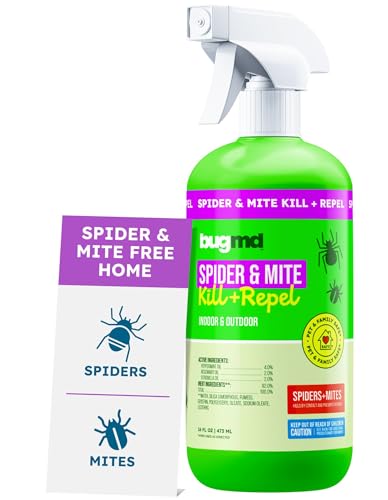
This plant-based spray uses peppermint oil as a key active ingredient to deter spiders and mites. It’s designed for indoor and outdoor use, offering fast knockdown on contact and a lasting barrier to reduce reinfestation. The formulation is non-staining and can be applied to mattresses, sofas, baseboards, and other common infestation points without leaving a harsh chemical odor, making it a practical option for homes with pets and children.
Bedlam Insecticide Spray

Bedlam Insecticide offers broad-spectrum control including bed bugs, lice, and dust mites. Its labeled use covers multiple settings such as residential, commercial, and institutional environments, making it a versatile choice for spaces needing rapid reduction of mite populations. The product is positioned to address both common household mites as well as pest complexes that may co-occur with spider mites in horticultural or storage settings.
CHOMP! Insect and Pest Control Spray

CHOMP! is a plant-based insect control spray designed for both indoor and outdoor use. Its key ingredients include peppermint oil, lemongrass, and geraniol, delivering quick contact kill against a range of pests, including dust mites and spiders. The formula is non-staining and leaves a mild scent, providing a pet- and furniture-friendly option for tackling mite problems in living spaces and gardens alike.
Buying Guide: Key Purchase Considerations And Comparisons
When selecting a bug bomb or spray to combat spider mites, consider the following factors to ensure effective control while safeguarding plants and occupants.
- Target pests and spectrum: Choose products with demonstrated efficacy against spider mites or a broad pest spectrum that includes mites. Some options also address eggs and resistant mite forms.
- Formulation and residue: For edible crops and indoor plants, prefer formulations with minimal residuals and that are safe when used as directed. Pyrethrin-based products can provide quick knockdown with limited lasting residue.
- Coverage area: Assess room size, greenhouse volume, and plant density. Foggers are suitable for large spaces, while sprays are better for spot treatments and fragile areas (crevices, underside of leaves).
- Safety and compatibility: Review safety guidelines for use around children, pets, and food crops. Some products are specifically labeled as safe for fruits and vegetables when used as directed; others should be avoided on edible plants.
- Application method: Aerosol foggers provide rapid, area-wide exposure, but require sealing off treated spaces. Sprays offer targeted application with less disruption to ongoing cultivation tasks.
- Reinfestation management: Consider products with deterrent or repellent properties, in addition to killing efficacy, to help minimize reinfestation risks.
- Environment and legality: Verify product labels and local regulations, especially for greenhouse operations and spaces used for food production.
In practice, combine products where appropriate: use a rapid-action fogger for initial population knockdown in enclosed spaces and follow up with a targeted spray to vulnerable niches and plant surfaces. Integrate non-chemical controls such as environmental controls, regular inspections, and quarantine measures to sustain mite suppression over time.