For American plant lovers, choosing a reliable water reservoir system can simplify care, extend vacations, and keep roots hydrated without overwatering. This article highlights five effective self-watering options, drawn from trusted brands, to help you pick the right reservoir solution for indoor pots, outdoor planters, and busy schedules.
Summary of selected products
| Product | Brand | Type | Key Benefit |
|---|---|---|---|
| Blumat Classic Self-Watering Stakes | Blumat | Consistent hydration via siphon mechanism | |
| SmartiLiving Drip Irrigation Stakes | SMARTILIVING | Longer intervals, easy top-fill design | |
| Fiskars LifeWell Watering Spike | Fiskars | Continuous hydration with simple monitoring | |
| Fielda Self-Watering Pots | Fielda | Integrated indicators and drainage for easy care | |
| Soilagua Watering Globes | Soilagua | Visible, large-capacity, holiday-friendly |
Note: All products above are designed to help maintain steady moisture for a variety of houseplants and outdoor containers. Each option uses a different mechanism, so consider plant type, pot size, and your watering routine when choosing.
Blumat Classic Self-Watering Stakes

The Blumat Classic Plant Watering Stakes provide consistent hydration for indoor and outdoor plants. Designed with a ceramic cone and siphon-based mechanism, these Austrian-engineered stakes draw water from a reservoir and release it as needed. They function as a reliable self-watering solution for a range of potted plants, offering steady moisture without daily attention.
SmartiLiving Drip Irrigation Stakes

SmartiLiving offers an extra-large reservoir bulb with a terracotta feeder. The system is designed for easy top-fill and slow, steady watering for larger plants over roughly four weeks. A sleek, low-profile design helps conceal the device within soil, delivering a natural look while maintaining reliable moisture delivery.
Fiskars LifeWell Watering Spike
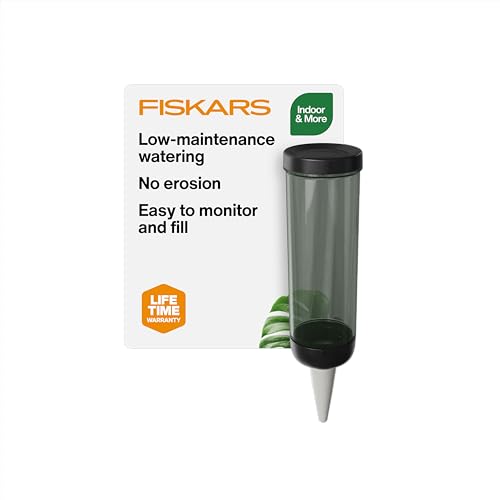
Fiskars LifeWell Watering Spike features a transparent 11.75 oz reservoir and a porous ceramic cone that promotes gradual water release. The design supports ongoing monitoring and easy refilling, helping keep soils consistently moist while reducing the risk of overwatering. A practical choice for indoor plants and decorative containers.
Fielda Self-Watering Pots

Fielda’s self-watering pots combine a drainage-aware design with a water level indicator. An absorbent cotton wick draws water from a detachable tray, keeping soil evenly moist for 7-10 days. The pots use high-temperature-resistant plastic, offering durability for indoor and outdoor use with a clean, modern look.
Soilagua 13 oz Watering Globes

Soilagua’s iridescent glass watering globes hold 13 oz each and use a rubber-stopper with a wick cord to prevent clogging. They provide a steady, bottom-up water release for larger plants, making them a visually appealing, vacation-friendly option for mixed indoor planters.
Buying Guide: Key Considerations For Choosing A Water Reservoir System
- Plant type and pot size: Smaller terracotta pots may benefit from compact stakes, while larger containers can use bigger bulbs or externals with longer intervals.
- Water delivery mechanism: Ceramic cones, terracotta bulbs, glass globes with wick cords, and integrated wicks each offer different rates of moisture release. Consider how quickly your soil dries between waterings.
- Reservoir capacity and refill frequency: Larger reservoirs require less frequent filling but may be more visible in the soil. Choose based on your schedule and plant water needs.
- Monitoring and visibility: Transparent reservoirs simplify monitoring. Look for built-in indicators or easy access to refill points.
- Durability and materials: UV resistance, weather tolerance, and plastic quality affect longevity for outdoor use. For indoor use, aesthetics may also matter.
- Maintenance: Some systems are easier to clean than others. Consider models with removable components or simple cleaning routines to prevent clogging.
- Ease of installation: Top-fill designs and detachable trays reduce setup time. Weighted bases or compact profiles help integrate devices with minimal disruption.
- Vacation and travel suitability: If you travel frequently, choose a system with multi-week capacity or simple top-up refills to maintain plant health during absences.
- Cost and availability: Compare brands for compatibility with your existing pots and future plant purchases. Availability in your region can influence long-term use.
- Plant watering balance: No single solution fits all. For some plants, gradual bottom watering is ideal, while others may respond better to controlled top irrigation or soil moisture monitoring.
When selecting a water reservoir system, align the choice with your plant varieties, daily routine, and home environment. A well-matched option helps maintain soil moisture consistently, supports root health, and reduces the risk of overwatering or underwatering across a diverse plant collection.