Discover top cell trays designed to boost seed germination and root health. This guide reviews highly-rated options that fit standard flats and offer reliable drainage, durable construction, and versatile use for flowers, herbs, vegetables, and more. Each product below highlights practical features to help you choose trays that fit your indoor or greenhouse setup and your gardening goals.
| Product | Cells | Depth | Notes |
|---|---|---|---|
| Gardzen 30 Pack 6-Cell Seed Starting Tray | 6 per tray | 2.2 inches | Durable, drainage holes, compact starter kit |
| RooTrimmer 32 Cell Seed Starter Trays | 32 cells | 4.33 inches | Deep trays, fits 1020 flats, strong construction |
| Gardzen 5-Set Seed Starter Tray Kits | 40 cells per kit (total 200 cells) | Varies by tray | Ventilation domes, adjustable vents |
| Burpee SuperSeed Seed Starting Tray | 16 XL cells | Deep, water channels | Pop-out cells, dishwasher safe |
| MIXC 360 Cells Seedling Starter Trays | Six 6-cell trays per set | 1.5 inches per cell | Clear plastic, easy observation, drains well |
Gardzen 30 Pack 6-Cell Seed Starting Tray
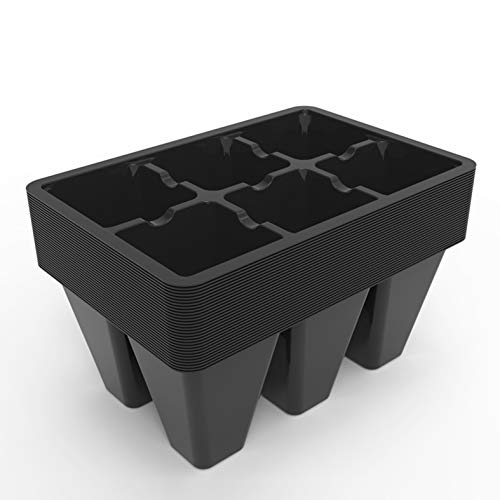
The Gardzen 30-pack offers compact 6-cell trays with drainage holes to prevent overwatering and promote consistent moisture. Each cell measures about 1.5 inches square by 2.2 inches deep, supporting healthy root development. Constructed from durable plastic, these trays are designed for repeated use in seed starting, indoor gardening, or greenhouse settings. The top guide channels help water reach every cell, making uniform germination more reliable.
RooTrimmer 32 Cell Seed Starter Trays

RooTrimmer provides deep 32-cell trays at 4.33 inches of depth, allowing larger soil volumes for longer-rooted varieties. The trays are built with 1 mm-thick premium plastic for durability and are suitable for indoor propagation or greenhouse use. Drain holes at the bottom reduce overwatering, and top-guides ensure water reaches each cell. They are designed to fit standard 1020 flats, enabling easy transplant planning and expansion in larger setups.
Seed Starter Trays, 144 Cells (24 Trays)

This Hydroponic City option bundles 24 trays totaling 144 cells, each cell sized at 1.5 inches square by 2.25 inches deep to foster healthy root systems. The trays are designed for reuse and accommodate a wide variety of seeds—flowers, herbs, succulents, and vegetables. The modular nature supports scalable seed starting for small to mid-size growing operations, both indoors and in greenhouses.
Gardzen 5-Set Seed Starter Tray Kits
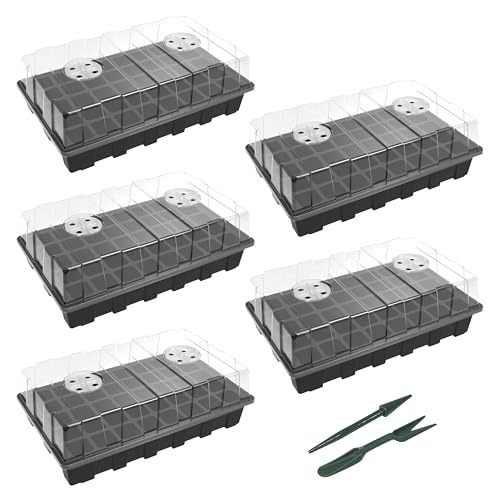
This Gardzen kit increases capacity with 40 cells per tray in a 5-set configuration, offering a total of 200 cells. It features adjustable ventilation with two top vents, enabling better air exchange for seed growth. The kit includes domes and bases that snap together for a tight fit, optimizing humidity control. This setup is well-suited for serious hobbyists or early-season greenhouse operations requiring multiple flat trays.
Burpee SuperSeed Seed Starting Tray

The Burpee SuperSeed tray features 16 XL, flexible pop-out cells designed to simplify transplanting. Labeled rows and a Plant-o-Gram diagram support seed identification. Molded corner slots improve drainage and soil aeration, while deep channels in the watering tray help manage excess moisture. The raised edge contains spills, and the silicone cells cradle seedlings gently to minimize root damage during removal. The tray is top-shelf dishwasher safe for reuse.
MIXC 360 Cells Seedling Starter Trays

The MIXC kit emphasizes visibility with clear plastic, allowing gardeners to monitor growth without disturbance. Each cell is 1.5 inches square, and the kit includes six trays per set to match a standard 1020 footprint. Drain holes in each cell support proper drainage, reducing the risk of root rot while enabling reuse for multiple seasons in seed starting and early growth stages.
Buying Guide
Key purchase considerations
- Cell size and depth: Choose cells that suit your seed types. Deeper cells are better for longer-rooted plants, while smaller cells work for fast-germinating herbs and flowers.
- Drainage and moisture control: Trays with bottom drainage holes prevent waterlogged soil. Top channels and raised tray edges aid in managing excess moisture during watering.
- Durability and reuse: Reusable trays made from sturdy plastic reduce long-term costs, especially for frequent seed starting and greenhouse use.
- Ventilation options: Some kits include adjustable vents or domes to optimize humidity and air exchange, supporting uniform germination.
- Compatibility with flats: If you use standard 1020 flats, ensure trays are sized to fit or stack neatly with your existing equipment.
- Observability: Clear or translucent trays let you monitor root growth without disturbing seedlings, aiding timely transplanting decisions.
Perspective considerations
- Beginner-friendly: Pre-assembled kits with domes and labeled cells simplify seed starting for newcomers.
- Commercial or hobby scale: Deep and high-capacity trays fit larger sowing projects, while compact trays suit balcony gardens or classrooms.
- Materials and sustainability: Durable plastics support long-term reuse; consider trays with smooth surfaces that are easy to clean and disinfect.
- Transplant readiness: Look for soft-cell designs or pop-out features that minimize root disturbance during transplanting.