Carpenter bees can be purposeful pollinators in your garden when provided with safe, sturdy housing. This guide highlights five top bee houses designed to attract native pollinators, support pollination, and help keep wooden structures protected. Each option emphasizes durable construction, nesting tubes, and weather resistance suitable for outdoor use.
| Product | Key Feature | Why It Matters |
|---|---|---|
| TOOBEETT Mason Bee House | Wax-coated, weatherproof housing | Durable protection against rain and wind for year-round use |
| Best Bee Brothers Ultimate Pro Carpenter Bee Trap | External bee vault + pheromone lure | Helps manage carpenter bee activity away from structures |
| BalterFF Bee Houses | Pre-drilled holes, detachable nesting frame | Easy maintenance and flexible placement in yard |
| WildYard Bee House | Nesting tubes of varying sizes | Supports a diverse community of solitary pollinators |
| POLLIBEE Mason Bee House | Waterproof wax coating | Long-lasting habitat for mason bees and garden productivity |
TOOBEETT Mason Bee House Wax Coated Mason Bee Hive
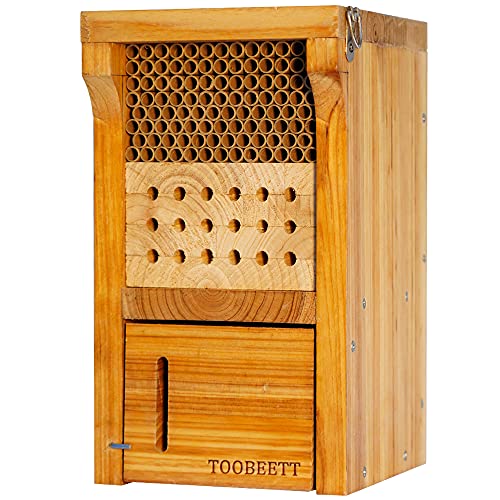
The TOOBEETT Mason Bee House is designed for solitary native bees with a full body size of 6.69 x 7.67 x 11.81 inches, offering 5.9-inch nesting tubes at 5/16-inch diameter. The wax-coated exterior provides weather resistance for longer service life, and the durable construction uses solid wood with 304 stainless steel screws for assembly. It includes a hanging rope and wall buckles for flexible installation. This setup supports peaceful pollinators, contributing to garden productivity through enhanced pollination.
Best Bee Brothers Ultimate Pro Carpenter Bee Trap

The Best Bee Brothers Ultimate Pro Carpenter Bee Trap is designed to attract and trap carpenter bees with an industry-exclusive plastic-lined internal Bee Vault and an extra-large external receptacle. An integrated bee bait cup and aerated design release pheromones to lure bees from a distance, while coverage extends up to a 15-foot radius. This product is oriented toward protecting wooden structures by providing an effective, outdoor bee-control solution that helps manage carpenter bee activity without harming the ecosystem.
BalterFF Bee Houses For The Garden
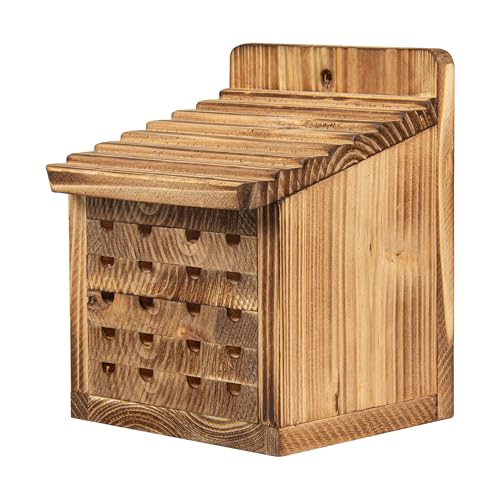
BalterFF presents All Handmade, solid wood bee houses with pre-drilled holes to safely attract leafcutter and carpenter bees. The overall size is 7.5 x 5.1 x 5.7 inches, and the unit features a detachable nesting frame for simplified cleaning and seasonal refreshes. This design is built to be installed in backyards or wooded areas, and its window-friendly viewing component invites family members to watch the bees enter, supporting education and awareness of pollinators.
WildYard Bee House

The WildYard Bee House offers weather-resilient, natural wood construction with nesting tubes of varying sizes to accommodate diverse solitary pollinators. It is designed for easy installation in gardens and supports pollinator biodiversity. The eco-friendly build uses sustainable wood, providing a safe nesting site that helps sustain bee populations while boosting garden yields through enhanced pollination.
Mason Bee House Native Bee Hive Hexagon

The POLLIBEE Mason Bee House is a wax-coated, weatherproof wooden hotel with approximately 90 nesting tubes, a hanging rope, and a metal wall buckle. The hexagonal design is crafted from solid pine and aims to attract mason bees while providing a durable, long-lasting habitat for backyard pollinators. This model supports pollination efficiency in gardens and orchards, helping plants thrive through improved fruit set and seed production.
Buying Guide: Key Considerations For Carpenter Bee Homes
- Material and durability: Seek weather-resistant woods (e.g., pine, cedar) and protective coatings (wax or wax-like coatings) to extend life in outdoor environments.
- Entrance hole size and variety: Different solitary bee species prefer varying hole diameters. A mix of sizes (commonly around 5/16 to 3/8 inch) can attract a broader range of pollinators.
- Maintenance and accessibility: Removable or detachable nesting frames simplify cleaning between seasons and reduce parasite buildup.
- Protective features: Wax coatings or waterproof seals help preserve the nesting tubes during rain and humidity, supporting bee health.
- Placement and microclimate: Install in shaded or partially shaded areas, away from excessive sunlight and direct wind. Elevate habitats to reduce moisture exposure and risk of predators.
- Pollinator diversity vs. pest control: Some products emphasize trapping or deterrence of carpenter bees; consider approaches that balance pollination benefits with protecting wood structures.
- Monitoring and education: Choose designs with viewing panels or windows if you want to observe life cycles, especially for educational settings or family settings.
- Size and site fit: Assess available space to ensure the habitat does not appear crowded and allows bees to thrive without interfering with human activities.
- Environmental impact: Favor sustainably sourced wood and non-toxic coatings to minimize ecological footprint and protect pollinator health.