In landscapes, construction sites, and soil restoration projects, straw-based erosion control blankets and related products offer a biodegradable, effective way to protect soil, promote vegetation, and reduce runoff. This article examines five top options available on Amazon that blend straw, coconut fiber, and natural netting to form temporary barriers against wind and water erosion. Each product is evaluated on materials, biodegradability, coverage, and practical applications to help you choose the right solution for your project timelines and site conditions.
| Product | Size / Coverage | Material Notes |
|---|---|---|
| Farm Plastic Supply 8′ x 112.5′ Biodegradable Straw/Coconut Blanket | 8′ x 112.5′ | 70% straw, 30% coconut fiber; 100% biodegradable netting |
| Farm Plastic Supply 2′ x 112.5′ Biodegradable Blanket | 2′ x 112.5′ | 70% straw, 30% coconut fiber; 100% biodegradable netting |
| Farm Plastic Supply 5′ x 112.5′ Biodegradable Blanket | 5′ x 112.5′ | 70% straw, 30% coconut fiber; 100% biodegradable netting |
| American Excelsior QuickGrass Pro 4′ x 112.5′ Blanket | 4′ x 112.5′ | Biodegradable top netting; excelsior fiber matrix |
| Farm Plastic Supply Straw Wattle (9″ x 8′) | 9″ x 8′ per wattle | Straw-based erosion control wattle for slope stabilization |
Biodegradable Straw/Coconut Erosion Control Blanket — 8′ x 112.5′

The 8′ by 112.5′ biodegradable blanket from Farm Plastic Supply combines 70% agricultural wheat straw with 30% coconut fiber, held together by a brown biodegradable net that dissolves after about 90 days. The product is designed for temporary erosion control on slopes, ready-to-ship in a standard width for many site configurations. Its mix of straw and coconut fiber provides immediate soil cover, reduces surface runoff, and encourages early seed germination by protecting seedbeds from wind and rain impact.
- Biodegradable construction with a net designed to break down in roughly three months
- High straw content offers instant soil coverage
- Suitable for slopes, banks, and disturbed soils
Biodegradable Straw/Coconut Erosion Control Blanket — 2′ x 112.5′
This compact blanket uses the same 70/30 straw-to-coconut fiber composition as the larger version, but in a 2-foot width ideal for narrow drainage channels, sidewalks, and small project footings. The 100% biodegradable net ensures temporary stability while grasses and groundcover establish themselves. It provides a cost-effective option for projects with tight spaces or where multiple passes of materials would be impractical.
- Perfect for narrow channels or tight layouts
- Biodegradable net reduces long-term residue
- Supports rapid establishment of vegetation with soil protection
Biodegradable Straw/Coconut Erosion Control Blanket — 5′ x 112.5′
The 5-foot-wide biodegradable blanket provides broader coverage for mid-sized sloped areas, banks, and disturbed soils. Its 70% straw and 30% coconut fiber blend creates a protective mulch layer that reduces splash erosion during rain events while supporting seed-to-soil contact. Netting biodegrades in about three months, helping to minimize long-term material presence on site.
- Wider footprint for efficient coverage
- Supports seed germination and establishment
- Biodegradable components minimize cleanup
American Excelsior QuickGrass Pro — 4′ x 112.5′
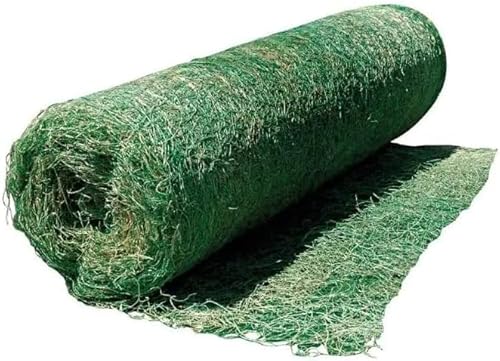
The QuickGrass Pro blanket from American Excelsior combines an excelsior fiber matrix with a top net, designed to protect soil from erosion while providing an optimal environment for seed germination. The top net is biodegradable or photo-degradable and the blanket is promoted as a versatile solution for landscaping, road construction, drainage improvements, and even landfill applications. It focuses on retaining topsoil and reducing sediment transport during storm events.
- Biodegradable top netting supports seed germination
- Robust excelsior fiber matrix stabilizes soil
- Widely applicable across landscaping and infrastructure projects
American Excelsior QuickGrass Pro — 2-1/2′ x 50′

This smaller QuickGrass Pro option is suitable for tight spaces or localized erosion control needs. It includes biodegradable fibers designed to cling to soil, supporting seed retention and initial vegetation establishment. Made in the USA, it emphasizes a long-standing tradition of quality erosion control products from American Excelsior.
- Compact size for small projects
- Biodegradable fibers aid seed retention
- Heritage of domestic manufacturing
Straw Wattle — Erosion Control, 9″ x 8′

The straw wattle combines a compact 9-inch diameter with an 8-foot length, designed to decelerate water flow, trap sediment, and stabilize slopes. Wattles are ideal for perimeter controls on construction sites and for temporary stabilization until vegetation becomes established. They can be placed along channels, at inlets, and within drainage swales to reduce runoff velocity and capture sediment.
- Effective for temporary slope stabilization
- Simple installation along channels and perimeters
- Reusable potential depending on site conditions
Buying Guide: Key Considerations For Straw-Based Erosion Control
When selecting a straw-based erosion control product, consider project scale, soil type, climate, and expected duration of erosion risk. Biodegradable netting helps minimize long-term material presence, but the rate of degradation can influence performance duration. Here are core factors to compare:
- Biodegradability and Netting: Look for products with 100% biodegradable materials and nets that break down within a project-friendly window (often 60–120 days). Netting should securely bind straw and coconut fibers without inhibiting seed germination.
- Material Composition: A higher straw content (around 70%) with coconut fiber (about 30%) provides immediate soil cover and improved moisture retention. Coconut fibers contribute strength in wetter conditions, while straw delivers quick mulch-like protection.
- Size and Coverage: Choose blanket widths to match slope length and width to reduce seams. Wider blankets reduce edge erosion but may be heavier to install. Wattles are best for along channels and as perimeter controls where blankets aren’t practical.
- Environmental Conditions: In windy sites, robust nets and thicker fiber matrices help resist displacement. In high-precipitation areas, ensure the product won’t float or wash away before vegetation establishes.
- Installation and Longevity: Some products offer 2–6 years of use if left in place, while others are intended as short-term solutions. Assess whether you need reusable features or a strictly temporary cover.
- Seed Establishment: Biodegradable blankets that promote seed-soil contact enhance germination. Look for designs that minimize soil disturbance once installed.
- Compatibility With Vegetation: If re-vegetation is planned, ensure the product does not release chemicals and that it supports natural growth without hindering root penetration.
- Disposal and Cleanup: Biodegradable options simplify post-project cleanup since they decompose naturally, reducing long-term site waste.
Comparative Notes For Quick Reference
– Coverage flexibility: Blankets vary from narrow (2′) to wide (8′ or more) options, with wattles covering edge and perimeter needs.
– Application focus: Blankets are ideal for slope stabilization, seed germination, and soil protection on larger disturbed areas, while wattles suit channel and perimeter control during rainfall events.
– Biodegradability timeline: Most products use natural fibers and a biodegradable net that dissolves within a few months, aligning with vegetation establishment cycles.