Choosing the right geotextile fabric can improve drainage, reduce erosion, and protect landscaping or construction projects. This guide reviews five durable, high-performance options that balance filtration, permeability, and strength for American landscapes and building sites. Each product below includes key specs, typical uses, and practical installation notes to help you compare at-a-glance.
| Product | Brand | Size | Highlights |
|---|---|---|---|
| VEVOR Geotextile Landscape, 4ft x 100ft | VEVOR | 4 ft x 100 ft | 8 oz, 350N tensile, 440N load, non-woven PP, weed barrier with permeability |
| PioneerWorks Geotextile Landscape, 4ft x 100ft | PioneerWorks | 4 ft x 100 ft | 6 oz, 350N tensile, 440N load, heavy-duty for erosion control andDrainage |
| VEVOR 6FTx100FT Non-Woven Geotextile | VEVOR | 6 ft x 100 ft | 8 oz, 350N tensile, 440N load, easy to install, strong drainage barrier |
| PioneerWorks Geotextile Landscape, 4ft x 50ft | PioneerWorks | 4 ft x 50 ft | 6 oz, 350N tensile, 440N load, construction-grade drainage and filtration |
| HZCGJMY Non-woven Geotextile Filter Fabric, 82 x 32-Inch | HZCGJMY | 82″ x 32″ | Filter fabric for stormwater, erosion control, French drains; easy to cut |
VEVOR Geotextile Landscape, 4ft x 100ft

VEVOR’s 4×100-foot landscape fabric uses an 8-ounce, non-woven PP construction designed for heavy-duty drainage and weed suppression. With a reported tensile strength of 350N and load capacity up to 440N, this fabric aims to resist tearing under foot traffic, equipment, and light vehicles. Its permeability supports gravel filtration, water drainage, and aeration, helping soil nutrients reach plant roots while preventing weed growth. It’s marketed as easy to roll out, cut, and fit to irregular areas, simplifying installation for gardens and drainage channels alike.
PioneerWorks Geotextile Landscape, 4ft x 100ft

The PioneerWorks 4×100-foot geotextile emphasizes heavy-duty performance for erosion control and construction-grade drainage. It lists 8 ounces per square yard and a 350N tensile strength, with a notable note that this fabric is intended for major erosion control rather than weed suppression. The product highlights support for filtration and drainage under concrete or pavement, making it suitable for driveways, retaining walls, walk paths, or heavy-load scenarios. It’s positioned as a robust option when long-term stability and traffic endurance are priorities.
VEVOR 6FTx100FT Non-Woven Geotextile
This VEVOR option extends to 6 feet by 100 feet with an 8-ounce polypropylene non-woven structure. It maintains the same core strengths—tensile strength around 350N and a 440N load capacity—while offering broader coverage for larger projects. Intended for ground cover, drainage underlayment, and landscaping, the fabric emphasizes permeability to preserve soil nutrients and airflow. The product touts easy handling and installation, making it practical for lawn renovations, garden beds, or extended drainage corridors where a durable barrier is needed.
PioneerWorks Geotextile Landscape, 4ft x 50ft

This PioneerWorks 4×50-foot variant provides a compact option with 6-ounce fabric and 350N tensile strength, aimed at drainage, separation, and filtration tasks. The description reiterates its suitability for French drains, erosion control, and underlayment for driveways or retaining walls. While similar in foundation to larger PioneerWorks rolls, this size favors smaller projects or zones with limited space. The product underlines its construction-grade credentials and high-load performance, which can be advantageous for ongoing drainage management and soil stabilization tasks.
HZCGJMY Non-woven Geotextile Filter Fabric
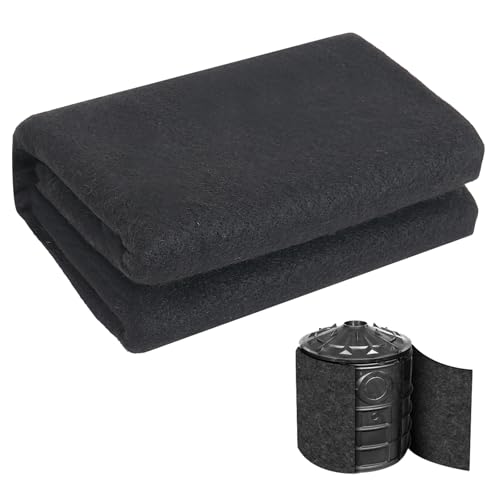
The 82 x 32-inch non-woven geotextile from HZCGJMY focuses on stormwater systems, dry wells, and trench drainage. The features emphasize preventing silt clogging, excellent filtration, and soil separation to extend drainage system life. The fabric’s felt-like texture supports easy handling and installation, with suitability for French drains, trench drains, erosion control, and gardening projects. It presents as a versatile, mid-size option for sites needing reliable filtration without the heft of larger rolls.
Buying Guide: Key Purchase Considerations
- Drainage vs. filtration balance: Higher ounce fabrics typically deliver stronger filtration and erosion control, but may reduce permeability slightly. Match the fabric to the expected drainage rate and soil type.
- Strength and load requirements: For driveways, retaining walls, or heavy traffic areas, prioritize fabrics with higher tensile strength (around 350N) and higher load ratings (up to 440N) to minimize tearing.
- Permeability and soil health: Aim for fabrics that allow water and air to pass while keeping soil particles out of drainage channels. This helps maintain root health and prevent clogging.
- Project scope and size: For long runs or large areas, select wider rolls and longer lengths to minimize seams and installation effort.
- Application suitability: Some fabrics are explicitly designed for construction under concrete or pavement; others focus on weed suppression and garden drainage. Read product notes to ensure your intended use aligns with design.
- Installation considerations: Easy-cut edges, fade resistance, and compatibility with gravel or mulch layers can affect long-term performance and maintenance needs.
- Environmental impact: Prefer non-woven, recyclable PP fibers when possible, and consider soil biology impacts from barrier materials.
When selecting a geotextile fabric for drainage in American settings, evaluate local climate, soil composition, and load expectations. For garden and landscape drainage, mid-weight options with robust filtration and easy installation typically perform well. For roadways, walkways, and erosion-prone sites, higher-strength, heavy-duty fabrics with clear drainage pathways are more suitable. Always factor in the length and width of your project to minimize joins and ensure consistent performance across the treatment area.