Growing healthy plants outdoors hinges on proper shelter and light diffusion. Corrugated polycarbonate sheets offer a resilient, UV-protected, clear alternative to glass, helping maintain stable temperatures and bright interiors without the risk of breakage. This guide highlights five highly relevant corrugated plastic options designed for greenhouses, emphasizing durability, insulation, and ease of cutting or installing. Each product section includes a quick overview, practical features, and guidance on choosing the right panel size for your structure.
Summary of chosen products:
| Product | Brand | Size (L × W × Thickness) | Key Benefit | Image |
|---|---|---|---|---|
| Hotop 6 Pcs Polycarbonate Greenhouse Panels | Hotop | 4′ × 2′ × 0.24″ | Reliable coverage with easy cutting for custom shapes |  |
| UMIG 12 PCS 4′ × 2′ × 0.24” Panels | UMIG | 4′ × 2′ × 0.24″ | Double-layer insulation for better climate control |  |
| Tatuo 12 Pack 6′ × 2′ × 0.24” Panels | Tatuo | 6′ × 2′ × 0.24″ | Hollow honeycomb design for heat retention and UV protection |  |
| Quibbay 8PCS 10′ × 6′ × 0.16” Panels | Quibbay | 10′ × 6′ × 0.16″ | High transparency with strong UV protection and light transmission |  |
| FAHKNS 14 Pack 4′ × 2′ × 0.16” Panels | FAHKNS | 4′ × 2′ × 0.16″ | Excellent light transmission and all-weather durability | 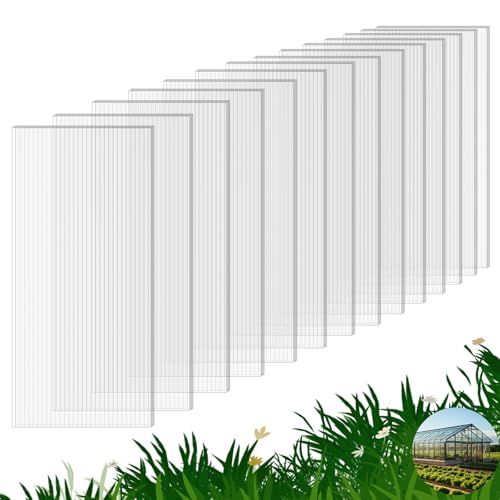 |
Hotop 6 Pcs Polycarbonate Greenhouse Panels
These double-layer polycarbonate sheets are designed for greenhouse roofs and walls, offering durability and clarity. The panels are described as reliable in coverage, making them a strong option to protect plants while allowing ample light. They can be cut to fit irregular greenhouse shapes, though a professional cutter is recommended due to material hardness. The clear finish helps maximize interior brightness, supporting robust photosynthesis and growth during all seasons.
Key considerations: availability in multiple panels for larger areas, compatibility with standard framing, and alignment with local climate demands like high sun exposure or strong winds. While the listing emphasizes UV protection and waterproofing, users should verify exact cut sizes and panel densities to ensure a seamless fit with their greenhouse design.
UMIG 12 PCS 4′ × 2′ × 0.24” Panels
UMIG’s twin-wall, double-layer design aims to enhance thermal insulation, helping environments stay cooler in summer and warmer in winter. The panels are described as impact-resistant with UV-coated faces to resist sun damage. Size is 4′ × 2′ with a 0.24″ thickness, and cutting is straightforward with a utility knife. The lightweight construction simplifies installation and replacement, making these panels suitable for ongoing greenhouse maintenance and expansion projects.
Considerations include the balance between insulation and light transmission, as well as ensuring cuts preserve structural integrity. Since the product features a relatively high UV resistance, it’s well-suited for long-term use in sunny climates.
Tatuo 12 Pack 6′ × 2′ × 0.24” Panels
Tatuo’s panels emphasize a sturdy, thick construction with a hollow honeycomb core that improves heat retention while maintaining good light diffusion. The set includes 12 panels sized roughly 6′ × 2′, with a 0.24″ thickness that resists cracking under outdoor conditions. They are UV protected on both sides, adding durability against prolonged sun exposure. A key feature is the ease of cutting to fit, though appropriate safety precautions should be followed when handling utility knives.
Practical considerations involve assessing the interior climate needs of your greenhouse: hotter climates may benefit from additional insulation, while frequent cutting should be planned to minimize waste and ensure a precise fit.
Quibbay 8PCS 10′ × 6′ × 0.16” Panels
Quibbay’s larger panels provide substantial coverage with a relatively thin profile of 0.16 inches, offering high light transmission and strong UV protection. The twin-wall design supports a bright interior while maintaining insulation during temperature swings. The panels are described as weather-resistant, with a broad operating range and resistance to fading, yellowing, or cracking from sun exposure. They are designed to be durable yet easy to handle for replacement or expansion projects.
When selecting this option, ensure larger panels suit your frame spacing and that the 0.16″ thickness meets your structural requirements and wind load expectations for your local area.
Buying Guide
Light Transmission and Clarity
Choose panels with high light transmission to support photosynthesis. Double-wall or honeycomb designs typically balance light diffusion with insulation, helping plants receive sufficient light while reducing temperature fluctuations.
Insulation and Thermal Performance
Double-layer panels generally provide better insulation than single-layer sheets, which can help reduce cooling costs in summer and heating needs in winter. Consider your climate and whether you need extra frost protection or heat retention.
Durability and Impact Resistance
Polycarbonate is favored for its impact resistance and shatterproof properties compared to glass. Check thickness (0.16″ to 0.24″ commonly) and the panel’s structural design (single vs. double layer) to gauge durability against wind, hail, and debris.
UV Protection and Longevity
UV-coated faces extend panel life by resisting yellowing and degradation from sun exposure. Verify both sides are protected if longevity in intense sun is a priority.
Installation and Customization
Most panels can be cut to fit your greenhouse dimensions, but this requires proper tools and care. Cutting quality affects seal integrity and wind resistance, so plan for accurate measurements and professional cutting if needed.
Size and Fit
Check how panels align with your greenhouse frame: standard sizes (4′ × 2′ or 6′ × 2′) cover common frame spans, but installations often require trimming. Respect your structure’s load-bearing capabilities and ensure panel thickness matches frame supports.
Weather Resistance
Panel performance across temperature ranges from extreme cold to heat is essential in varied climates. Look for panels rated for wide temperature ranges and weather resistance to ensure year-round performance.
Cost, Availability, and Replacement Strategy
Consider the total cost of covering or expanding a greenhouse with multiple panels. Availability of replacements and ease of ordering more panels in the future can influence long-term maintenance and growth planning.
In choosing corrugated plastic sheets for a greenhouse, align panel selection with your local climate, desired light diffusion, insulation needs, and installation capabilities. The options summarized here offer a range of thicknesses, sizes, and designs to support consistent plant growth, reduced heat loss, and durable protection from environmental stressors.