Finding an efficient, durable hay net for round bales helps reduce waste, support healthy digestion, and save time feeding. This guide reviews five high-performing options, covering mesh size, knotless design, weather resistance, and ease of use. Whether you manage a small farm or a large stable, these picks balance safety, longevity, and cost-efficiency while accommodating common bale sizes.
Summary of selected products:
- Kingump 5×5 Ft Round Bale Hay Net — 1.5″ mesh, knotless design, durable materials.
- Hay Chix Round Bale Hay Net — 5′ length, 1 3/4″ holes, patented closure, marine-grade nylon.
- Tongmo 5×5 Ft Round Bale Hay Net — 2″ holes, knotless, easy to bind around a bale.
- GmTonty 5×5 ft Round Bale Hay Net — 1.75″ mesh, knotless, weather-ready.
- Dayimado Large Round Bale Hay Net — 1.5″ holes, easy setup, reduces waste.
Kingump 5×5 Ft Round Bale Hay Net

Features emphasize a slow-feeding design with a 1.5-inch mesh to mimic natural grazing, encouraging horses to chew more slowly for better digestion and weight control. The net is built from high-strength materials to handle outdoor weather and demanding use, reducing the need for frequent replacements. Its knotless construction minimizes wear on mouths and teeth, reducing dental concerns and tangling risks during feeding. This combination supports safer, more efficient hay consumption for horses and goats.
In practice, the 1.5″ mesh balances hay length and intake, helping minimize waste while allowing livestock to access hay efficiently. The durable build suits barns, pastures, and feed rooms, making it a versatile choice for owners seeking reliability without frequent replacements. The knotless design further enhances safety during feeding, especially for horses prone to mouth sensitivity or dental issues.
Hay Chix Round Bale Hay Net — 5 Ft

This 5-foot net uses UV-treated marine-grade nylon with 1 3/4″ holes, designed for durability in field or paddock environments. The patented rope and Hoggle closure system simplifies loading over a round bale and reduces hay loss, often delivering significant savings by maximizing hay consumption from each bale. The “Goldilocks” sizing accommodates a range of bale sizes, fitting up to 5′ x 5′ bales and some smaller configurations.
The Hay Chix design emphasizes easy filling and secure closure, helping busy handlers complete routines quickly. Its universal compatibility with various feeder setups, paddocks, and pastures makes it a flexible option for farms of different scales. In environments with entry points and feeding stations, this net supports efficient feeding while minimizing waste and debris on the ground.
Tongmo 5×5 Ft Round Bale Hay Net

With a 2-inch hole size, this Tongmo net aims to slow feeding while remaining simple to bind around a 5′ x 5′ bale. It’s described as knotless, which softens contact with the horse’s gums and teeth and reduces dental wear. The straightforward setup and practical dimensions appeal to operators who want a reliable, easy-to-use net that discourages fast, wasteful eating while accommodating common bale configurations.
Key considerations include whether the larger 2″ holes may slightly increase hay loss for very aggressive eaters, though the net remains efficient for slow-feeding goals. The knotless design is a consistent safety feature, supporting long-term use in varied weather conditions and pasture layouts.
GmTonty 5×5 Ft Round Bale Hay Net

GmTonty’s 5×5 ft net emphasizes high-quality material and knotless construction to protect teeth and reduce fraying. With a 1.75-inch mesh, it slows hay intake to reduce waste while supporting healthier feeding patterns. The design prioritizes weather resistance, making it suitable for outdoor use year-round, including sun, rain, and snow. This net’s robust build aims to withstand energetic horses and repeated use without frequent replacement.
Designed to improve forage utilization, the 1.75″ mesh provides a balance between slow feeding and adequate hay access. The knotless feature is particularly beneficial for horses prone to mouth sensitivities or dental concerns. Overall, this net combines durability with practical feeding management, helping owners optimize bale consumption in diverse environments.
Hay Chix Round Bale Hay Net — 6 Ft

This larger Hay Chix model extends to 6 feet with 1 3/4″ holes for efficient slow feeding. The marine-grade nylon construction, UV treatment, and patented closure system emphasize longevity in harsh field conditions. The product description highlights the potential to extract up to 94% of hay from a bale, underscoring efficient use and reduced waste in real-world scenarios.
The six-foot version broadens compatibility with bigger round bales and certain square configurations, providing a flexible option for farms that rotate between bale sizes. The knotless design, along with the closure system, contributes to safer and more user-friendly feeding routines in busy operations.
GmTonty 6×6 Ft Round Bale Hay Net
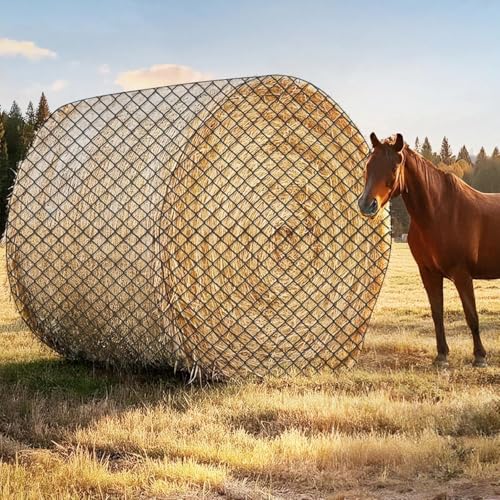
This 6×6 ft option from GmTonty extends the knotless, high-quality construction to larger bales. It features a 1.75-inch mesh and reinforced stitching, designed to withstand energetic horses and the rigors of all-season use. The mesh size supports slow feeding while maintaining accessibility for horses and livestock eating patterns across varied bale sizes.
The weather-resistant design ensures reliable operation outdoors, with emphasis on longevity and reduced maintenance. The knotless design protects dental health and reduces wear on the net itself. For operations managing larger or multiple bale sizes, this model offers a robust, long-term solution with consistent performance.
Tongmo 6×6 Ft Round Bale Hay Net
The Tongmo 6×6 ft model provides a 2-inch mesh for slow feeding and straightforward setup around large bales. The knotless construction supports gentler contact with horse mouths, contributing to dental safety and comfort. The design aims to balance slow consumption with reliable access, especially for mixed herds or larger pastures where larger bales are common.
As with other Tongmo offerings, this net emphasizes user-friendly binding, enabling quick installation and reduction of hay waste. It suits farms needing a dependable solution for larger round bales and varying feeding setups across seasons.
Buying Guide: Key Purchase Considerations
- Mesh size: Smaller holes (1.5″–1.75″) slow intake more aggressively, reducing waste but potentially limiting hay access for very large, coarse fibers. Larger holes (2″) allow faster access but may increase waste. Choose based on horse temperament and feeding goals.
- Knotless versus knotted: Knotless nets cushion teeth and gums, reducing wear, and minimize snags. They generally last longer but can be pricier. Knotted nets are often more affordable but may wear faster over time.
- Material and weather resistance: Marine-grade nylon and UV-treated fabrics perform best in outdoor environments. Consider all-season use in barns, paddocks, and pastures to extend lifespan.
- Size compatibility: Check bale dimensions (typical options include 4′ x 5′, 5′ x 5′, and 6′ x 6′). Ensure the net fits your standard bale size and any feeder structures you use.
- Closure and loading: Patented closures or easy-loading designs help reduce hay waste during filling and ensure a snug bale fit. Look for simple, quick-release features for busy routines.
- Durability versus cost: Higher durability through reinforced stitching and heavier netting reduces replacement frequency. Weigh upfront costs against long-term savings on feed and labor.
- Safety and maintenance: Choose nets with smooth edges and secure knots to prevent entanglement or dental injuries. Regular inspections prevent fraying and extend life.
- Ease of use in varied settings: A versatile net should perform in fields, barns, and paddocks. If you manage mixed terrains, prioritize weather resistance and robust construction.
Across these options, consumers should balance bale size, animal temperament, and environmental conditions. Knotless, slow-feeding nets with durable, weather-ready materials tend to deliver consistent performance with lower maintenance, while closure features can notably reduce hay waste and time spent on feeding routines.