Freshwater aquariums benefit enormously from grassy foreground plants that create natural textures and microhabitats for small fish and invertebrates. This guide highlights five reliable freshwater grass options, focusing on easy care, growth habits, and suitability for carpet-like layouts. Each product section below explains why the plant excels in beginner and experienced setups alike, along with care considerations to help you optimize growth, lighting, and CO2 needs.
| Product | Brand | Notable Benefit | Care Snapshot |
|---|---|---|---|
| Dwarf Hairgrass Eleocharis Parvula Tissue Culture | Generic | Petite, carpet-forming foreground plant | Low to medium light; CO2 recommended for best results |
| Ultum Nature Systems Mini Dwarf Hair Grass Eleocharis Parvulus | Ultum Nature Systems | Vibrant green lawn; easy to keep in tanks | Medium to high lighting; regular nutrients; CO2 helpful |
| Jungle Vallisneria (Jungle Val) | Marcus Fish Tanks | Hardy and fast-growing, good for background or midground | Low to moderate light; steady water conditions |
| Dwarf Hair Grass (3x bundle) | Marcus Fish Tanks | Multiple small clumps for carpet effect | Med to high light; careful planting for anchoring |
| Dwarf Baby Tears Cuba (Hemianthus Callitrichoides Cuba) | Ultum Nature Systems | Ultra-fine carpet foreground for lush scapes | Medium to high light; nutrient-rich regimen; CO2 often required |
Dwarf Hairgrass Eleocharis Parvula Tissue Culture
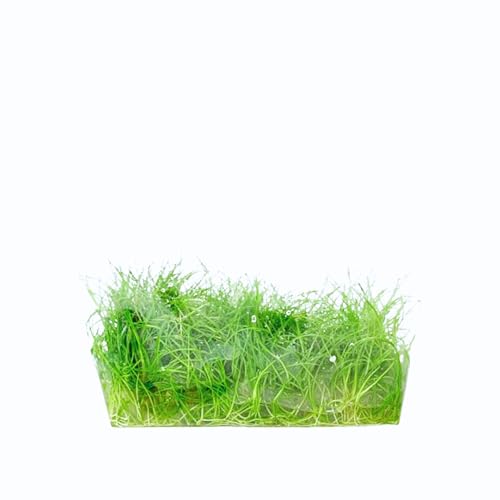
Dwarf Hairgrass Parvula is a compact foreground grass that forms a delicate carpet when provided with adequate lighting and nutrients. Tissue-cultured stock minimizes pests and contaminants, improving early survival in new tanks. The plant’s linear blades stay neat and are suitable for close-up viewing in a smaller tank. Beginner aquarists should monitor nutrients and consider a basic CO2 regime or frequent water changes to sustain rapid growth.
Ultum Nature Mini Dwarf Hair Grass Eleocharis Parvulus

Ultum Nature Systems offers a compact, bright-green dwarf hair grass that adapts well to foreground layouts. As with other carpet plants, strong lighting and a consistent nutrient schedule help spread and thicken the turf. Substrate depth should be adequate to anchor runners, with carbon supplementation aiding root development and overall resilience in busy tanks.
Jungle Val (Jungle Vallisneria) – 6 Plants

Jungle Val is a remarkably forgiving aquatic plant that thrives in a range of lighting conditions. Its long, ribbon-like leaves can anchor midground and background schemes while helping to stabilize sediments. It’s a good choice for beginners seeking quick visual impact and a natural-looking aquarium edge, though occasional trimming may be needed to prevent overtaking the tank.
Dwarf Hair Grass (3X Bundle)

This bundle provides multiple small clumps, ideal for creating a dense carpet across the foreground. It scales well with increasing light and nutrient input, though initial anchoring and even spreading may require a hands-on planting approach. Regular maintenance keeps the carpet uniform as it matures.
Dwarf Baby Tears Cuba (Hemianthus Callitrichoides Cuba)

Dwarf Baby Tears Cuba is among the smallest foreground plants, delivering a striking, dense carpet that can dramatically transform a planted aquarium. It demands adequate lighting and a consistent nutrient schedule, with CO2 strongly recommended for the best carpet-like spreading. New aquariums should be cycled and stabilized to avoid plant stress and algae blooms.
Buying Guide: Freshwater Grass For Aquariums
Key considerations when choosing freshwater grasses include growth pattern, light requirements, nutrient needs, and tank size. Foreground grasses such as dwarf hairgrass and baby tears require bright lighting and a steady nutrient supply to spread evenly and maintain a lush appearance. Valisneria provides height variation and resilience, making it a versatile choice for beginners who want quick visual impact. For carpet effects, select plants with vigorous runners and prioritize tissue-cultured stock to minimize pests. Substrate choice matters: nutrient-rich substrates support root development, while carbon supplementation can accelerate growth. CO2 is often beneficial for high-light setups and dense carpets, but not strictly necessary for all species. Regular maintenance—trimming, nutrient dosing, and water changes—helps keep carpets uniform and prevents gaps that invite algae. When introducing live plants, monitor temperature and acclimation to avoid shock; this is especially crucial in extreme weather. By aligning plant choices with tank dimensions, lighting, and bioload, aquarists can craft durable, aesthetically pleasing carpet scenes that stay healthy over time.
For many hobbyists, a mixed approach yields the best results. Pairing a sturdy background like Jungle Val with a dense foreground carpet from dwarf hairgrass or baby tears creates depth and realism. Begin with a simple lighting plan, then gradually increase nutrients and CO2 as you observe how the plants respond. Always quarantine new plant stock when possible and follow tank-specific compatibility notes to preserve fish and invertebrate health. The five options above offer a spectrum of growth habits and care levels, letting you tailor a lush freshwater landscape to your aquarium’s size and style.