Protecting vegetables from insects while keeping sunlight, air, and water flowing is key to a thriving garden. The following insect netting options are designed to deter pests, minimize plant damage, and support healthy yields. Each product below includes a concise overview of its strengths, so you can compare quickly.
| Product | Brand | Mesh Size | Best For |
|---|---|---|---|
| Garden Netting, 2 Pack 10x33Ft Ultra Fine Mesh Netting | RIFNY | 0.04 inch | Small pests, birds, and light shading for crops |
| Garden Netting Pest Barrier: 4’x10′ | Garden Tailor | Not stated, HDPE mesh | General pest protection for vegetables, fruits, and flowers |
| 10 * 50FT Ultra Fine Garden Mesh Netting | Hyxanons | 0.8mm x 1mm | Raised beds, greenhouses, nurseries |
| Garden Netting, Plant Covers 10x33Ft Net Ultra Fine Mesh | FARAER | 0.8mm x 1mm | Vegetables, fruits, flowers, crops |
| Bird Netting for Garden Protection – 4 Pack | LCHUANG | Not stated, PE mesh | Birds and larger pests for berries, tomatoes, and shrubs |
This guide spotlights five insect netting options that balance pest exclusion with essential plant needs. Read on to learn how each product performs, what to consider when choosing, and how to install for best results in a typical American vegetable garden.
RIFNY Ultra-Fine Garden Netting Kit

RIFNY’s 2-pack delivers a robust 10×33-foot setup in a single package, featuring a 0.04-inch ultra-fine mesh. The design allows sunlight, air, and rain to pass through while blocking insects and animals that threaten crops. The white mesh is dense enough to guard against birds and small critters, yet it does not impede photosynthesis or water penetration. This makes it suitable for early-season seeds and delicate transplants, where pest pressure is high but growth conditions must remain optimal. The kit’s two large nets provide broad coverage for raised beds or multiple rows.
Key considerations: size and ease of use, mesh density tuned for small pests, compatibility with drip irrigation. If you irrigate through the mesh, this netting supports liquid feeding without removal. The material is lightweight and UV-stable for seasonal use, and the oblong hole construction contributes to durability while maintaining airflow.
Garden Tailor Garden Netting Pest Barrier 4’x10′
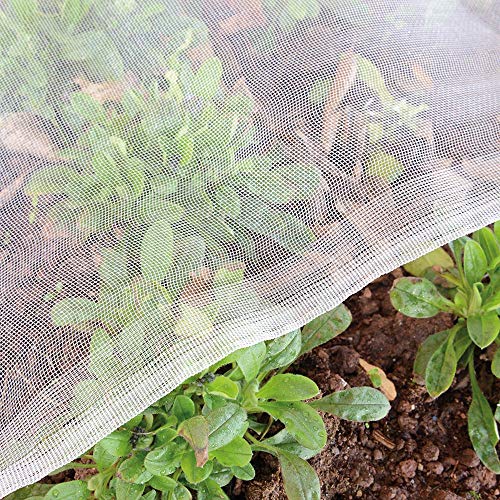
Garden Tailor offers a versatile 4’x10′ netting solution designed to shield a range of crops, including vegetables, fruits, and flowers. The HDPE material is UV-resistant and designed to resist unraveling at the edges, ensuring durability across growing seasons. Its all-purpose nature makes it suitable for use over raised beds, in greenhouses, or as a window screen for indoor protection. The netting’s fine mesh creates a barrier against cicadas, aphids, and other common pests while still allowing light, air, and moisture to reach plants.
Key considerations: mesh strength and edge construction, UV resistance for outdoor use, and the ability to cover larger plots without frequent adjustments. It’s a good choice for gardeners seeking a simple, broad-scope shield with minimal maintenance.
Hyxanons Ultra Fine Garden Netting 10x50Ft

The Hyxanons netting spans 10 by 50 feet, with a 0.8mm by 1mm ultra-fine mesh. This configuration provides a strong barrier against insects and birds while preserving airflow, light transmission, and irrigation permeability. The PE material is UV-resistant and designed for repeated use, making it suitable for extended outdoor exposure across growing seasons. Installation is straightforward: drape over plants and secure with rocks, stakes, or hoops. The product is marketed for raised beds, greenhouses, nurseries, and general garden protection, offering flexible deployment for various garden layouts.
Key considerations: long roll length for larger plots, compatibility with hoop supports, and cost-per-foot for high-coverage needs. For growers with repeated pest pressure or extended outdoor seasons, its durability and reusability are notable advantages.
FARAER Ultra Fine Garden Netting 10x33Ft
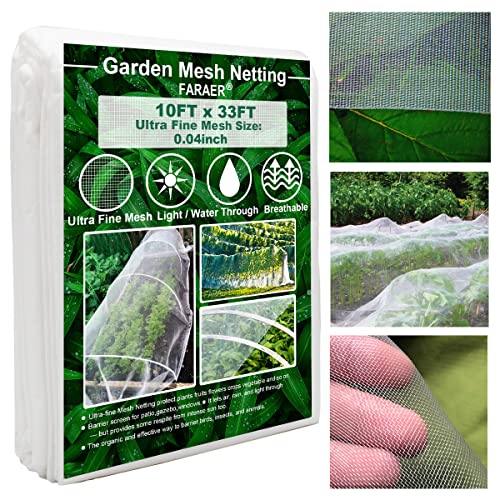
FARAER’s 10×33-foot netting features a fine mesh size of 0.8mm by 1mm, designed to shield vegetables, fruits, and flowers from pests while maintaining essential airflow and light exposure. The mesh is described as easy to irrigate through, allowing watering and nutrient delivery without removing the cover. This netting is positioned as a versatile all-purpose solution suitable for gardens, pastures, and even indoor use. Its mesh construction aims to balance pest protection with plant health, striving to minimize stress on crops during routine care and weather events.
Key considerations: ease of irrigation through the mesh, drop-down performance during rainfall, and the balance between protection and photosynthesis. For gardeners who want a simple, effective barrier without added complexity, this option offers a straightforward setup with reliable coverage.
LCHUANG Bird Netting for Garden Protection

LCHUANG’s bird netting package focuses on protecting berries, tomatoes, trees, and other plants from birds, insects, and small pests. The drawstring design simplifies setup and adjustment, while the PE material provides a lightweight yet durable barrier. The netting is described as transparent to keep plants visible and light-permeable, reducing any shading concerns. The drawstring closure helps secure nets around targeted plants, minimizing gaps that pests could exploit. This option emphasizes ease of use for gardeners who frequently reposition nets or cover individual plants.
Key considerations: ease of securing with a drawstring, visibility through the netting for plant monitoring, and suitability for berry bushes and small fruiting plants. If you frequently need to protect individual plants or clusters, this design offers practical flexibility.
Buying Guide: Key Purchase Considerations
- Mesh size and pest profile: Smaller pests require finer meshes (0.8–0.04 inches). For birds and larger insects, look for denser nets or multi-layer setups.
- Materials and durability: UV-resistant PE or HDPE materials withstand outdoor exposure. Consider edge construction and whether the netting is reusable for multiple seasons.
- Coverage and fit: Choose dimensions that cover raised beds, rows, or entire planting areas. Kits with hoops or panels can reduce installation time and improve stability in wind.
- Air, water, and light transmission: Look for mesh designs that allow watering through and adequate light for photosynthesis. Easy irrigation through the mesh saves maintenance time.
- Ease of installation: Drawstring closures, clips, or modular hoop systems can simplify setup and removal. Consider compatibility with existing garden structures.
- Maintenance and storage: Reusability, resistance to tearing, and compact storage when not in use are practical factors for year-to-year use.
- Application scope: Some nets are labeled for gardens, landscapes, or nurseries. Choose one that aligns with your crop types (vegetables, fruits, flowers) and garden layout.
Overall, selecting the right insect netting involves balancing pest protection with crop health and garden workflow. For many American vegetable gardens, a fine mesh that allows irrigation and light, paired with sturdy edges or a simple hoop system, offers the best blend of protection and ease of use. Consider your climate, pest pressure, and garden size to identify the option that provides the most consistent results season after season.