Choosing the right soil pH kit helps gardeners tailor amendments for healthier lawns, gardens, and landscapes. The options below cover DIY test kits, 3‑in‑1 meters, and professional-grade mail-in tests, so you can pick a method that matches your needs and time frame.
| Product | Type | Best For | Notes |
|---|---|---|---|
| Rapitest Soil Test Kit | Home test kit (color comparators) | Quick, in-garden readings | 20 tests total; color-based results |
| MySoil Soil Test Kit | Professional mail-in lab analysis | Comprehensive nutrient profile | Results in 6–8 days; 13 plant-available nutrients |
| Soil pH Paper Test Kit (Strips) | pH test strips | Low-cost routine checks | 100 strips; 3.5–9 pH range |
| SONKIR Soil pH Meter (MS02) | 3-in-1 soil meter (moisture/pH/Light) | All-in-one garden tool | No batteries; dual-function readouts |
| NewTest Soil pH Test Kit | Colorimetric strips with cylinders | Accuracy and ease for beginners | 125 tests; measuring cylinders |
Rapitest Soil Test Kit
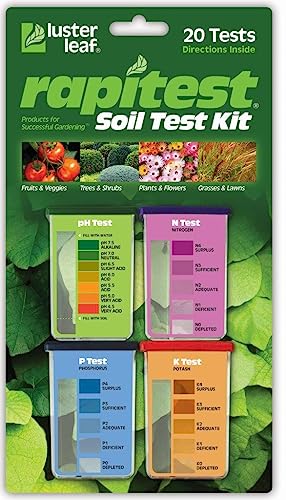
The Rapitest kit from Luster Leaf provides quick, at-home results for soil pH, nitrogen, phosphorus, and potassium. It uses an easy-to-use capsule system and patented color comparators to deliver clear readings. The package includes components for 20 tests, with five tests dedicated to each nutrient category. This setup suits home gardens, lawns, and mixed beds where fast feedback supports timely amendments.
MySoil: Professional-Grade Soil Test
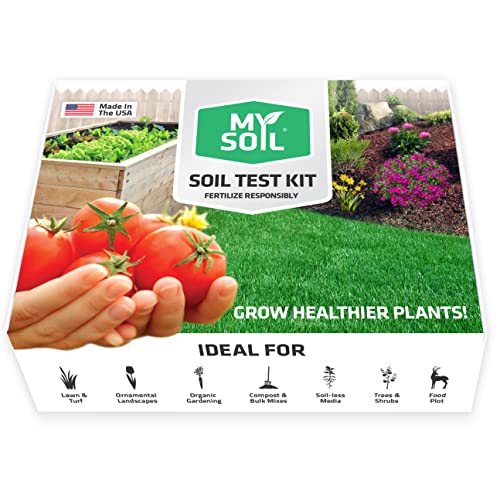
MySoil offers a complete nutrient and pH analysis with tailored recommendations. Unlike basic home meters, this mail-in service provides measurements for 13 plant-available nutrients and pH. Results typically arrive in 6–8 days and apply to a broad range of growing scenarios, including lawns, vegetables, flowers, compost, trees, and hydroponics. This option prioritizes accuracy and actionable guidance for long-term soil health.
Dewildetradingco Soil pH Paper Test Kit

This kit uses 100 pH test strips covering a range of 3.5–9. It is designed for practical, frequent testing across gardens, lawns, fruit trees, vegetables, and indoor plants. The procedure is straightforward: mix soil with water, wait, dip a strip, and compare colors to the included chart. It’s a cost-effective tool that supports quick trend checks and routine monitoring.
SONKIR Soil pH Meter (MS02)

The SONKIR MS02 offers a 3-in-1 reading for soil moisture, pH, and light. It’s battery-free and designed for quick gardening feedback. The device requires that soil be adequately moist for accurate readings, and its simple dial readouts help users interpret moisture and pH without complexity. This makes it a good option for beginners who want a single tool for essential soil conditions.
Leaping Lynx Soil pH Test Kit

Leaping Lynx offers 100 test strips with a 3–9 pH range. The kit emphasizes quick analysis and ease of use, enabling frequent checks for soil pH in gardens, lawns, and containers. Its straightforward color comparison method supports ongoing monitoring to maintain optimal soil conditions for a variety of plants, from vegetables to ornamentals.
NewTest Soil pH Test Kit

NewTest provides an upgraded pH test kit with 125 strips and measuring cylinders. It emphasizes accuracy through four-block color indicators and proper dissolving ratios, helping both beginners and experienced gardeners capture precise pH values. The larger supply supports extensive testing across multiple planting zones and seasons, enabling detailed tracking of soil chemistry changes over time.
Buying Guide: Key Purchase Considerations
- Testing method: Choose between quick at-home colorimetric kits, 3-in-1 meters, and mail-in professional analysis based on your need for speed, precision, and depth of data.
- Coverage: For small gardens, a few strips or a compact meter may suffice; for larger yards, consider kits offering multiple tests or a mail-in service to cover diverse zones.
- Range and accuracy: Look for pH ranges that fit your plants (3.5–9 is common) and consider whether you need nitrogen, phosphorus, and potassium readings in addition to pH.
- Ease of use: Battery-free meters and color-chart strips are beginner-friendly, while mail-in labs require sending samples but deliver comprehensive nutrient profiles.
- Cost per test: Strips and basic kits are economical for routine checks; professional analyses have higher upfront costs but can save time and improve long-term soil health decisions.
- Result timing: DIY kits give immediate feedback; mail-in analyses typically take several days, which may affect amendment timing.
- Soil type and environment: Some kits are more suitable for lawns, others for vegetable beds or containers. Consider where you’ll be testing most often.
- Documentation and support: Products with clear instructions and color scales reduce interpretation errors and improve repeatability over seasons.
- Storage and shelf life: Strips and color charts can degrade if exposed to moisture or heat; ensure proper storage to maintain accuracy.