Healthy plant growth depends on precise light levels. The right light meter helps you measure illuminance in lux or foot-candles, compare readings across grow rooms, and fine-tune lighting for different plant stages. Below are five reliable light meters ideal for indoor gardens, greenhouses, and plant care. Each option offers different features like backlit displays, fast sampling, and dual units to suit your setup.
| Product | Brand | Key Feature |
|---|---|---|
| Light Meter Digital Illuminance Meter Handheld | URCERI | Up to 200,000 Lux, ambient temp, 4-digit LCD |
| Dr.meter LX1330B Digital Illuminance Light Meter | Dr.meter | 2x/sec readings, FC/LUX toggle, peak recording |
| TopTes TS-710 Light Meter | TOPTES | 180° rotating sensor, fast sampling, backlit display |
| Leaton Light Meter, Digital Luxmeter | Leaton | Range up to 200,000 Lux, precise with high readability |
| UNI-T UT383 Light Meter Lux Meter | UNI-T | High accuracy, auto shutdown, portable with backlight |
Light Meter Digital Illuminance Meter Handheld
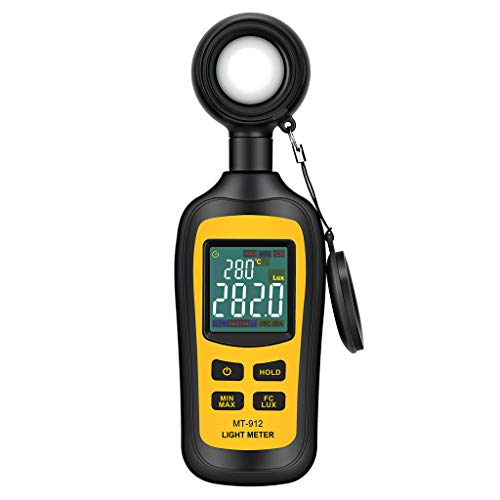
The URCERI device measures luminosity from 0 to 200,000 Lux and also reports ambient temperature. It features a 4-digit color LCD, MIN/Max readings, data hold, and auto power-off. Its measurement accuracy is ±3% rdg ±8 dgts up to 10,000 Lux and ±4% rdg ±10 dgts beyond that range, helping gardeners calibrate lighting for vegetative and flowering stages with reliability.
Dr.meter LX1330B Digital Illuminance Light Meter

Dr.meter’s LX1330B delivers rapid readings at about two updates per second, suitable for dynamic grow environments. It supports FC/LUX conversion, letting you measure in the unit you prefer. A PEAK data recording feature captures the highest light pulse value, beneficial when evaluating brief high-intensity sources like direct sunlight through windows or grow lights. This meter is designed for indoor and outdoor plant setups requiring quick, repeatable measurements.
TopTes TS-710 Light Meter

The TS-710 features a 180° rotating sensor for flexible positioning and a fast 0.5-second sampling rate. It measures 0.1 to 200,000 Lux and 0.1 to 20,000 Foot Candles, with an accuracy of 3% rdg + 5 digits. A large backlit LCD improves readability in low-light grow rooms. Its versatility makes it suitable for assessing LED grow lights, fluorescents, and other common horticultural lighting sources.
Leaton Light Meter Digital Luxmeter
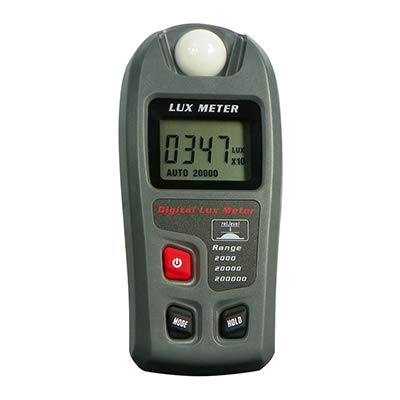
The Leaton light meter provides a broad measurement range up to 200,000 Lux with a 9V battery-powered design. It offers a 0.1 Lux resolution and ±4% accuracy, achieving dependable readings for plant sections that require moderate-to-high light. The device supports Lux and FC units, making it versatile for indoor gardens and photography lighting assessments in addition to plant care.
UNI-T UT383 Light Meter Lux Meter

UNI-T’s UT383 offers a compact, easy-to-use digital illuminance readout with backlit display. It measures 0 to 199,900 Lux (0 to 18,500 FC) with a typical accuracy of 4% ± 8 digits. Features include a max/min memory, data hold, auto shutdown, and a 0.5-second sampling time. This model suits hobbyists and professionals seeking a portable option for plant rooms, studios, or classrooms.
Buying Guide: Key Purchase Considerations
- Measurement range and resolution: Choose a meter covering at least 0–200,000 Lux with fine resolution (0.1 Lux) for precise plant-light calibration.
- Units and conversion: If your workflow uses FC (foot-candles) frequently, ensure the unit can switch between Lux and FC easily.
- Display readability: Backlit LCDs and large numerals help in dim grow rooms; consider rotating sensors for flexible positioning in tight spaces.
- Response time and data features: Fast sampling (0.5–2 seconds) and features like MAX/MIN, data hold, and peak recording support dynamic environments.
- Power and portability: Battery life and weight are important for handheld use; some models require 9V batteries, others use AA or do not require batteries for soil-based testers.
- Intended use: For plant growth, prioritize meters tested for visible light sources (LED, HPS, fluorescent) and confirm suitability for horticultural settings.
- Durability and warranty: Look for devices with sturdy housings, protective caps, and manufacturer warranties, especially if used in greenhouses or on sites.
- Additional features: Rotating sensors, peak hold, and auto power-off help optimize readings without constant attention.
- Accessories: Some bundles include batteries, carrying pouches, and calibration notes—assess value based on your setup.
In practice, gardeners should start with a meter offering easy unit conversion, a backlit display, and a quick sampling rate. For classrooms or demonstrations, a compact meter with a tactile interface may suffice. For professional setups, a meter with MAX/MIN logging and peak recording ensures you capture transient lighting events, such as morning sun bursts or brief grow-light spikes.