Bagworms and other caterpillars can threaten vegetable plots and ornamentals. Bacillus thuringiensis (Bt) sprays offer targeted, organic control that is safe for many beneficial insects when used as directed. This guide highlights five Bt-based products from Monterey and Bonide to help select an effective treatment. Each product targets caterpillars and worm-like pests while protecting non-target organisms when applied properly.
| Product | Size / Form | Notes |
|---|---|---|
| Monterey BT – 16 oz | 16 oz concentrate | Bundle with measuring spoon; ready-to-use in sprayers |
| Monterey B.t. – 32 oz | 32 oz concentrate | Bundles with measuring spoon; versatile for sprayers |
| Monterey BT – 31 oz | 31 oz ready-to-spray | OMRI-listed for organic gardening |
| Monterey B.t. – 8 oz | 8 oz concentrate | Compact bundle; convenient for smaller gardens |
| Bonide Captain Jack’s Thuricide BT | 128 oz ready-to-use | Home garden, organic suitability; spray-ready |
Monterey BT – Bacillus Thuringiensis For Organic Worm And Caterpillar Control

Monterey BT targets caterpillars and worm-type pests such as cabbage looper, bagworm, gypsy moth, fall cankerworm, and elm spanworm. It is suitable for a wide range of crops, including broccoli, cabbage, leafy greens, tomatoes, and ornamentals. The formulation is safe for earthworms and bees when used as directed, supporting beneficial insect populations while providing effective control of caterpillars. The concentrate format allows precise mixing for spray applications, enabling scalable use in larger plots or smaller beds.
Monterey B.t. Bundled With Measuring Spoon – 32 Oz

This 32 oz Bt concentrate bundle includes a measuring spoon for easy mixing and consistent application. It is designed to control caterpillars and worm-type pests on vegetables, fruit, and ornamental plants. The product protects a broad spectrum of crops, including broccoli, celery, cabbage, lettuce, tomatoes, shade trees, and ornamentals, while remaining safe for earthworms and beneficial insects when used appropriately. Ideal for gardeners who value precise dosing and scalable spray coverage.
Monterey BT Ready To Spray – 31oz

This ready-to-spray Bt product simplifies application by eliminating the mixing step. It delivers targeted control of caterpillars such as cabbage looper, bagworm, and gypsy moth without affecting birds, earthworms, or beneficial insects when used according to label directions. It supports organic gardening and is suitable for a variety of crops, including vegetables, fruits, and ornamentals. The 31 oz size is convenient for mid-to-large gardens or frequent use during pest pressure periods.
Monterey B.t. Bundled With Measuring Spoon – 8 Oz
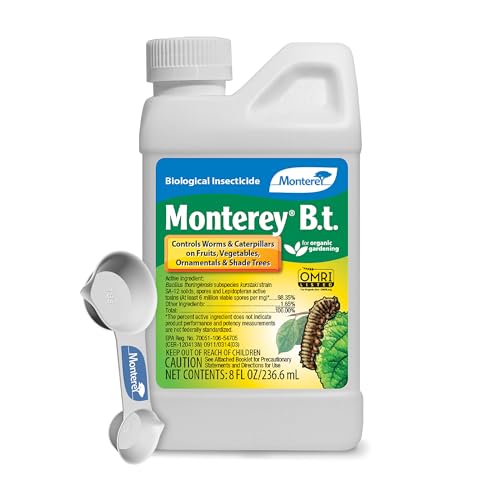
This compact Bt option is ideal for small gardens or spot treatments. The bundle includes a measuring spoon for accurate mixing and delivers effective control of caterpillars and worm pests on a range of crops, including leafy greens, fruiting plants, and ornamentals. As with other Bt products, it remains safe for earthworms and pollinators when used as directed, making it a practical choice for occasional pest pressure.
Bonide Captain Jack’s Thuricide BT

Captain Jack’s Thuricide BT provides a ready-to-use Bt spray effective against caterpillars, including cabbage looper and tent caterpillars, as part of organic gardening programs. The 128 oz size is suitable for larger home gardens and can be applied to edible plants up to harvest when used as directed. This product is designed for rapid action within 2-3 days and is compatible with a variety of fruits, vegetables, and ornamentals, with minimal impact on beneficial insects when applied properly.
Monterey B.t. Bundled With Measuring Spoon – Organic Caterpillar Killer

This 32 oz Ready-to-Spray Bt solution combines a measuring spoon for accurate mixing with a formulation designed to control caterpillars across a wide range of crops. It is OMRI-listed for organic gardening, ensuring alignment with organic standards. The product is compatible with vegetables, fruit trees, shrubs, and ornamentals, and it protects beneficial insects when used as directed and not over-applied. Its ready-to-use format streamlines adoption for gardeners seeking quick results.
Buying Guide
Key considerations when choosing a Bt spray for bagworms and similar caterpillars include:
- Formulation type: Decide between ready-to-use sprays for quick applications and concentrates for scalable mixing and cost efficiency.
- Affected pests: Confirm the product targets caterpillars and worm-type pests common in your area, such as bagworms, hornworms, and looper species.
- Organic compatibility: If you follow organic gardening standards, look for OMRI-listed products or those explicitly labeled for organic use.
- Plant compatibility: Ensure the product is safe for the crops you’re growing, including vegetables, fruits, and ornamentals.
- Safety for non-targets: Bt is generally selective, but always follow label directions to protect bees, earthworms, and flowering plants.
- Reapplication schedule: Bt products typically require multiple applications at intervals; plan spray timing around pest life cycles and weather conditions.
- Packaging and dosing: Bundles with measuring spoons help ensure consistent mixing, especially for larger gardens.
Comparative considerations
- Concentrates vs. ready-to-spray: Concentrates offer flexibility for large areas but require mixing, whereas ready-to-spray formats save time but may be more expensive per ounce.
- OMRI listing and organic suitability: For certified organic operations, confirm OMRI listing or equivalent certifications to ensure compatibility with organic standards.
- Application equipment: Some products come in sprayer-ready formats; others require compatible spraying gear, so assess your existing tools.
- Crop protection window: Schedule applications when caterpillars are present but before heavy feeding or visible damage escalates.
These Bt-based options provide targeted, environmentally mindful control of bagworms and other caterpillars. Always read and follow the label for proper timing, rates, and safety guidelines to maximize efficacy and minimize impacts on non-target organisms.