Lava rock is a popular choice for terrariums and succulent setups due to its porosity, drainage, and natural look. This guide highlights five high-quality lava rock products that suit terrariums, bonsai, succulents, and other plant habitats. You’ll find stones in varying sizes, colors, and textures to help with drainage, moisture retention, and aesthetics. Each option is evaluated for potting mixes, top dressing, and substrate blends to support healthy root development and minimize root rot.
Summary Of Chosen Products
| Product | Brand | Size / Type | Key Benefit |
|---|---|---|---|
| Pulovin 2.5lbs Lava Rocks | Pulovin | 1/5 inch, black gravel | Excellent drainage and root health, natural, no additives |
| Pulovin 2.5lbs Mix Horticultural Lava Rocks | Pulovin | 1/5 inch, mix | Balanced substrate blend for various plants, pH regulation |
| FISCAPE 2-6 Inches Large Lava Rocks | FISCAPE | Various large sizes | Natural, non-reactive, supports beneficial bacteria |
| KINGRUI Red Lava Rock | KINGRUI | 4″-6″ pieces | Vivid color accents with strong porosity for filtration |
| Boniosz Red Horticultural Lava Rock | Boniosz | 2 lb; red, sifted | Direct potting use; effortless drainage and mineral support |
Pulovin 2.5lbs Lava Rocks For Plants

Pulovin’s lava rocks are about 1/5 inch on average, making them suitable for succulents, cacti, orchids, and bonsai. The rocks are 100% natural with no additives, dyes, or fillers. Their porous structure supports drainage and air circulation around roots, helping to reduce waterlogged soil. This option is ideal for top dressing or as a mixed substrate to improve plant health in terrariums and shallow pots.
Key considerations: small size for compact terrariums; natural composition supports bioactivity in substrate; minimal maintenance required. Users should rinse before use if dust appears, then incorporate into the potting mix or lay as a decorative top layer to improve drainage and prevent soil compaction.
FANTIAN 2 lbs Black Lava Rocks

FANTIAN lava rocks are a 1/4 inch crush style, suitable for terrariums, succulents, bonsai, and garden landscaping. They have porous texture that promotes drainage while maintaining soil moisture. Note that some dust can be present upon arrival; washing and filtering mineral residues before use helps prevent turbidity in aquariums or terrarium environments. These rocks can also inhibit weed growth and add natural color to substrates.
Key considerations: ensure proper cleaning before use; the porous nature supports beneficial microhabitats; can be spread as mulch or mixed into soil for improved aeration and drainage.
Pulovin 2.5lbs Mix Horticultural Lava Rocks

This blend combines lava rocks with gravels, offering a decorative yet functional substrate. The rocks are about 1/5 inch and include a color variation that can enhance terrarium aesthetics. The porous composition supports drainage, aeration, and pH regulation, reducing root rot risk for acid-loving plants such as succulents, orchids, cacti, and bonsai. The mix is particularly useful for terrarium top dressing and as a soil amendment.
Key considerations: aesthetically varied substrate adds depth to terrariums; suitable for acid-loving plants; helps manage soil moisture balance for sensitive species.
KINGRUI Red Lava Rock (4″-6″ Pieces)
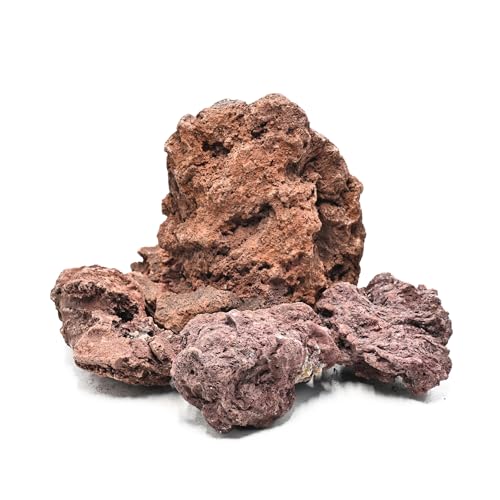
Kingrui’s red lava rocks are larger, offering a striking contrast in aquascapes, terrariums, and decorative landscapes. The porous surface supports natural bio-filtration and helps stabilize water parameters, making them suitable as base stones or aesthetic focal points. Red lava rocks add visual interest while providing the functional benefits of lava stone in terrarium ecosystems.
Key considerations: larger size provides dimensional interest; porous surface aids biological activity; color offers a bold design element without compromising permeability.
Boniosz 2lb Red Horticultural Lava Rock

Boniosz offers a 2 lb red lava rock option that is sifted and ready for direct potting. It’s designed for quick drainage and mineral support, making it suitable as a soil additive or top dressing in bonsai, succulents, and terrarium plantings. The absence of dyes or chemicals emphasizes a natural composition that helps maintain a healthy substrate environment.
Key considerations: ready-to-use sizing simplifies setup; good drainage and mineral support promote robust plant growth; color adds a warm accent to terrarium aesthetics.
Buying Guide: Key Purchase Considerations And Comparisons
Selecting lava rock for terrariums involves evaluating size, porosity, color, and how you plan to use the material in your setup. Consider the following perspectives to guide your choice:
- Size and texture: Smaller rocks (1/5 inch) work well as top dressing or soil amendment for compact terrariums, while larger rocks offer structure and decor for open displays or larger enclosures.
- Porosity and drainage: Highly porous lava rocks promote drainage and air circulation, reducing root rot risk. They also support beneficial microbial habitats in the substrate.
- Color and aesthetic: Black, red, or mixed lava rocks provide visual contrast with green foliage. Red rocks can serve as focal accents, while black rocks blend with most terrarium palettes.
- Purity and additives: Look for 100% natural volcanic rock with no dyes or fillers. Additive-free rocks reduce the risk of introducing unwanted chemicals or nutrients that could disrupt the terrarium balance.
- Maintenance: Some products arrive with dust or residue. Washing and rinsing before use helps maintain water clarity in closed terrariums or aquariums.
- Use cases: For terrariums with moisture-sensitive plants, combine lava rocks with a well-draining substrate and consider a thin layer of inert stones to facilitate drainage without absorbing too much moisture.
- Color treatment: If color matters for display, choose red or mixed-tone lava rocks. For natural, understated looks, black lava rocks work well with most greens and browns.
- Long-term stability: Large rock pieces can provide durable structure in larger terrariums, while smaller rocks are ideal for micro-terrariums or container plants where space is limited.
Across these options, lava rocks offer consistent drainage, aeration, and a natural aesthetic. When used thoughtfully—as a soil amendment, top dressing, or decorative base—lava rock can contribute to healthier root systems, better moisture regulation, and visually appealing terrarium environments.